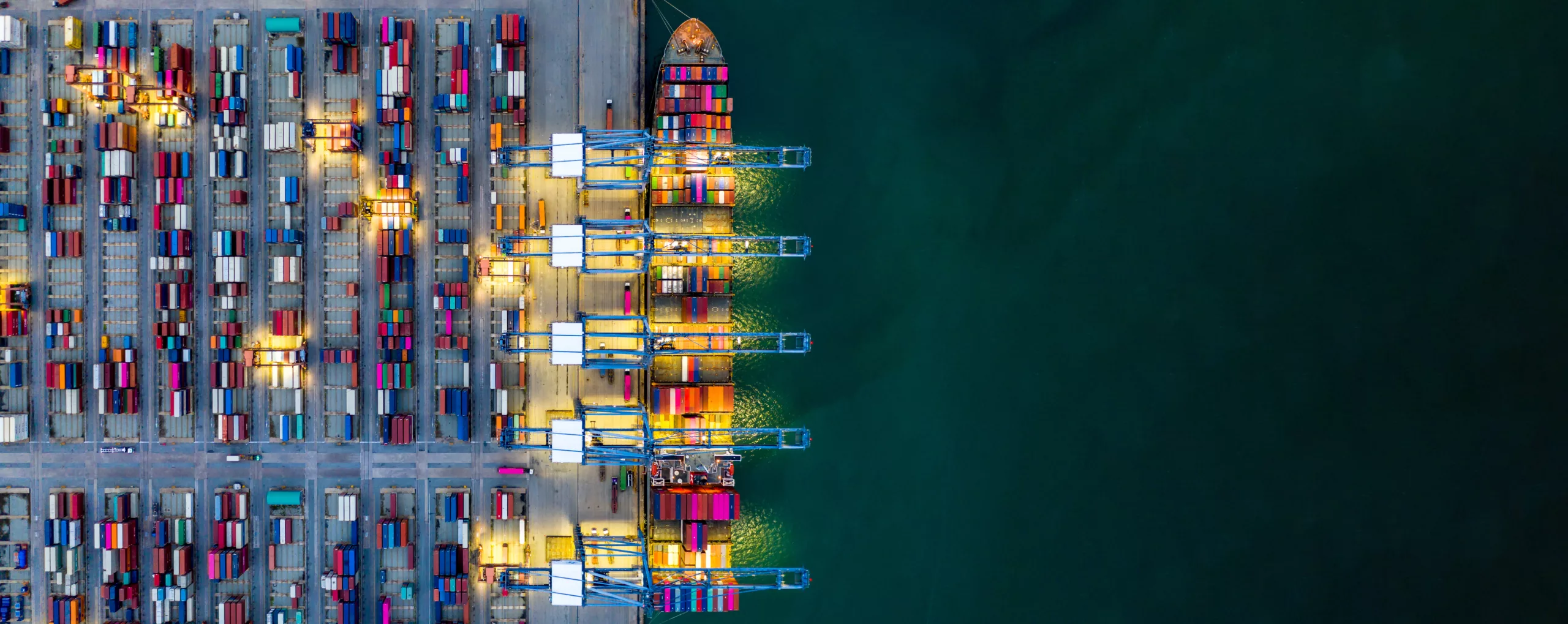
Ports operate 24/7 across large areas under high wind loads, marine corrosion and constantly changing obstacles. We engineer lighting systems that align yard areas, cranes and maintenance strategy into one operationally reliable solution.
Obstacle-aware yard lighting for changing container stacks and sightlines
Glare-controlled visibility for STS / RTG / RMG crane operations
High-mast engineering and retrofit verification for long-term integrity
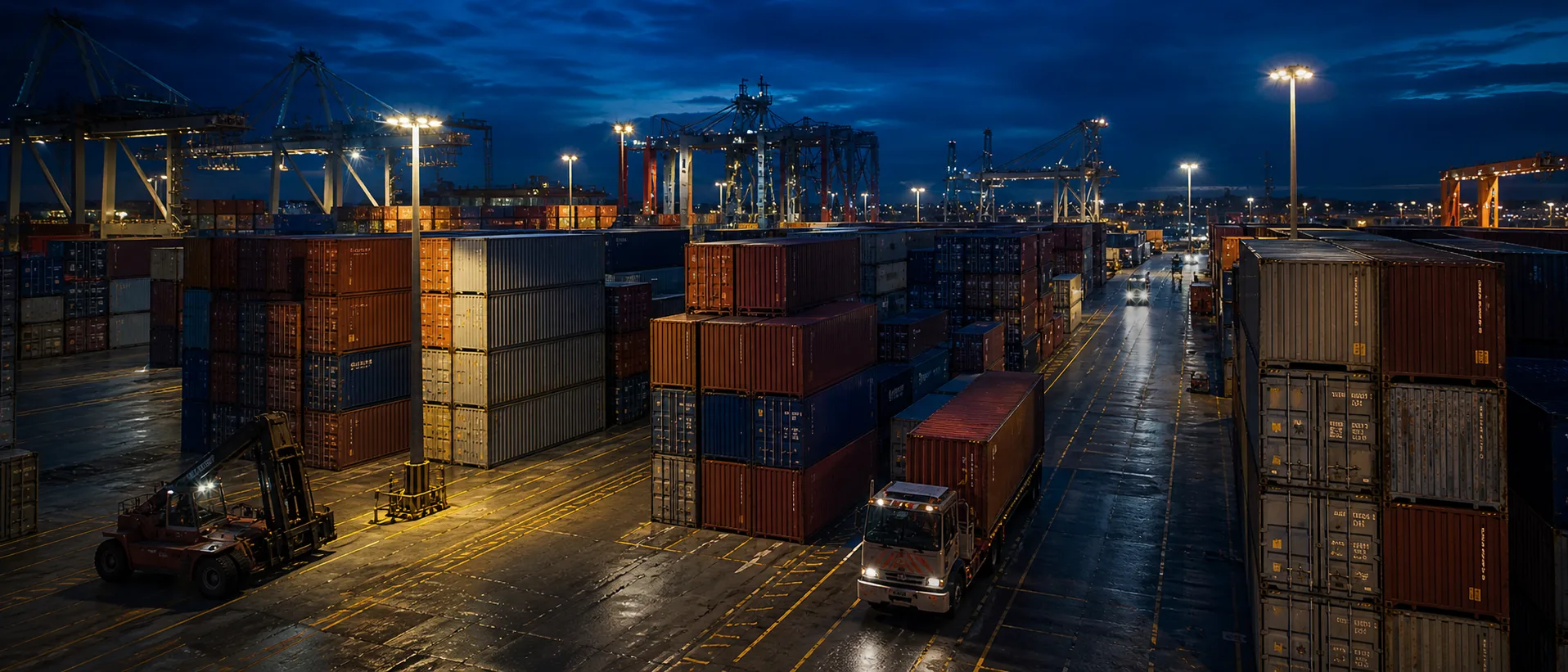
Terminal lighting is not only about lux levels. Container stacks, moving cranes, vehicles, wet surfaces and temporary storage zones constantly change visibility conditions.
A robust design must support daily operations, reduce glare, limit maintenance disruption and remain reliable under wind, salt, rain, vibration and continuous use.
Typical challenges
Changing container stacks and shadow lines
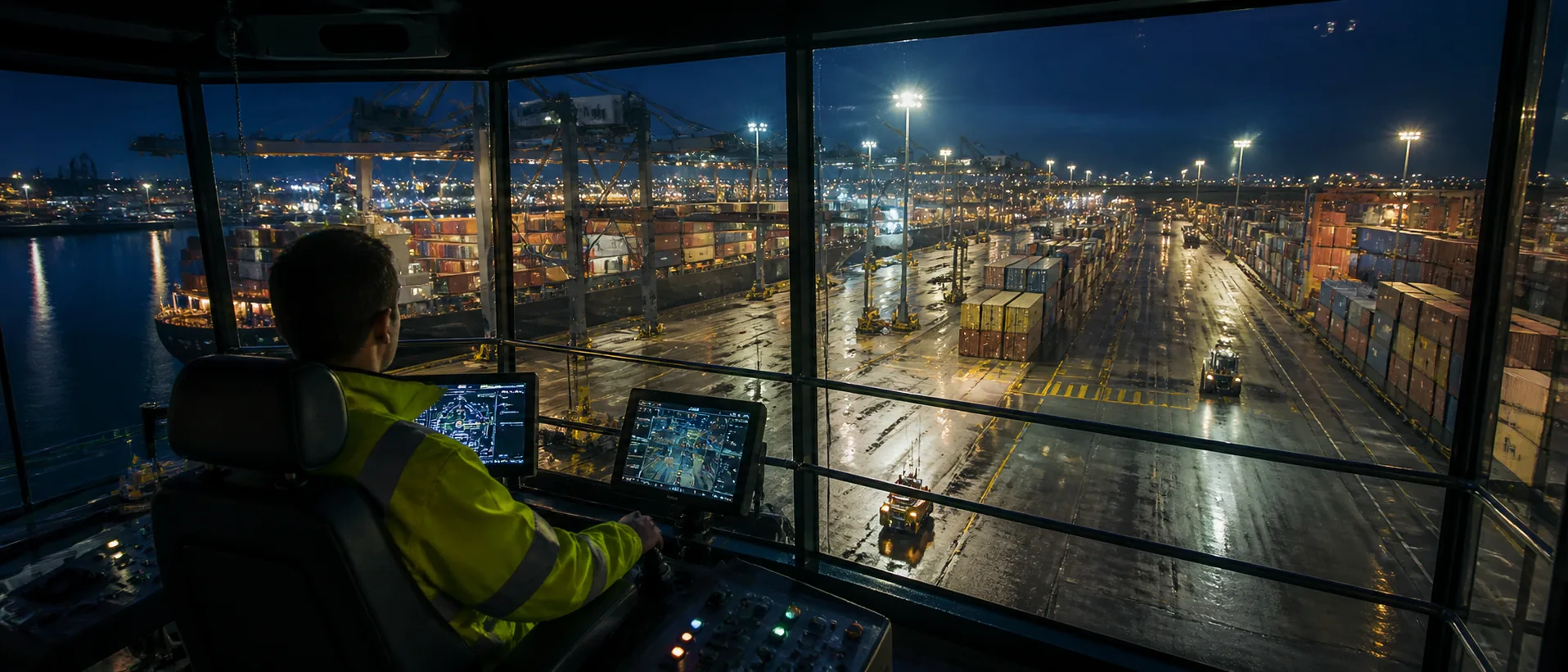
Crane operator sightlines and cabin comfort
Wet and reflective surfaces
Marine corrosion and high wind exposure
Limited maintenance windows
Long-term performance under 24/7 operation
Technical Summary
JEL Products designs and supplies industrial lighting systems for ports, container terminals, bulk terminals, ferry terminals, offshore staging areas and heavy lift operations.
Typical Applications
Terminal yards, STS cranes, RTG/RMG cranes, reefer areas, heavy lift zones, access routes and maintenance areas.
Engineering scope
Lighting design, mast layout, glare control, structural verification, luminaire selection, controls, installation support and maintenance strategy.
Operating conditions
Marine corrosion, high wind loads, vibration, wet surfaces, changing obstacles, limited access and strict uptime requirements.
Best fit
Terminal operators, EPC contractors, engineering teams, asset owners, maintenance teams and contractors working on new installations, retrofits or lighting upgrades.
Not intended for
Residential lighting, decorative outdoor lighting, webshop replacement or projects driven only by the lowest initial purchase price.
Key design factors
Glare & operator visibility
Safe operations require controlled glare and stable visibility for crane operators and yard personnel. Optical planning must protect crane cabin sightlines while maintaining functional illumination on the ground.
Crane operator sightlines and cabin comfort
Direct and reflective glare management
Contrast and depth perception in critical task areas
Read more
Glare is a functional risk on terminals. Operators work with long sightlines, reflective surfaces (wet pavement, container faces, ship-side reflections) and frequent visual transitions between bright and dark zones.
Engineering glare control involves beam shaping, aiming strategy, cut-off management and zone-specific placement so crane cabins are protected without under-lighting the working area below.
In practice, a terminal can meet target lux levels and still feel unsafe if glare forces operators to compensate by posture changes, reduced speed or reliance on local lights.
Obstructions & vertical illuminance
Terminal geometry changes daily. Containers, cranes and parked equipment create shadow lines and visibility gaps. Designs must account for obstruction patterns and vertical illuminance, not only horizontal values on a grid.
Dynamic shadowing between container stacks
Vertical illuminance where recognition matters
Placement strategy aligned to changing zones
Read more
Many yard designs focus heavily on horizontal illuminance. On terminals, visibility often depends on vertical components: recognition of edges, lanes, signage, twist locks and moving assets.
Container stacks act like temporary walls, creating “light canyons” and dead zones that are not visible in simplified calculations. A resilient layout considers worst-case stacking patterns, critical routes and operational hotspots.
The goal is not maximum light everywhere, but stable functional visibility across changing conditions and obstacle configurations.
High-mast engineering & verification
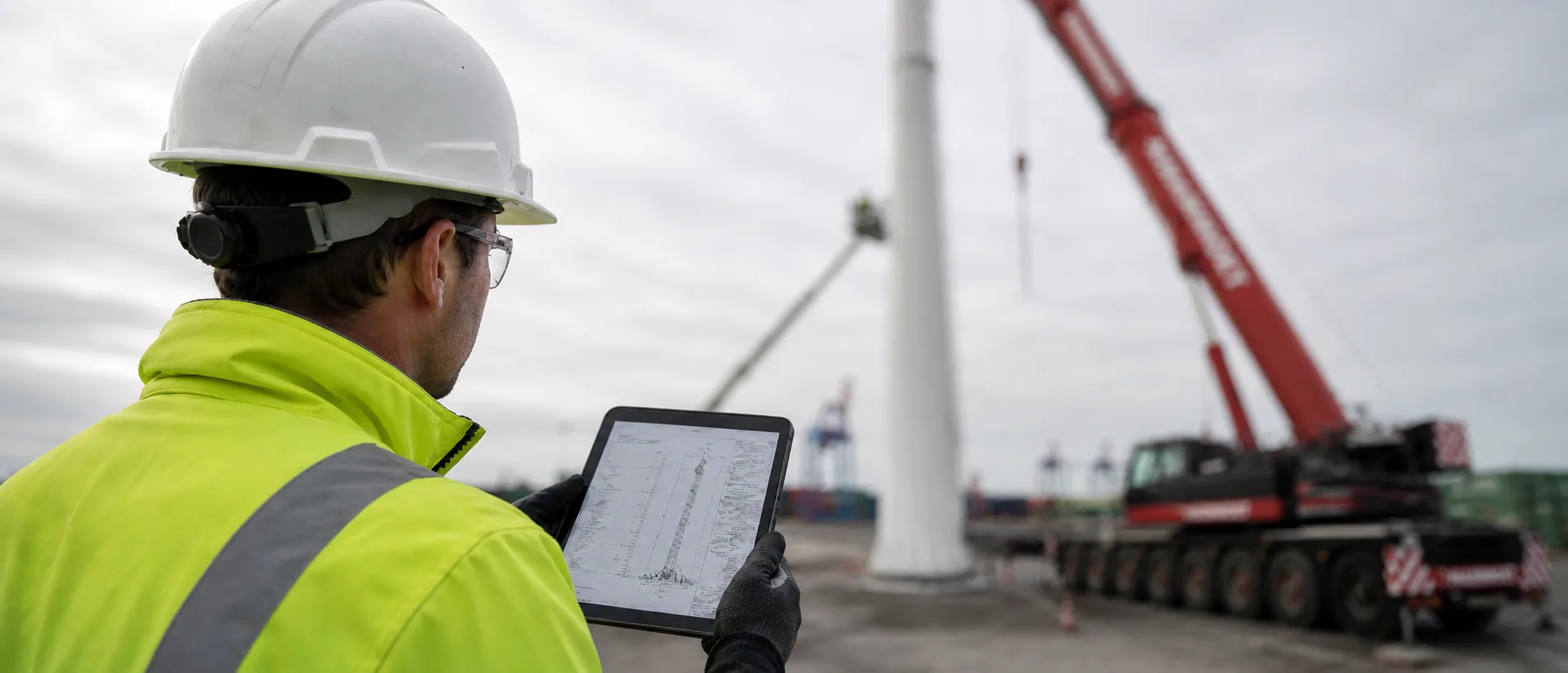
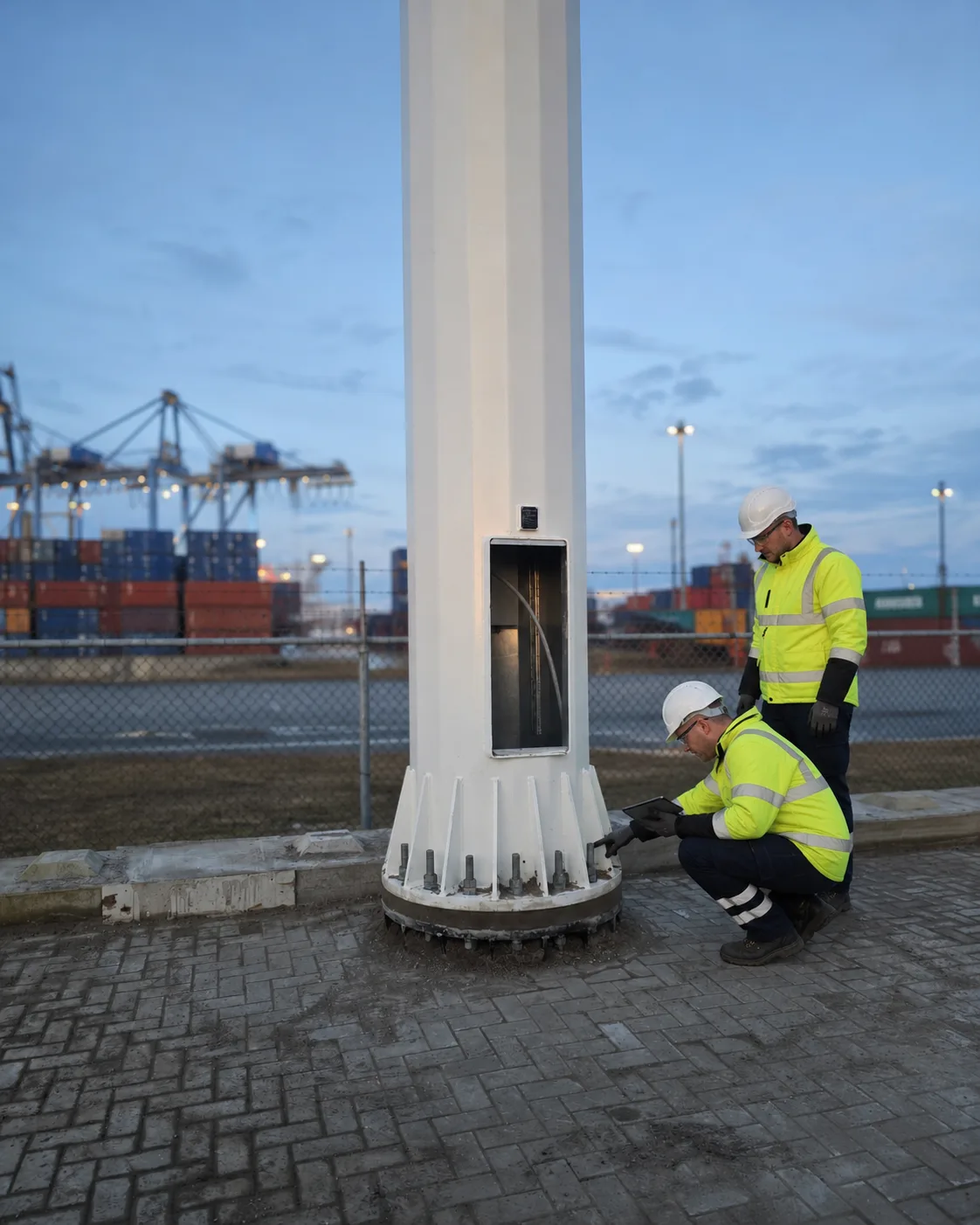
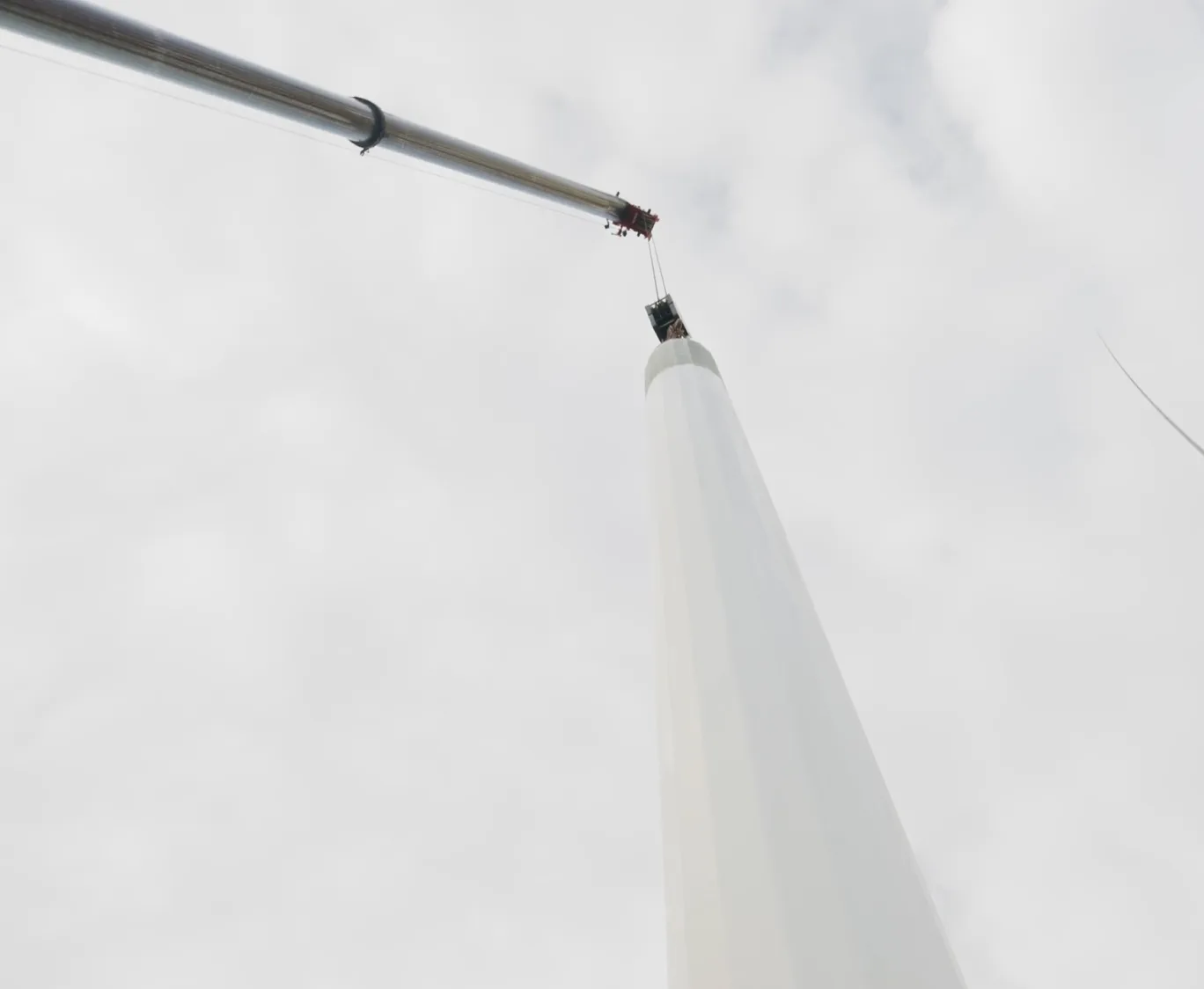
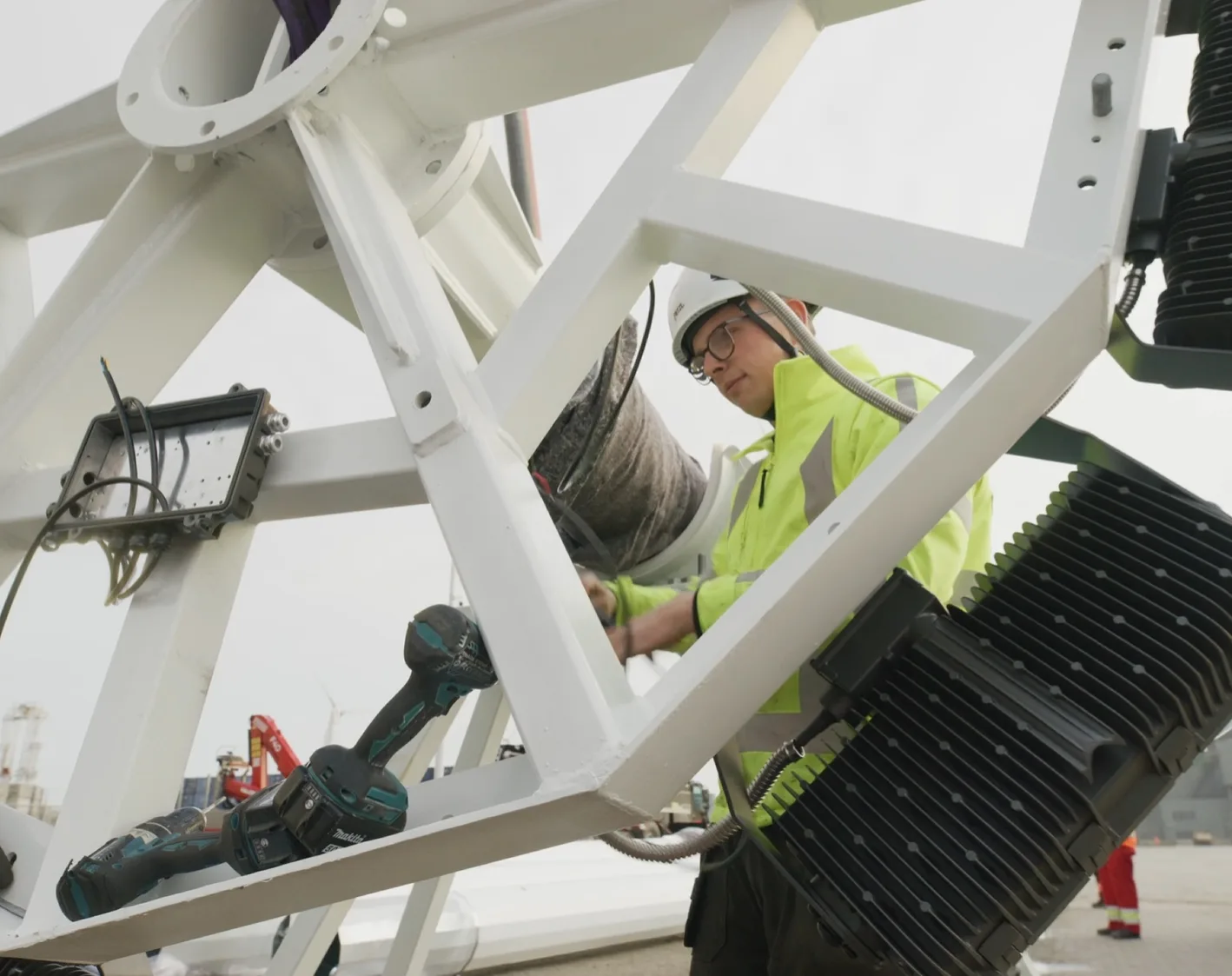
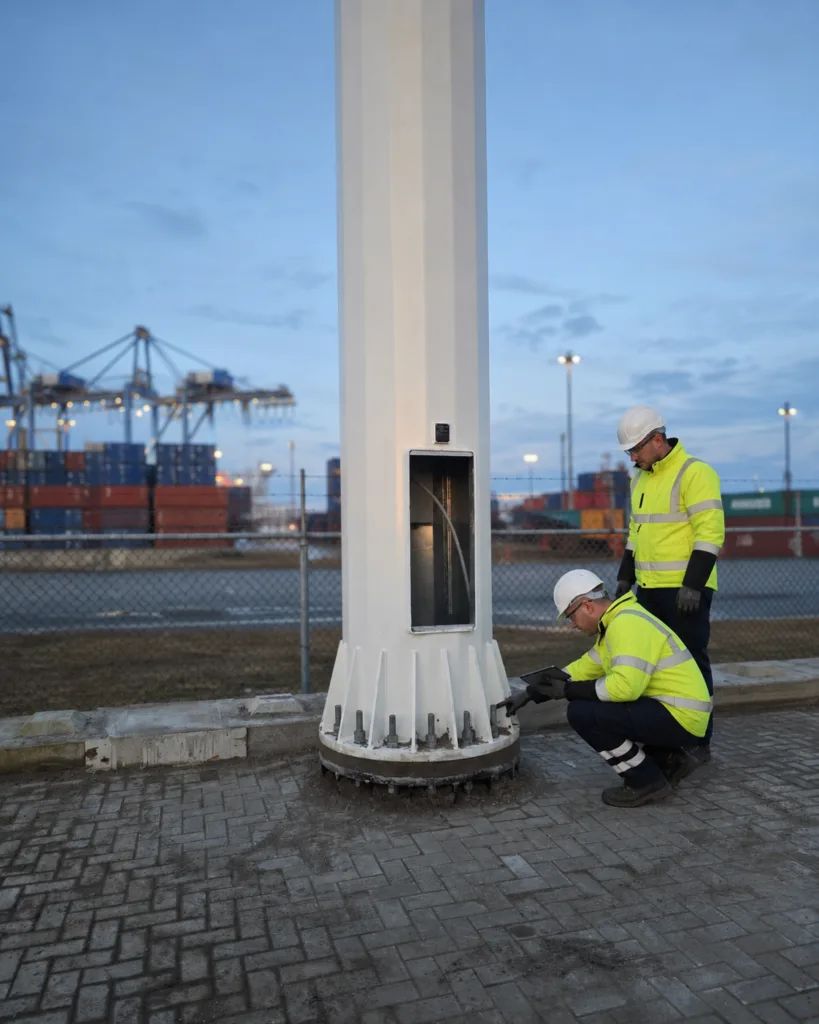
High-mast lighting is structural engineering as much as photometrics. New installations and retrofits require load verification, corrosion assessment and interface validation especially when upgrading luminaires on existing masts.
Terminal yard lighting frequently depends on high masts that operate under significant wind exposure. In retrofit projects, risks increase: existing masts may have unknown histories, corrosion progression or undocumented modifications.
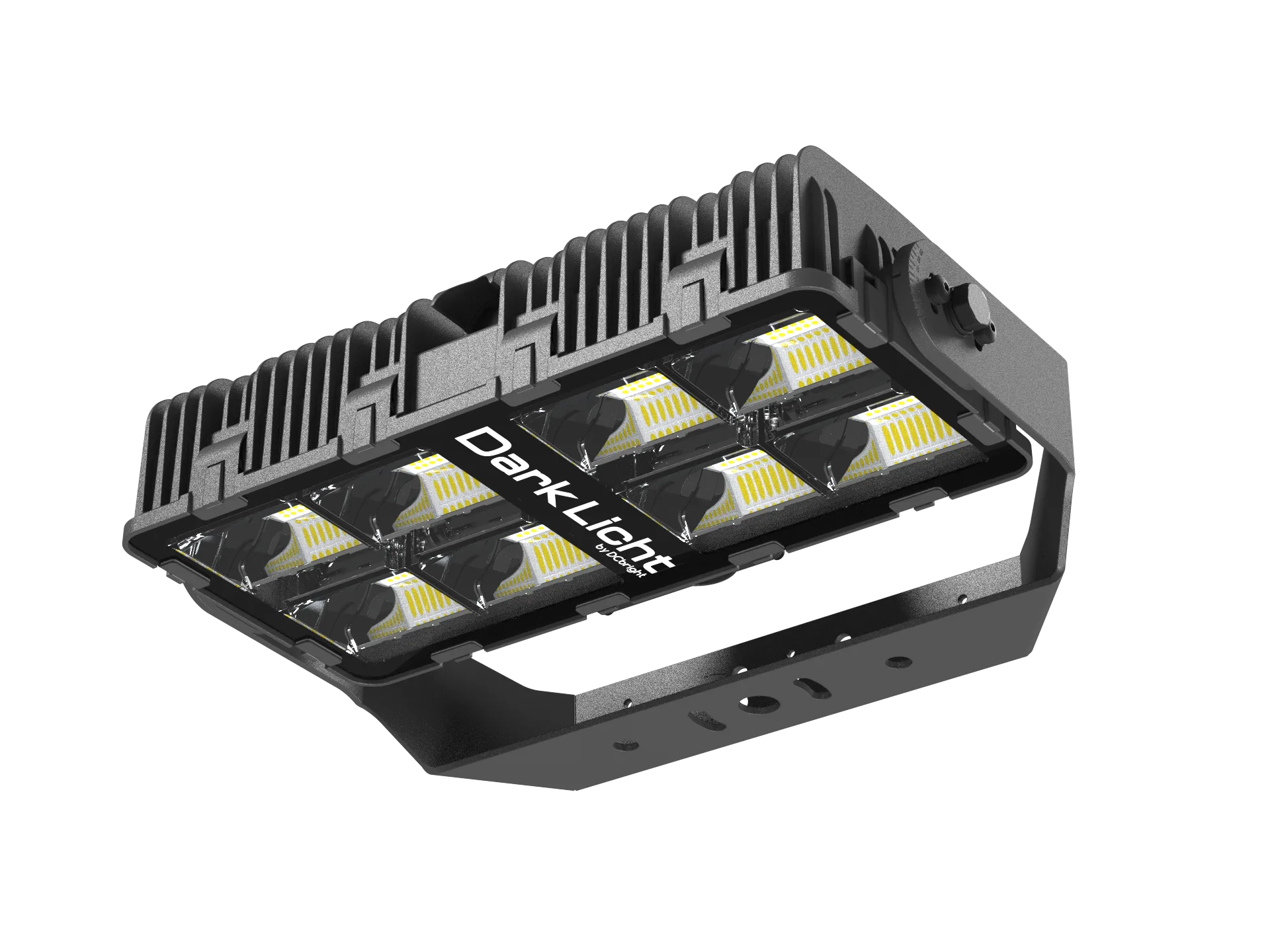
Upgrading luminaires can change wind profile, weight distribution and bracket geometry, making structural verification a normal engineering requirement, not an optional add-on.
A proper approach includes condition assessment, interface checks, load implications of new equipment and a documented acceptance path: re-use, reinforce, or replace. This reduces structural risk and supports predictable lifecycle performance.
Corrosion & maintenance strategy
Marine exposure defines lifetime. Material selection, coatings, sealing strategy and inspection planning are essential for predictable performance and minimal downtime in port environments.
Marine corrosion resistance and coating strategy
Sealing performance under cleaning cycles (IP requirements)
Maintenance planning aligned with service windows
Read more
Ports and terminals operate in aggressive environments: salt-laden air, wind-driven moisture and frequent cleaning. These factors affect housings, fasteners, brackets and enclosures. Engineering must align materials and coatings with exposure zones (quay vs yard vs crane structures) and prevent water trapping, crevice corrosion and premature degradation.
Because access is expensive and maintenance windows are limited, the design should support predictable inspection intervals and modular replacement where it reduces downtime and risk. The objective is stable operation across the asset lifecycle not short-term performance only.
What We Offer
Assets within Ports & Terminals
Explore the key terminal assets where lighting performance, integration and lifecycle strategy typically differ.
Technik
Integration
Operations
Terminal yard lighting
High-mast and area lighting designed for large terminal surfaces with changing obstacles (container stacks, equipment) and strict operational uptime. Focus on uniformity, glare control, corrosion resistance and lifecycle maintenance planning.
High-mast layout & zoning
glare control
structural verification
control strategy
Integration
STS cranes
Lighting integration for ship-to-shore cranes, aligned with operator sightlines and ship-side operations. Engineered to minimize glare, handle vibration and exposure, and support safe work areas under the boom and spreader.
Cabin glare control
boom lighting
luminaire integration
access strategy
Marine exposure & vibration resilience
Integration
RTG / RMG cranes
Lighting for rubber-tyred and rail-mounted gantry cranes operating above container lanes and yard blocks. Designed for consistent visibility between stacks, reduced operator glare, and reliable performance under frequent movement and vibration.
Crane-mounted lighting
yard interface
shadow control
vibration resistance
Operations
Reefer areas
Stable, low-glare illumination for dense reefer blocks with high infrastructure density, cable trays and frequent inspections. Built for safe visibility, easy maintenance access and long-term corrosion resistance.
Task lighting
access routes
maintenance visibility
controlled spill light
Operations
Heavy lift zones
High-contrast, controlled lighting for critical lifting and transport operations with variable load paths and temporary staging. Engineered to reduce shadowing, support safe signalling and maintain visibility during peak operations.
Large-area coverage
mobile equipment visibility
lifting zone recognition & illuminance
Wartung
Maintenance & workshop facilities
Task-focused lighting for repair bays, inspection areas and service routes where accuracy and safety matter. Designed around vertical illuminance, reduced glare and predictable maintenance cycles.
Work lighting
linear lighting
access lighting
inspection-friendly design
Solution layers for terminal environments
Terminal lighting projects rarely depend on one luminaire type only. Yard lighting, crane lighting, mast structures, controls and maintenance access must work together as one system.
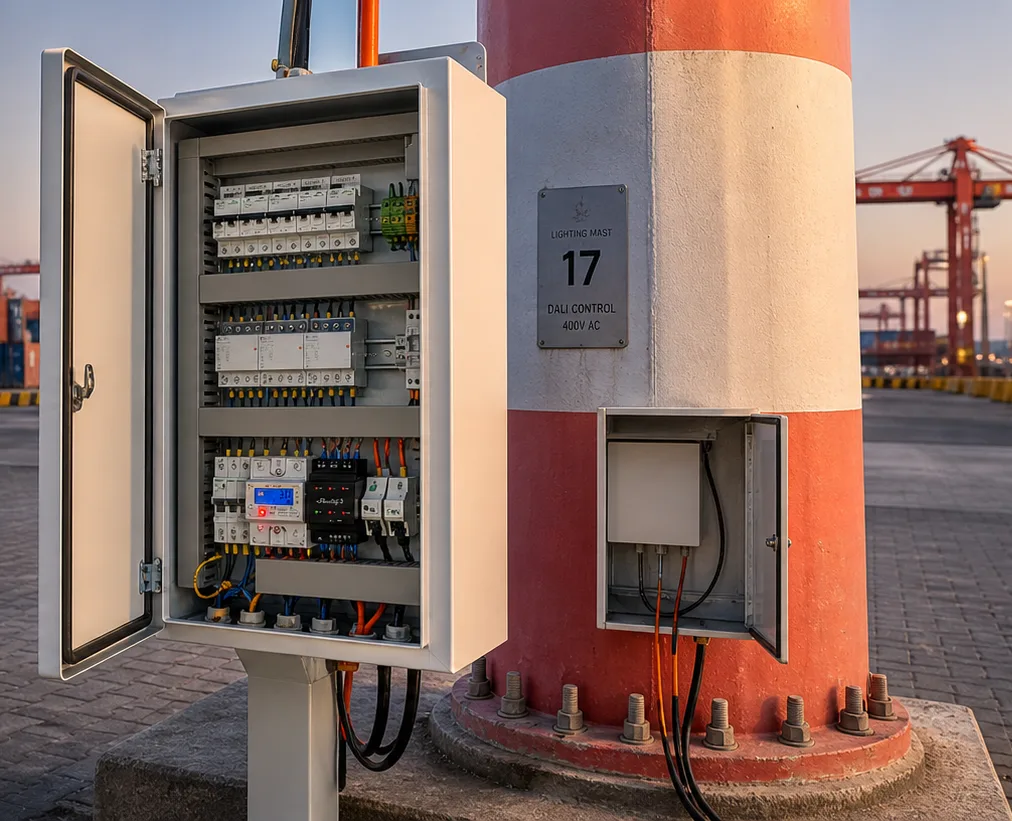
For terminals requiring switching zones, dimming, energy reduction, operational control or phased lighting strategies.
Typical scope: control cabinets, switching groups, DALI or LORA communication, driver placement and integration with site infrastructure.
Reference Projects
BUSS Terminal
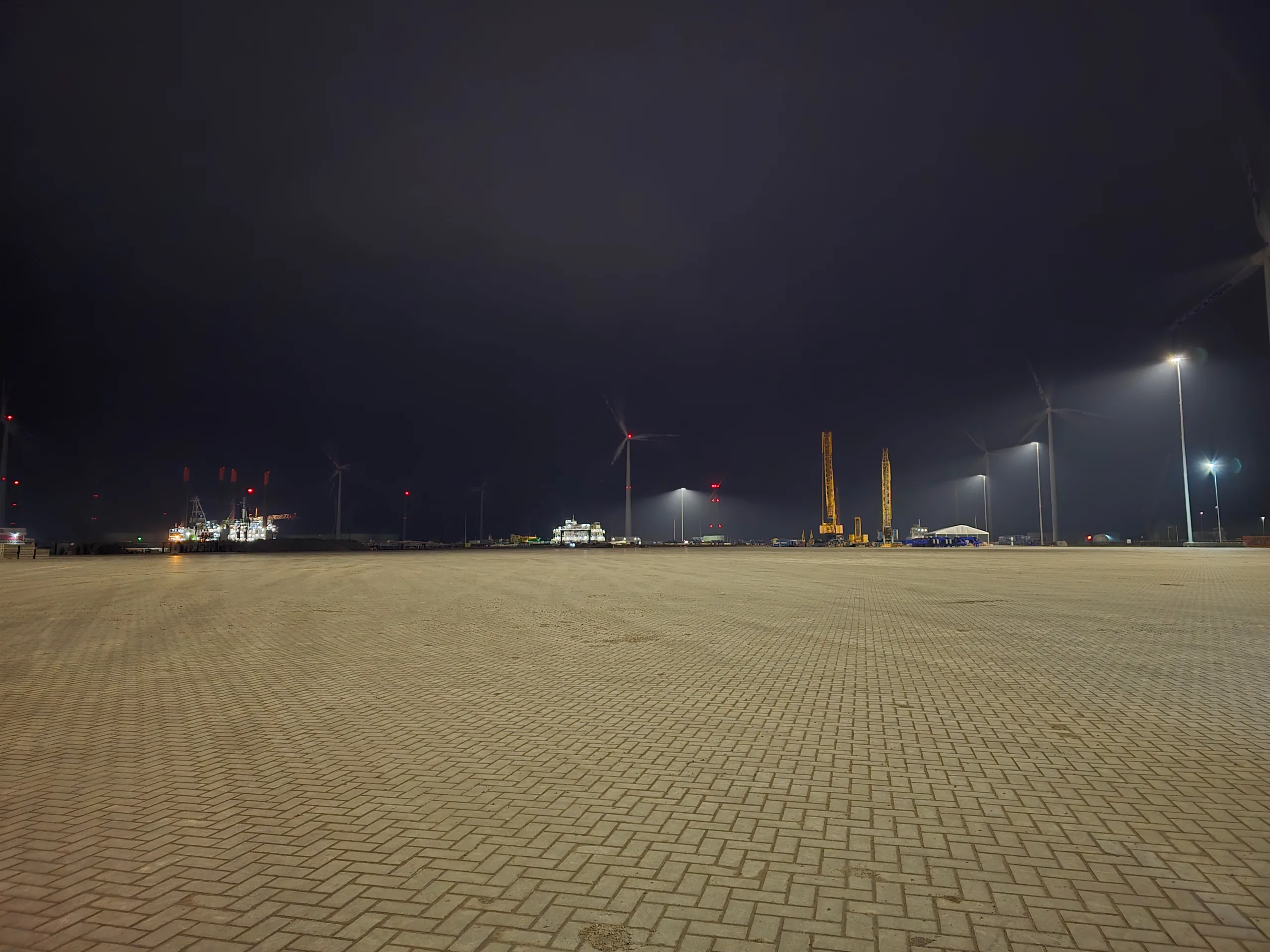
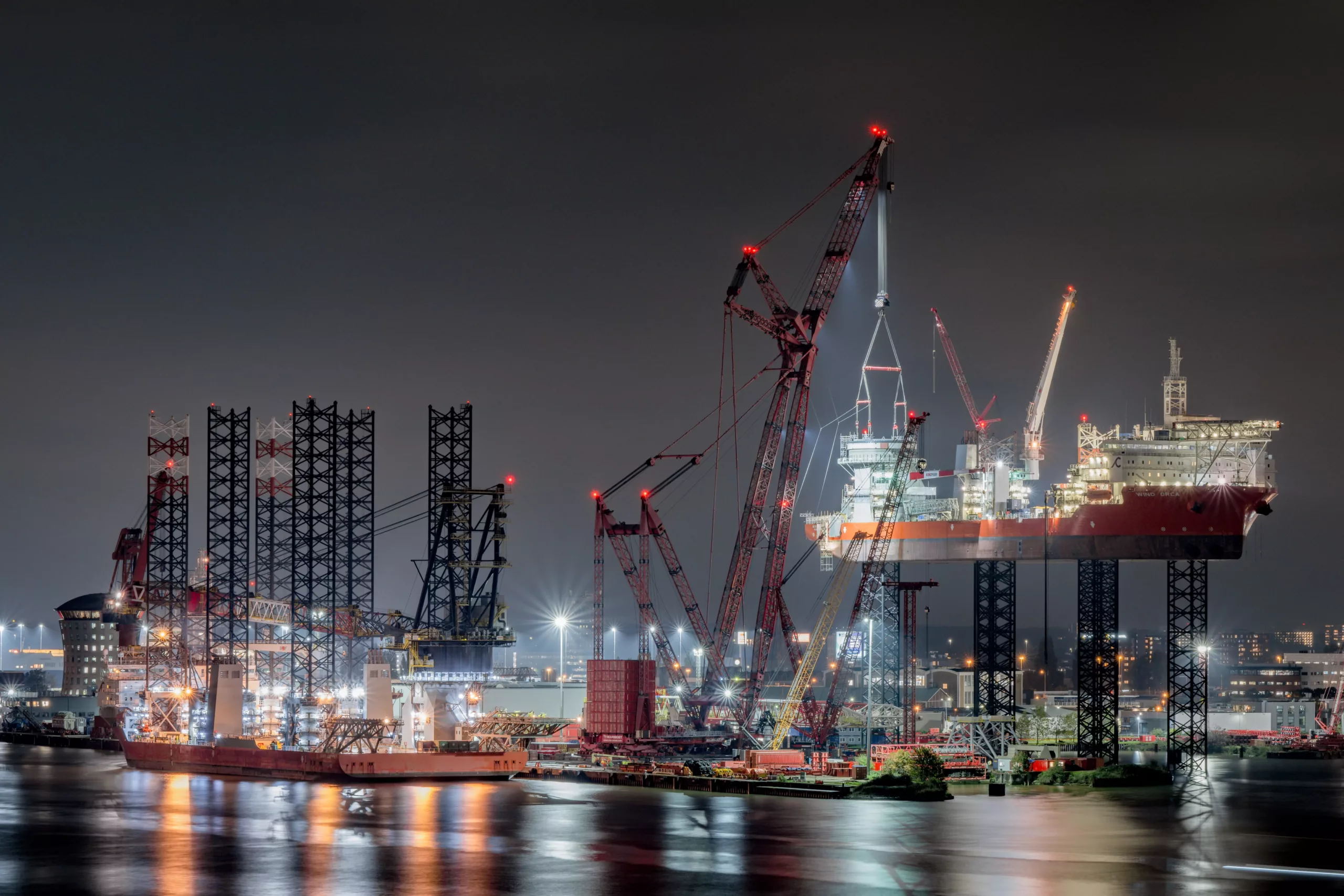
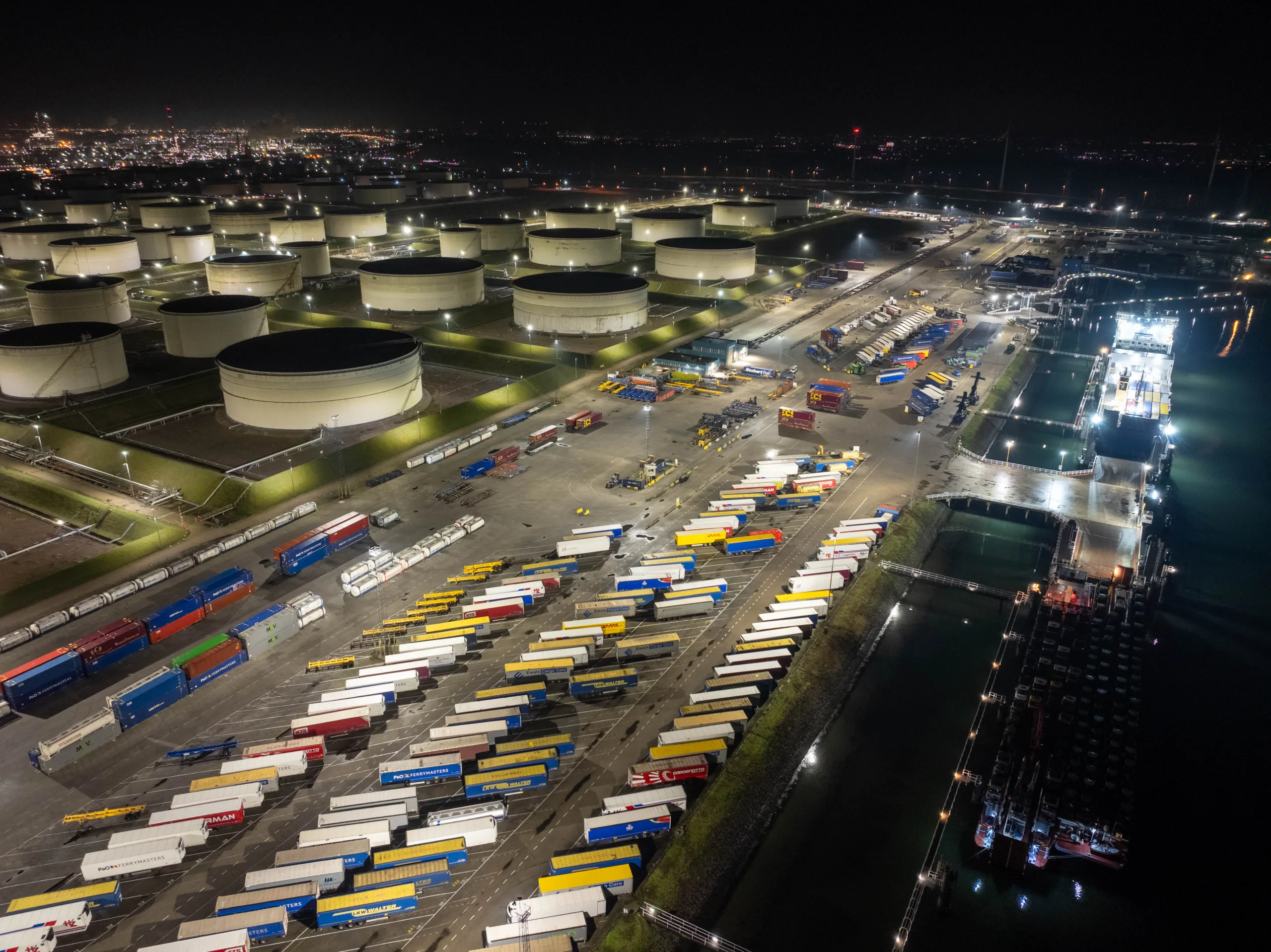
Terminal lighting project with 50 metre masts, engineering preparation, site coordination, installation support and commissioning for a large offshore wind staging environment.
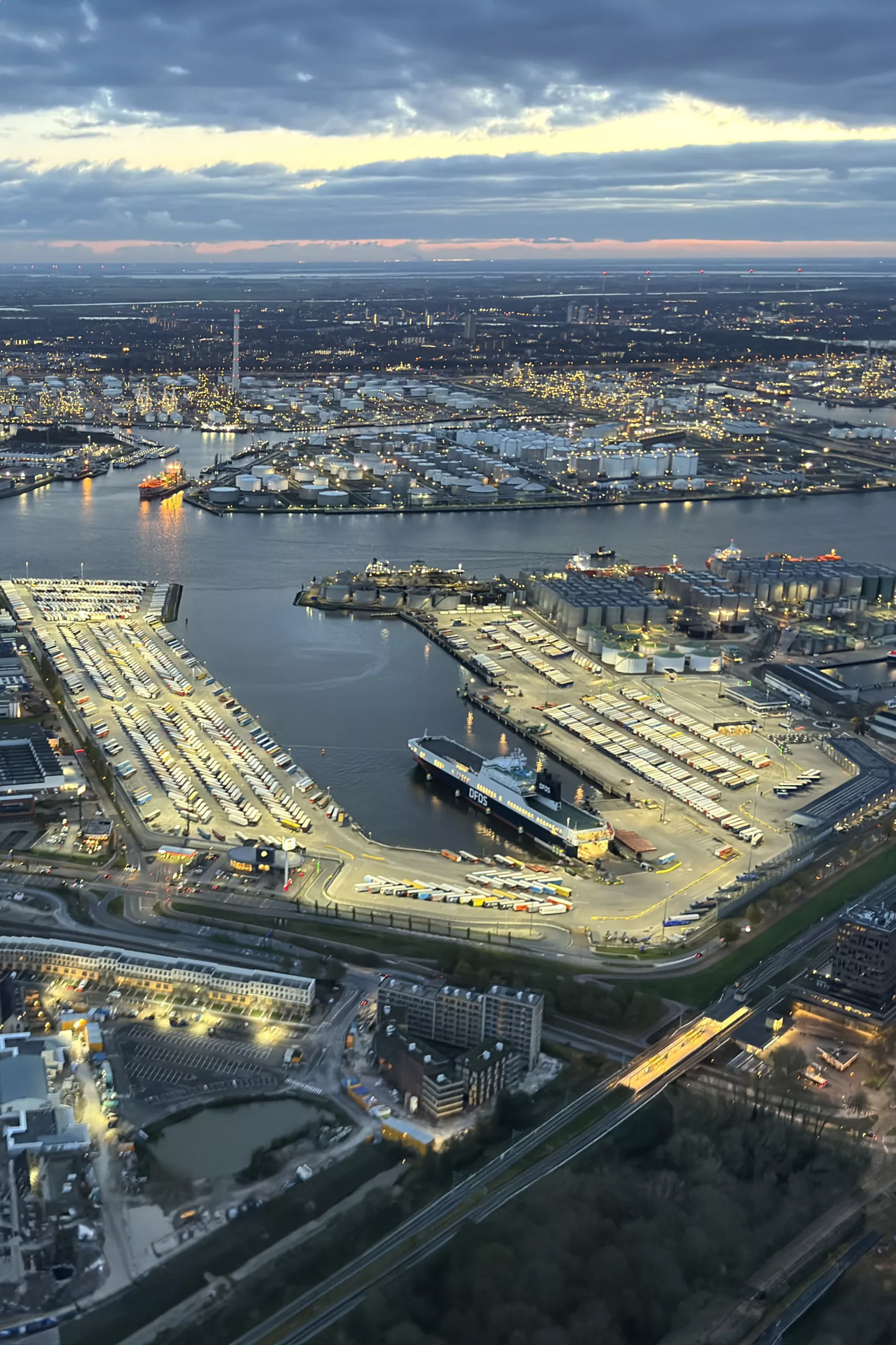
Terminal lighting design and optimisation for a ferry and logistics environment where large-area visibility, glare control and operational continuity are essential.
“We partnered with JEL Products for our outdoor lighting at DFDS. In our experience, JEL has a solid understanding of the day-to-day operations of a terminal and is technically skilled at developing suitable solutions.”
Richard K.General Manager | DFDS Seaways
"They were fantastic to work with, we really ended up with a high-quality solution for our terminal. I would definitely recommend them to others in the industry."
Jesse M.Project Manager | BUSS Terminal Eemshaven
"JEL Products helped us achieve a 53% reduction in energy consumption while significantly improving visibility at the DFDS terminal in Vlaardingen."
Leon C.Port Manager - P&O Ferries
a selection of our valued clients
Discuss your terminal environment with our engineering team
We support industrial operators, contractors and engineering firms in defining lighting systems that fit their full operational context.
Discuss your terminal environment with our engineering team
We use your information solely to review your request and respond to it appropriately.
Frequently asked questions
What makes terminal lighting different from regular outdoor lighting?
Terminal lighting must account for moving cranes, changing container stacks, high wind loads, corrosion, glare, wet surfaces, heavy vehicles and limited maintenance windows.
Which areas of a terminal need different lighting strategies?
Yards, cranes, reefer zones, heavy lift areas, access roads, maintenance zones and technical infrastructure each require a different lighting approach.
Why is glare control important in ports and terminals?
Glare affects crane operators, truck drivers and ground personnel. Poor glare control can reduce visibility, comfort and safety during night operations.
Are high masts always the best solution?
No, high masts are often effective for large yards, but crane-mounted lighting, facade lighting, mobile lighting or lower mounting positions may be better in specific zones.
Can existing terminal lighting be upgraded?
Yes. Retrofit projects often require inspection of existing masts, brackets, cabling, corrosion status, loads and lighting performance before selecting new luminaires.
Which standards are relevant?
Terminal lighting is commonly assessed against outdoor workplace lighting requirements, project-specific safety requirements, glare criteria and local light pollution restrictions.