
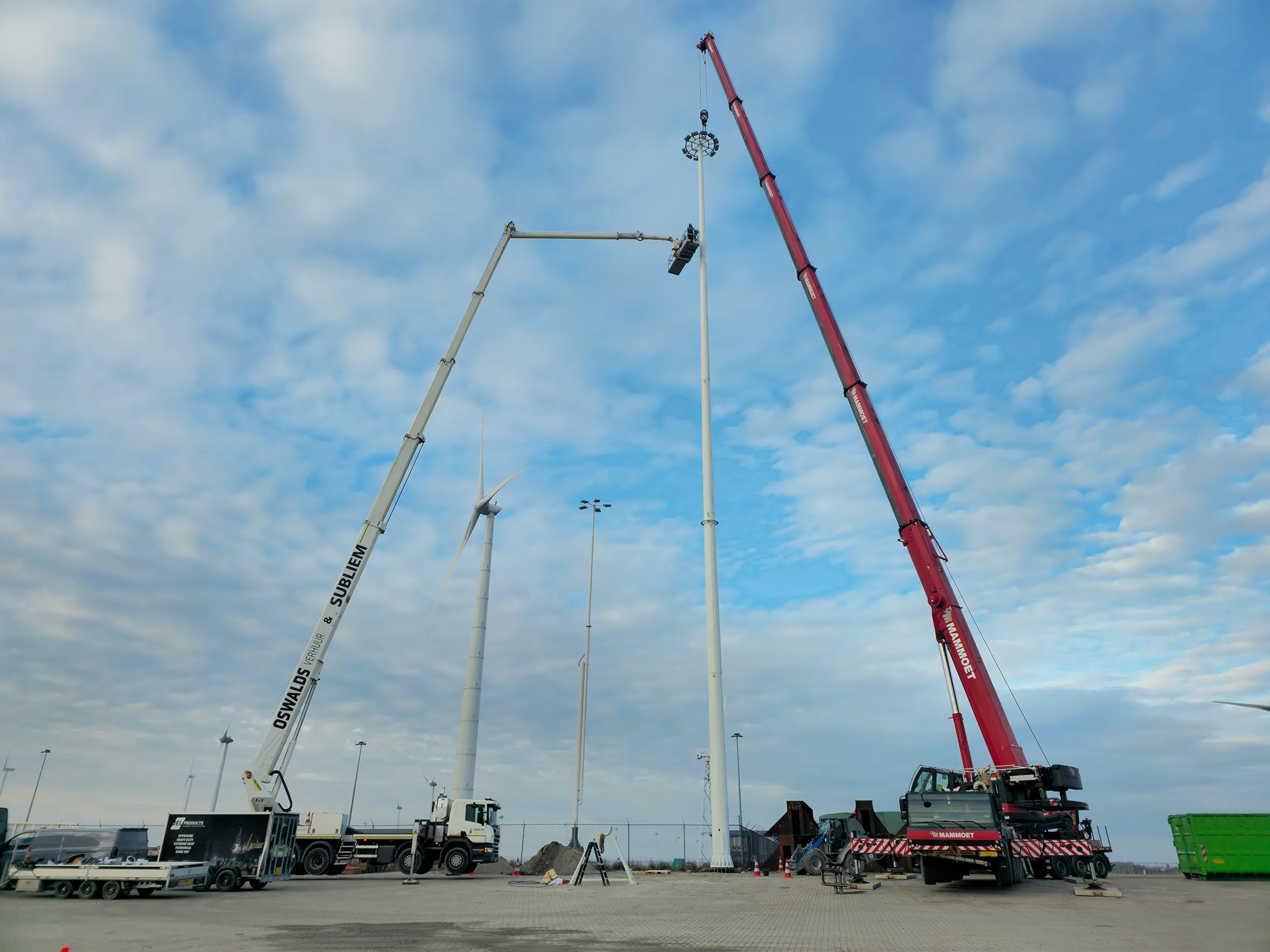
That sounds self-evident and it is not. Usually, one party makes a lighting calculation and the other hangs the luminaires, with an aiming angle that was on the drawing and turns out differently on the mast. With us, our own VCA-certified fitters and the engineering team work with the same final design.
Turnkey installation and maintenance for sites, terminals, cranes, and on-board installations. From inventory and lighting calculations to verification measurements upon delivery and periodic inspections in the years that follow.
You can purchase them separately. In practice, they blend into one another: whoever installed the system knows where to look in the event of a malfunction, and at a terminal that saves half a night. We also take over maintenance of systems that we did not install ourselves.
Complete installation of industrial lighting systems by our own VCA-certified technicians, from inventory to verification measurement. Including control: dimming regime, switching times and, if necessary, emergency lighting.
Periodic inspection that keeps the system up to standard and prevents downtime. By contract or on demand, and also for systems that we did not install ourselves.
Outages rarely come at a convenient time. In the event of a malfunction, short, pre-agreed response times apply so that your operation is disrupted as little as possible.
This is the sequence we follow for every project, whether it concerns a new installation or taking over an existing one. The reason there are seven steps instead of three: between the initial sketch and the installation, there are decisions that are expensive to reverse afterwards.
Do you install yourself, as an installer or an installing hall builder? Then you can register a project with us and receive the project advantage on it for six months. See the page for installers.
A thorough analysis of your situation, requirements, and working conditions, whether it concerns a new installation or taking over an existing one. We assess the current lighting, measure light levels and uniformity on-site, and identify the condition, risks, and savings opportunities, along with applicable standards such as NEN-EN 12464 and the operational requirements of your environment.
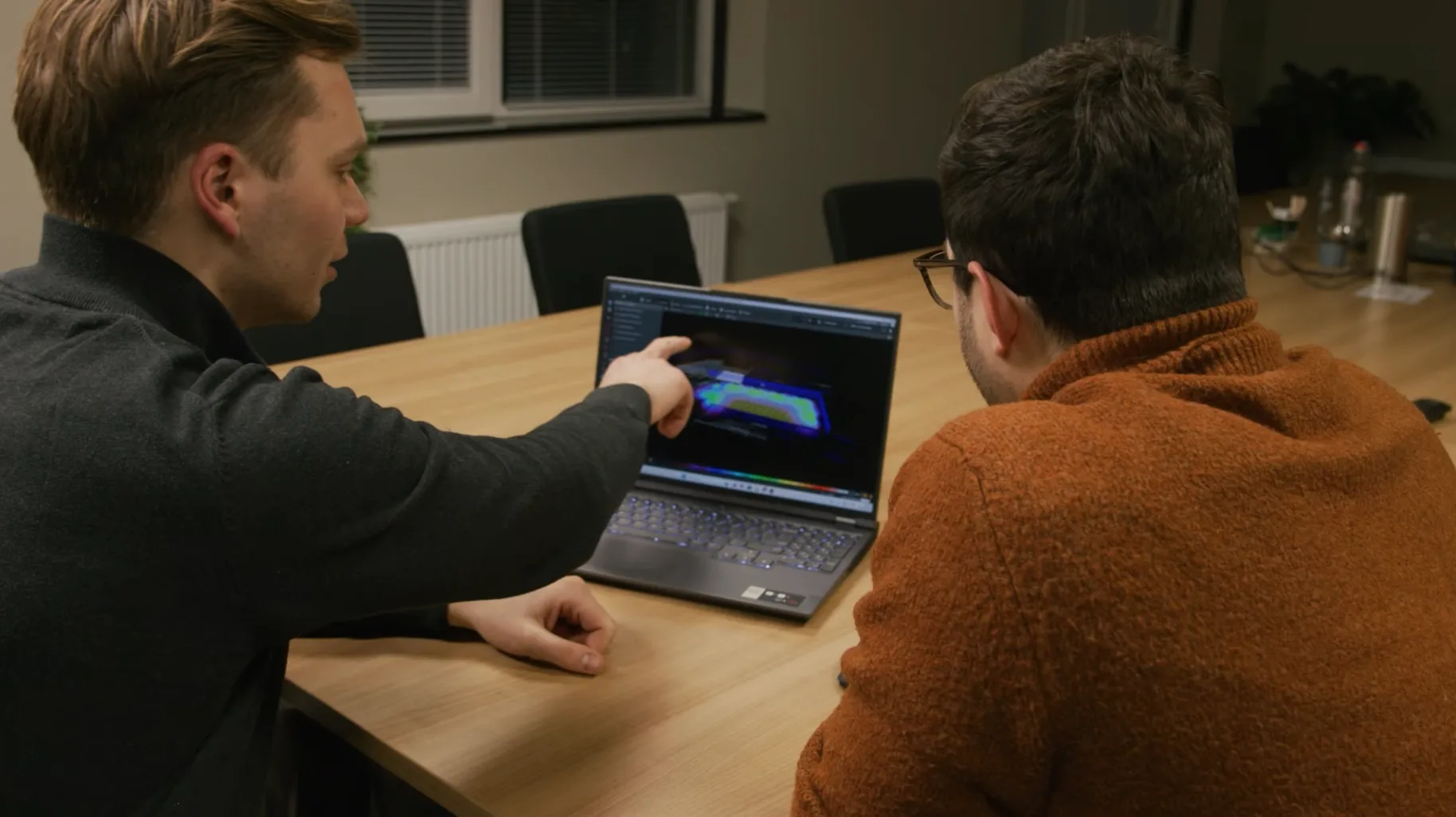
A custom plan for both installation and maintenance. For new or modified installations, we use professional lighting calculations and 3D simulations in software such as DIALux to determine the correct luminaires, positions, and light distribution; for existing installations, we establish what needs to be replaced, improved, or periodically maintained.
Before we start construction, we work out the project in detail: assembly plan, schedule, and material list, tailored to your operational processes, and a site visit where necessary. Accessibility, working at height, connections, and the required safety measures are determined in advance.
The design is finalized: exact luminaires, installation details, mounting method, cabling, and any control systems or emergency lighting. Only after your approval will we begin the installation.
Our in-house SCC-certified technicians handle the complete on-site installation: placement, assembly, alignment, and connection according to the final design and applicable standards. Safe, clean, and with minimal disruption to your business operations, even in demanding industrial, maritime, and outdoor environments.
After installation, we check and test the complete setup. We measure the achieved light levels and uniformity, verify them against the design and standards, and test the operation of control and safety functions.
We remain involved even after delivery. Through periodic inspection and preventive maintenance, we keep the system reliable and efficient throughout its entire lifecycle: identifying wear and tear in a timely manner, resolving malfunctions quickly, and making adjustments based on usage and changing requirements.
Two steps are design, and that is intentional. Only after your approval of the final design will someone go up the mast. This way you know exactly what is being installed, with which mounting and which cabling.
The lighting design itself is by lighting advice and lighting calculationIf your situation calls for a luminaire that does not yet exist, it starts with engineering and custom work.
An installation is only truly valuable if it continues to perform reliably year after year. That is why we also take care of the maintenance, whether we installed the system ourselves or are taking it over from a third party. You choose what suits you best: a fixed contract with periodic inspections, or on-call maintenance.
In the event of a malfunction, short, pre-agreed response times apply. Our in-house VCA-certified technicians resolve the issue efficiently, keeping your operations to a minimum downtime.
Choose a fixed maintenance contract with periodic inspections and complete peace of mind, or call us in whenever it suits you. In both cases with clear agreements and transparent reporting.
With scheduled inspections, we identify wear and risks before they cause downtime. This extends the lifespan of the installation and keeps consumption and performance at an optimal level.
Maintenance of LED lighting is not about replacing bulbs; those last hundreds of thousands of hours. It is about everything surrounding them: the mounting that can come loose after years of vibration, the cable entry where moisture gets in, the glass that gets dirty and costs luminous flux, and the direction that is no longer correct after a collision.
You simply don't see those things from the ground. That is why an inspection follows a fixed checklist and you receive a report detailing what has been done and what is coming up.
On a mast or crane, it is not the labor but the equipment that is the major expense: every intervention requires a cherry picker and often a cordoned-off zone. A single planned inspection where everything is checked at once is cheaper than three separate breakdown visits, and that difference grows with height.
How often an inspection is needed depends on the environment: a terminal exposed to sea breezes gets dirty faster than a covered hall, and a crane that is assembled and disassembled daily requires attention more often than a fixed mast. We propose the interval per installation and record it in the contract.
Engineering, infrastructure and installation of masts up to 50 meters, on a transshipment terminal that operates 24 hours a day and is located next to a UNESCO area. The footage shows what planning on paper cannot convey: how such a project is executed amidst ongoing operations.
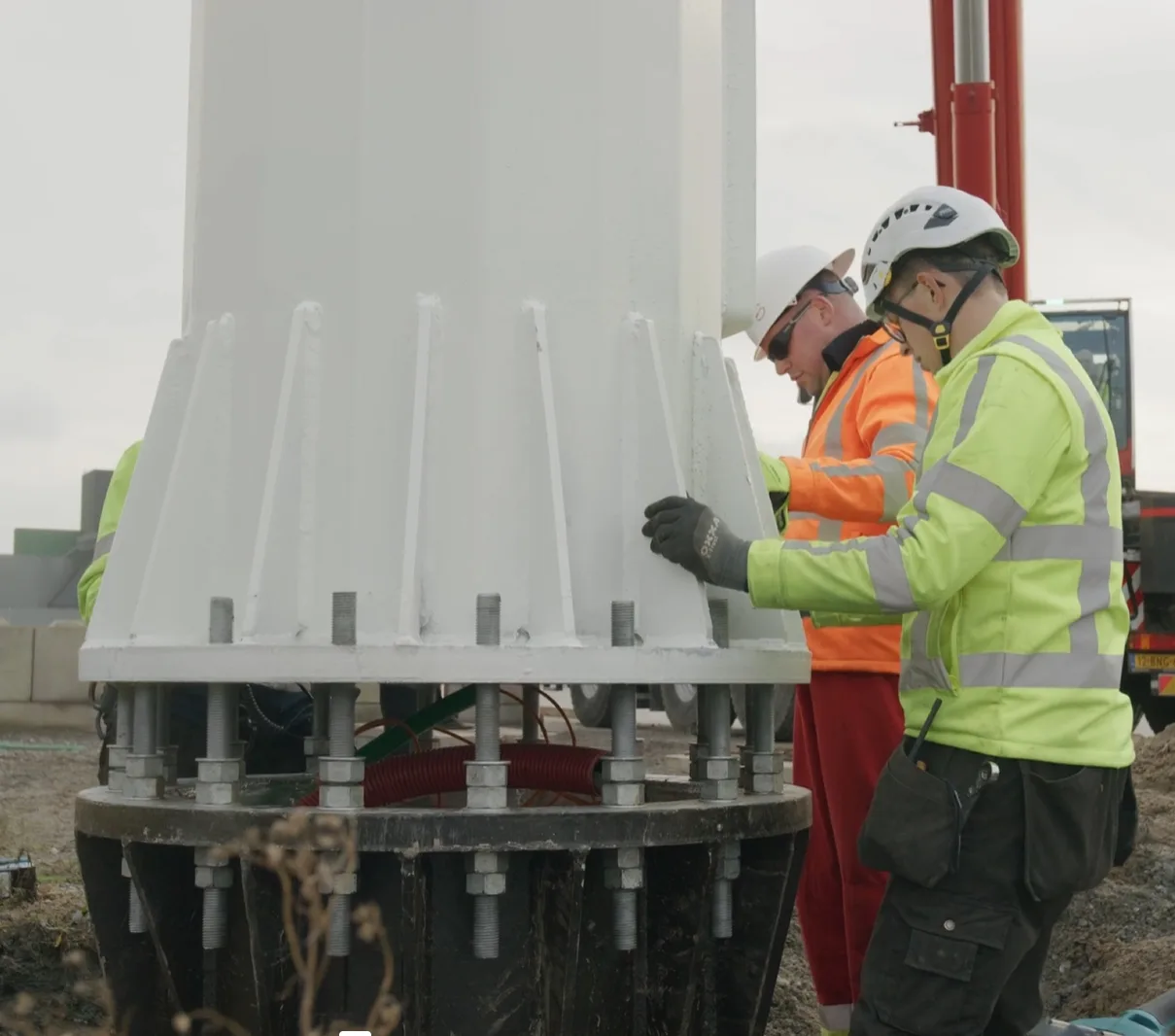
A complete lighting system for a large-scale transshipment yard: engineering, infrastructure, and installation of masts up to 50 meters. Realized for 24/7 operations in a demanding port environment.

A previous LED installation with sports luminaires did not suffice at the port. We designed and delivered a new solution with sharply directed DarkLicht luminaires on thirty new mast structures, approximately 66 percent lower consumption, delivered in two weeks on a continuously operational terminal.

Modernized in two phases: new installation in 2021 and a complete LED upgrade in 2023, resulting in 53 percent less energy consumption. Implemented in phases due to terminal expansion, without disrupting operations.
Don't take our word for it; ask our customers.
“We partnered with JEL Products on the outdoor lighting for DFDS. In our experience, JEL has a good understanding of the day-to-day operations of a terminal and is technically strong in developing appropriate solutions.”

“The collaboration was excellent. In the end, we were able to implement a high-quality solution for our terminal. I would definitely recommend JEL Products to others in the industry.”

“JEL Products has helped us achieve energy savings of 53 %, while significantly improving visibility at the DFDS terminal in Vlaardingen.”









We work in places where a mistake doesn't just affect us: fifty meters up, above a bustling terminal, on board a ship. Your client or your own HSE department wants to see the paperwork for that, and rightly so.
The safety certification for contractors. Two stars means that not only the execution but also the organization behind it has been assessed: procedures, training courses, and risk management. At a terminal or refinery, this is often an access requirement.
The quality management system, externally audited. Concretely, this means that agreements, changes, and deliveries are documented and that there is a demonstrable trail if something goes wrong.
Our technicians are trained and certified for working at heights, and consult directly with the engineer during execution. As a result, every component is installed correctly right away, in accordance with the final design.
We adhere to the code of conduct for lighting calculations. This means that we state the design assumptions, substantiate the maintenance factor, and do not present values that are only valid on day one.
The certificates can be downloaded as a PDF at quality marks and certificationsWhat is covered under the warranty can be found at quality and warranty.


We ensure that every lighting installation is designed, installed, and maintained with precision, so that performance and lifespan remain consistent. This keeps your terminal, site, and machinery operating safely and efficiently.

We work exclusively with suppliers who share the same principles. DCbright, of which we are the importer, is one of those; this means that in the event of a malfunction, we are not dependent on a supply chain, but have parts and documentation readily available ourselves.
Don't see your question listed? Call us, and we'll walk through your installation in five minutes.
That we handle the entire process: inventory, lighting calculation, work preparation, final design, installation, verification measurement, and subsequent maintenance. You have a single party for both the design and execution, meaning any on-site deviation is resolved on the spot rather than discovered later.
Because between the initial sketch and the installation there are decisions that are expensive to reverse afterwards: the method of attachment, the cabling, the accessibility for maintenance. Two of the seven steps are design, and only after your approval of the final design will someone go up the mast.
Yes, that is step six and it is not a formality. We measure the achieved light levels and uniformity, verify them against the design and the standard, and test the operation of the control and safety functions. You will receive the measurement data upon delivery, so you have in writing that the installation performs as agreed.
Yes, that is possible. We can install according to your lighting plan or create one first. However, we check in advance whether the chosen luminaires and mounting method match the positions; if we think it will not work, we will tell you before anyone climbs the mast.
Yes. We also take over maintenance of third-party installations. We first inspect them: which luminaires, which year of manufacture, which mounting method, and what condition. After that, we know whether it is responsible to take over the maintenance and what needs to be repaired first.
That depends on how critical the installation is. For a terminal that runs 24 hours a day or for positions that are only accessible with an aerial lift, a contract with scheduled inspections is almost always cheaper: you prevent breakdown visits and can schedule the work at a convenient time. For a straightforward installation at eye level, on-call service suffices.
We go through a fixed checklist: fastening and brackets, cable entry and glands, cleaning the front, direction and angle, driver and connection, and spot-checking the light level. Afterwards, you will receive a report detailing what was done, what was repaired, and what will require attention in the foreseeable future.
The LED itself rarely fails: that lasts for hundreds of thousands of hours. But the installation around it does. What actually ruins an LED installation in practice is a bracket shaken loose, a cable gland that lets in moisture, a dirty front that reduces luminous flux, or a beam pointing in the wrong direction after a collision. You cannot see that from the ground.
That depends on the environment. A terminal exposed to sea winds gets dirty faster than a covered hall, and a crane that is assembled and disassembled daily requires attention more often than a fixed mast. We propose the interval per installation and record it in the contract.
That is more the rule than the exception with us. We plan per zone and coordinate when which part can be cordoned off; at P&O Ferries, a terminal with thirty new mast structures was converted in two weeks while transshipment continued; at DFDS, work was done in phases because the terminal was being expanded at the same time.
It is the safety certification for contractors, and the two stars mean that the organization behind it has also been assessed: procedures, training, and risk management. At a terminal, refinery, or chemical company, it is usually an access requirement: without VCA, you won't get through the gate.
Yes, all technicians are trained and certified for this. In this type of work, that is no minor detail: light poles of tens of meters, crane jibs, and ship structures are the usual workplace. If any additional requirements apply at your location, please report them in advance so we can prepare accordingly.
In the event of a malfunction, short, pre-agreed response times apply; we record these in the maintenance contract, because what is fast enough differs per installation. Often, a problem can already be traced back over the phone to a group, a luminaire, or a driver, so that the technician arrives with the right part. If you have an installation from us, we have your lighting plan and the positions on hand.
Yes, that is part of the commissioning. Dimming via 0-10 V or DALI, switching times, twilight switching, integration with a building management system, and emergency lighting if necessary. On a site with fixed operating hours, a night mode is often the simplest way to reduce energy consumption and light nuisance at the same time.
Yes, upon delivery, along with the measurement data from the verification. What is installed, where it is installed, with what settings, and what warranty applies. That is not only useful for you: in the event of a malfunction years later, it is the difference between targeted troubleshooting and checking the entire installation.
Whether it concerns a new installation, maintenance on what is already there, or a malfunction that needs to be resolved today.
Your application will be evaluated by an engineer who will visit the location personally. We support B2B projects in demanding industrial, maritime, and operational environments.