

Een haven staat 24 uur per dag open, ligt in zout en heeft zelden een moment waarop een hoogwerker het terrein op kan. Dat bepaalt het lichtontwerp meer dan het aantal lumen. Wij verlichten kades, stacks, kranen en overslagzones bij Europese haven- en terminalbedrijven, en rekenen elke opstelling door voordat er een armatuur hangt.
C5 tot CX
drie Europese terminals, permanent in de zwaarste corrosieklassen
24/7
in bedrijf, dus levensduur en driverkeuze wegen zwaarder dan aanschafprijs
Tabel 14
van EN 12464-2:2024: de richtwaarden voor kades en ligplaatsen, doorgerekend per zone
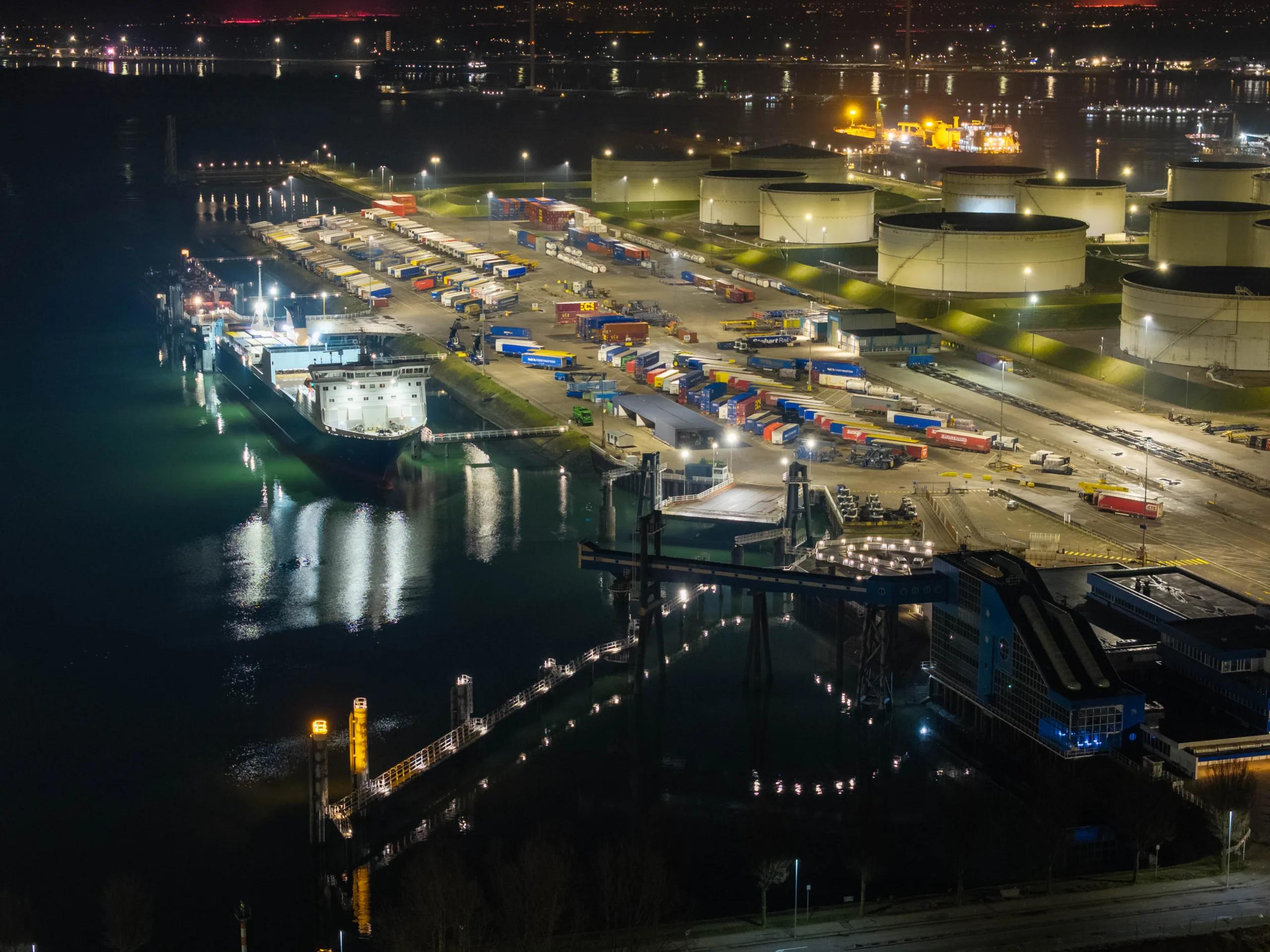
P&O Ferries Europoort: het hele terrein verlicht vanaf hoge masten, in 316L aan de waterzijde
Vijf waarnemingen. Ze gaan niet over verlichting, ze gaan over uw bedrijf. Als u ze herkent, weet u dat wij hier vaker zijn geweest.
| wat wij tegenkomen | wat het u kost | waar het over gaat |
|---|---|---|
| Het terrein draait door, dus de hoogwerker kan alleen tussen twee schepen in het veld | Een defect armatuur blijft maanden hangen, en onderhoud wordt uitgesteld tot het er twee zijn | levensduur en driverkeuze |
| De kraanchauffeur kijkt van bovenaf de bundel in | Hij dimt of schakelt uit, en dan werkt de grondploeg in het donker | verblinding en afscherming |
| Beugels en bouten roesten eerder dan de armaturen zelf | Een armatuur dat nog werkt maar niet meer veilig hangt | materiaalkeuze over de hele bevestiging |
| De gemeente of de omgevingsdienst kijkt mee op de vergunning | Discussie over lichthinder op het moment dat u het terrein wilt uitbreiden | omgevingszone en opwaarts licht |
| De camera's voor kentekens en containernummers lezen 's nachts slechter | Handmatig naregistreren, en fouten in de administratie | flikker en kleurweergave |
In een haven is de beperking zelden lichtstroom. Het zijn de omstandigheden eromheen die bepalen wat er kan hangen, hoe lang het blijft hangen en hoeveel licht er over de erfgrens mag.
| Ontwerpfactor | Wat er hier speelt | Wat het in het ontwerp bepaalt |
|---|---|---|
| Corrosiebelasting | Zout, chloriden en condens, permanent buiten. Corrosiviteitscategorie C5 tot CX volgens ISO 12944-2 | Materiaal van behuizing, beugel en bevestiging, coatingopbouw, massief 316L aan de waterzijde, zoutneveltest volgens ISO 9227 |
| Montagehoogte en mast | Masten van 20 tot 50 meter, onderhoud alleen met hoogwerker of kraan en alleen als het terreindeel uit bedrijf is. Een deel van het terrein is bovendien afgezet, dus niet elke mast is bereikbaar op het moment dat het uitkomt | Bundelkeuze en aantal armaturen per mast, kroon of kantelbare uitvoering, windvang en fundatiebelasting, en de vraag of een mast neerlaatbaar moet zijn |
| Bedrijfstijd | 24 uur per dag, zeven dagen per week, geen onderhoudsvenster | Levensduurkeuze en driverkeuze, want vervangen betekent hier stilstand op het terrein |
| Verblinding op de werkplek | De kraanchauffeur kijkt van bovenaf in het lichtbeeld, de loods en de schipper kijken vanaf het water naar de kade | Verblindingsgrens volgens EN 12464-2:2024, afscherming, richting en plaatsing van de bundel |
| Lichthinder naar de omgeving | Vaarwater, woonkern of natuurgebied naast het terrein, en vergunningvoorwaarden die daarop sturen | Omgevingszone E0 tot E4 met de grenswaarden uit tabel 4 van EN 12464-2:2024 en CIE 150, nationaal aangevuld met de NSVV Richtlijn Lichthinder 2020 en het addendum kleurtemperatuur 2026. Daaruit volgen opwaarts lichtpercentage, lichtsterkte per armatuur en de waarden voor en na de avondklok |
| Camerabeeld | OCR-portalen, kentekenherkenning, CCTV en kraancamera's werken op hetzelfde licht | Flikkerarm licht en voldoende kleurweergave voor herkenning |
| Voeding en kabeltracé | Lange tracés over het terrein, groepen per mastrij, aanloopstroom bij inschakelen | Kabeldoorsnede, spanningsval en beveiliging berekend volgens NEN 1010 (NEN-EN-IEC 60364), met deel 5-52 voor kabelkeuze en spanningsval. Daaruit volgen ook driverlocatie en groepsindeling |
De richtwaarden per deelgebied staan niet op deze pagina. Kades en ligplaatsen vallen onder tabel 14 van EN 12464-2:2024 en beginnen bij 10 lux, overslag en laden en lossen bij 30 lux, en op het terrein daarachter gelden andere waarden. Welke waarde waar geldt en hoe wij daarop rekenen, staat op de pagina die daarover gaat.
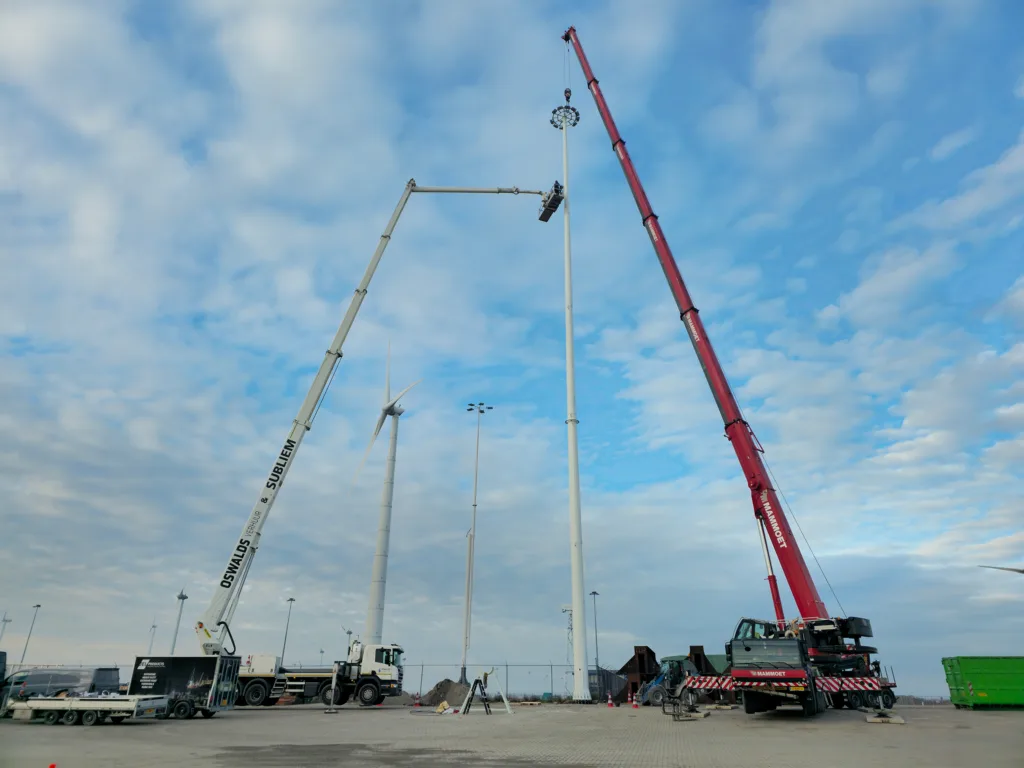 Eemshaven · containerterminalBUSS Terminal EemshavenTerreinverlichting op 50 meter hoge masten, in 316L aan de waterzijde.Bekijk het project →
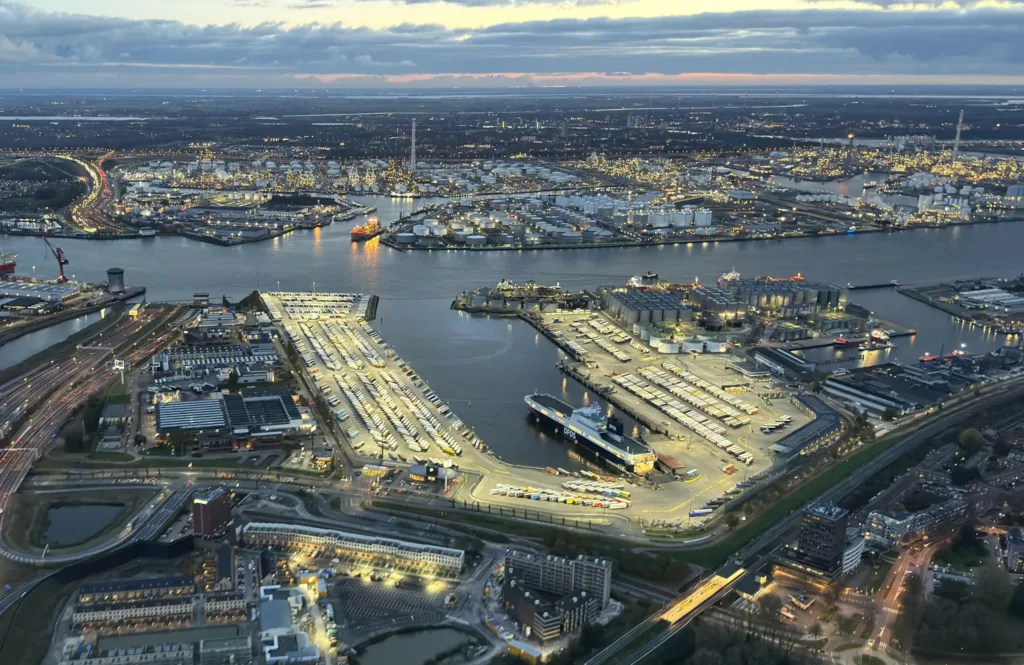 Vlaardingen · ferryterminalDFDS Seaways VlaardingenKade, opstelterrein en toegang verlicht met een lichtmeting als bewijs.Bekijk het project →
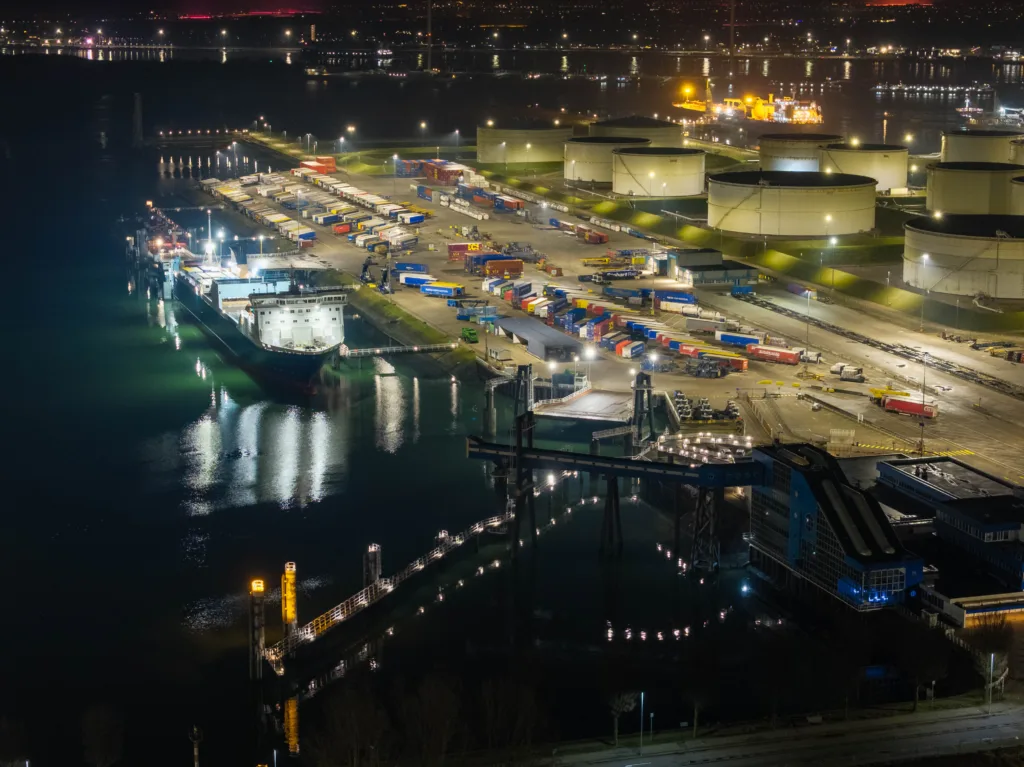 Europoort · ferryterminalP&O Ferries EuropoortHet complete terrein in één lichtontwerp, met de 316L-lijn op de natte posities.Bekijk het project →


STAP 1
Opname en lichtberekening
STAP 2
Engineering en maatwerk
STAP 3
Levering uit Nijkerk
STAP 4
Begeleiding bij installatie
STAP 5
Onderhoud en garantie
Zelf kijken: datasheets en lichtbestanden · handleidingen · garantie en kwaliteit
Achtergrond: IP- en IK-waarde en lichthinder
Standaarduitvoeringen komen uit Nijkerk en gaan snel; projectconfiguraties in overleg.
Vijf jaar compleet, en tot twintig jaar op een 316L-behuizing.
Wij leveren ontwerp, armaturen en begeleiding; het montagewerk gebeurt door uw eigen dienst of uw installateur.
Ja, in overleg met de betreffende terminal.
Nee, op dit moment niet.
Stuur ons de omvang van het terrein, wat er ’s nachts gebeurt en wat er naast ligt. U krijgt een lichtberekening met de richtwaarden per zone en een opstelling die u kunt overleggen.
| Reactie | binnen 1 werkdag, door een engineer |
| Lichtberekening | kosteloos, per zone |
| Proefarmatuur | op uw eigen mast, op verzoek |
| Garantie | 5 jaar compleet, 10 jaar op de behuizing met onderhoudscontract |
Liever direct bellen: 033 785 9809