

Ports and terminals operate 24/7 across large areas, subject to high wind loads, marine corrosion, and constantly changing obstacles. JEL Products develops lighting systems that integrate terminal areas, cranes, and maintenance strategies into a single, operationally reliable solution.
Terminal lighting isn't just about lux values alone. Container stacks, moving cranes, vehicles, wet surfaces, and temporary storage zones constantly change the visibility conditions on site.
A robust lighting design must support daily operations, limit glare, reduce maintenance disruptions, and remain reliable under the influence of wind, salt, rain, vibration, and continuous use.
Typical challenges
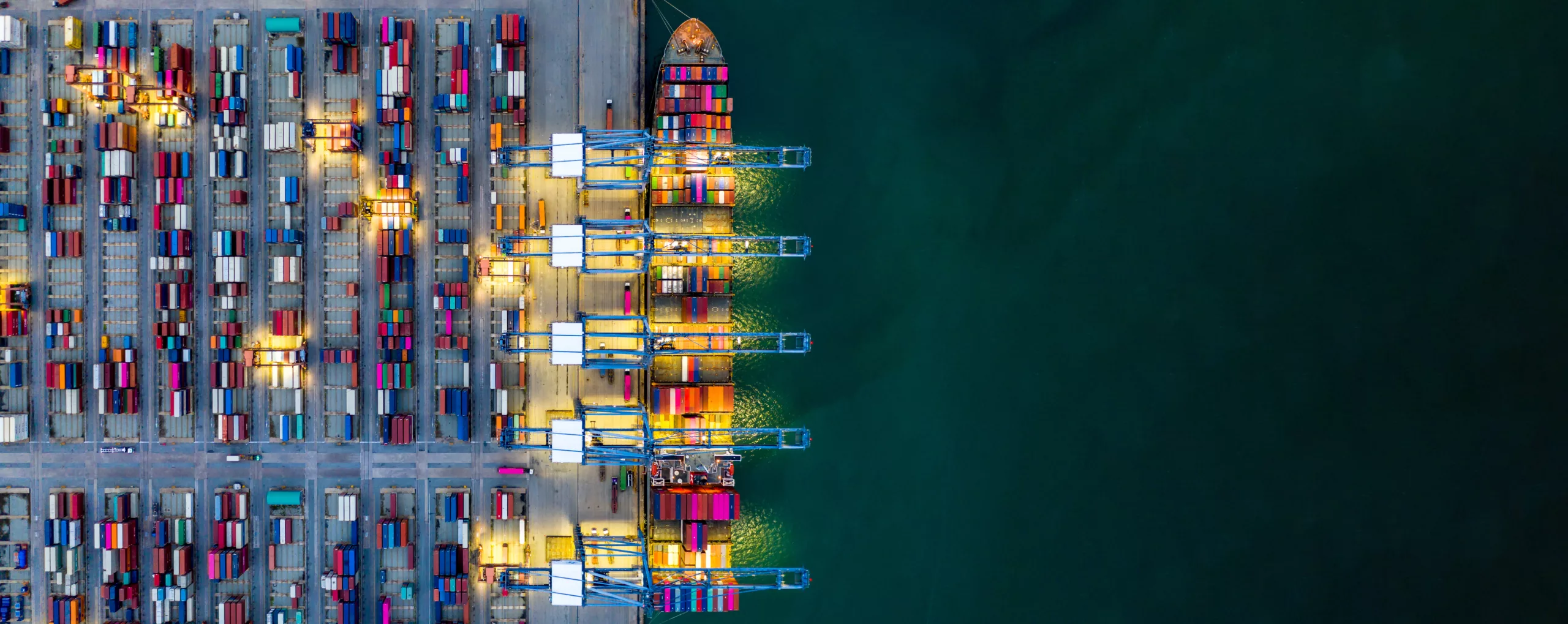
JEL Products designs and supplies industrial lighting systems for ports, container terminals, bulk terminals, ferry terminals, offshore staging areas, and heavy-lift operations.
Terminal areas, STS cranes, RTG and RMG cranes, reefer zones, heavy-lift zones, access roads, and maintenance zones.
Lighting design, mast layout, glare control, structural verification, luminaire selection, controls, installation support, and maintenance strategy.
Marine corrosion, high wind load, vibrations, wet surfaces, changing obstacles, limited access, and strict reliability requirements.
Terminal operators, EPC contractors, engineering teams, asset owners, maintenance teams, and contractors working on new installations, retrofits, or upgrades of existing lighting systems.
Residential lighting, decorative outdoor lighting, webshop replacements, or projects where only the lowest initial purchase price is the deciding factor.
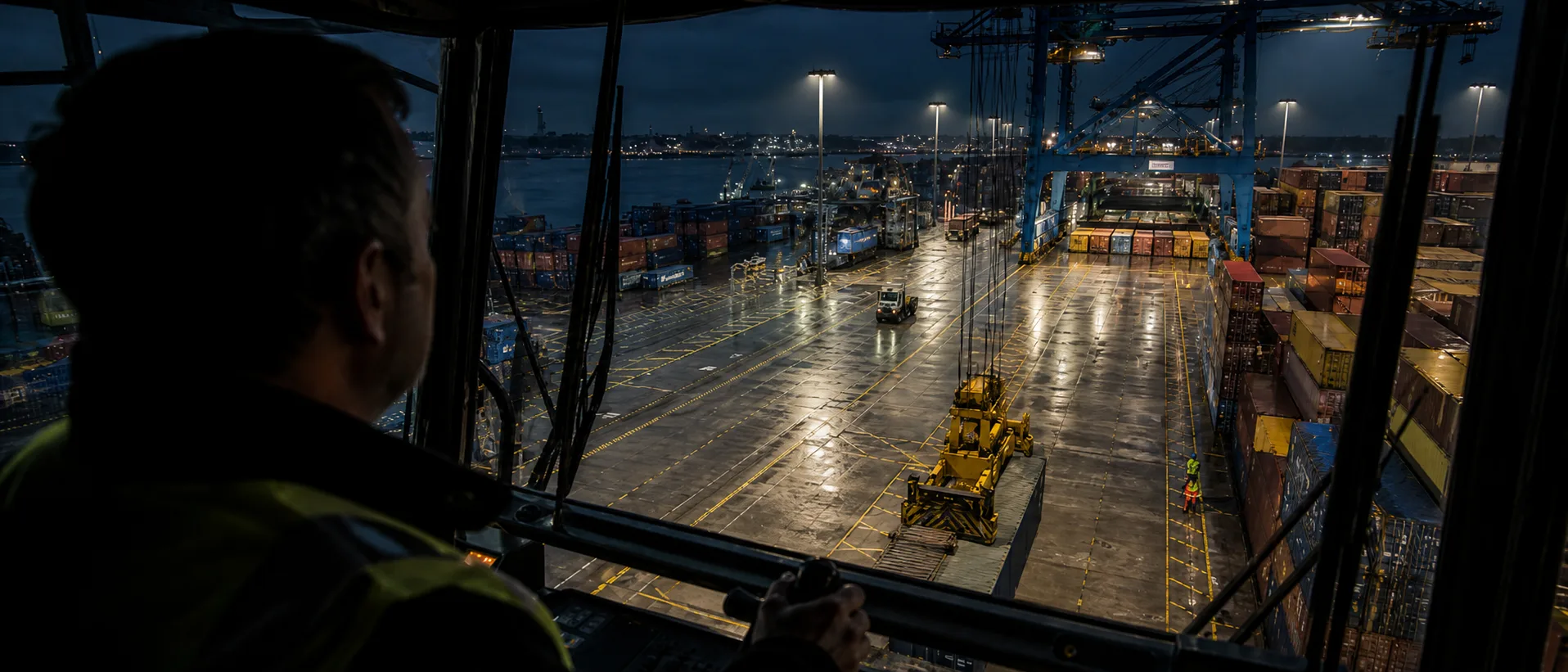
Safe terminal operations require controlled glare and stable visibility for crane operators and ground personnel. Optical planning must protect sightlines from crane cabs while maintaining functional lighting in the work area.
Glare is a functional risk at terminals. Operators work with long sightlines, reflective surfaces such as wet road surfaces, container walls, and reflections from ship sides, and frequent visual transitions between light and dark areas.
Technical glare control requires targeted light distribution, thoughtful aiming angles, cut-off management, and zone-specific placement. This protects crane cabins without inadequately illuminating the work area below.
In practice, a terminal can meet the required lux values and still feel unsafe when glare forces operators to adjust their posture, work slower, or rely on local lighting.

The geometry of a terminal changes daily. Containers, cranes, and parked equipment create shadow lines and sight gaps. Designs must therefore consider obstacle patterns and vertical illuminance, not just horizontal values on a calculation grid.
Many landscape designs focus heavily on horizontal illuminance. At terminals, however, visibility often depends on vertical components: recognizing edges, lanes, markings, twistlocks, and moving assets.
Container stacks act as temporary walls. This creates light corridors and dead zones that are not always visible in simplified calculations. A resilient layout takes into account worst-case stacking patterns, critical routes, and operational hotspots.
The goal is not maximum light everywhere, but stable functional visibility under changing conditions and varying obstacle configurations.
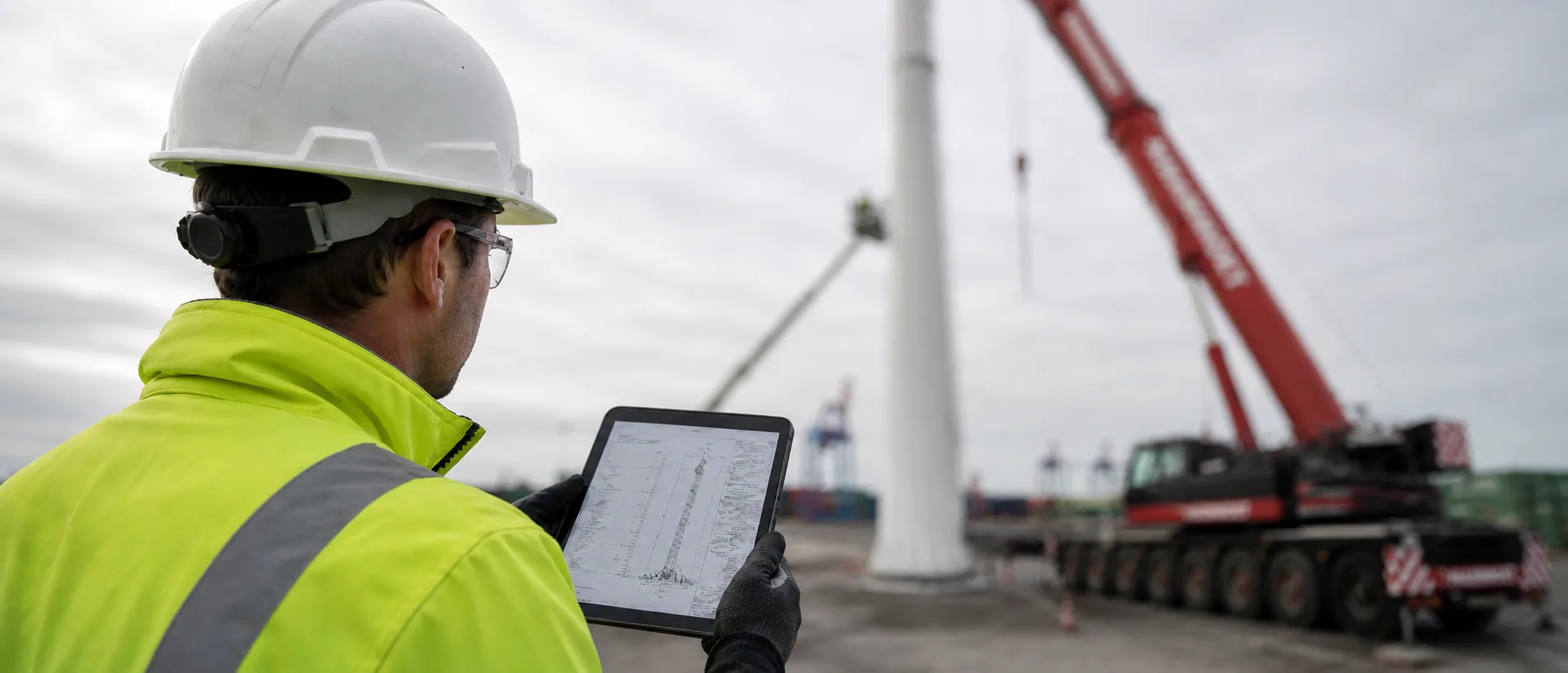
High-mast lighting is as much a matter of structural engineering as it is of lighting technology. New installations and retrofits require load control, corrosion assessment, and interface verification, especially when existing masts are fitted with new luminaires.
Terminal terrain is often dependent on high masts that function under considerable wind load. In retrofit projects, the risks increase: existing masts may have an unknown history, corrosion may have progressed, and previous modifications are not always well-documented.
Replacing or upgrading fixtures can alter the wind profile, weight distribution, and bracket geometry. Structural verification is therefore a normal engineering requirement, not an optional extra.
A correct approach includes condition assessment, interface inspection, analysis of the load from new equipment, and a documented acceptance path: reuse, reinforce, or replace. This reduces structural risks and supports predictable lifespan behavior.
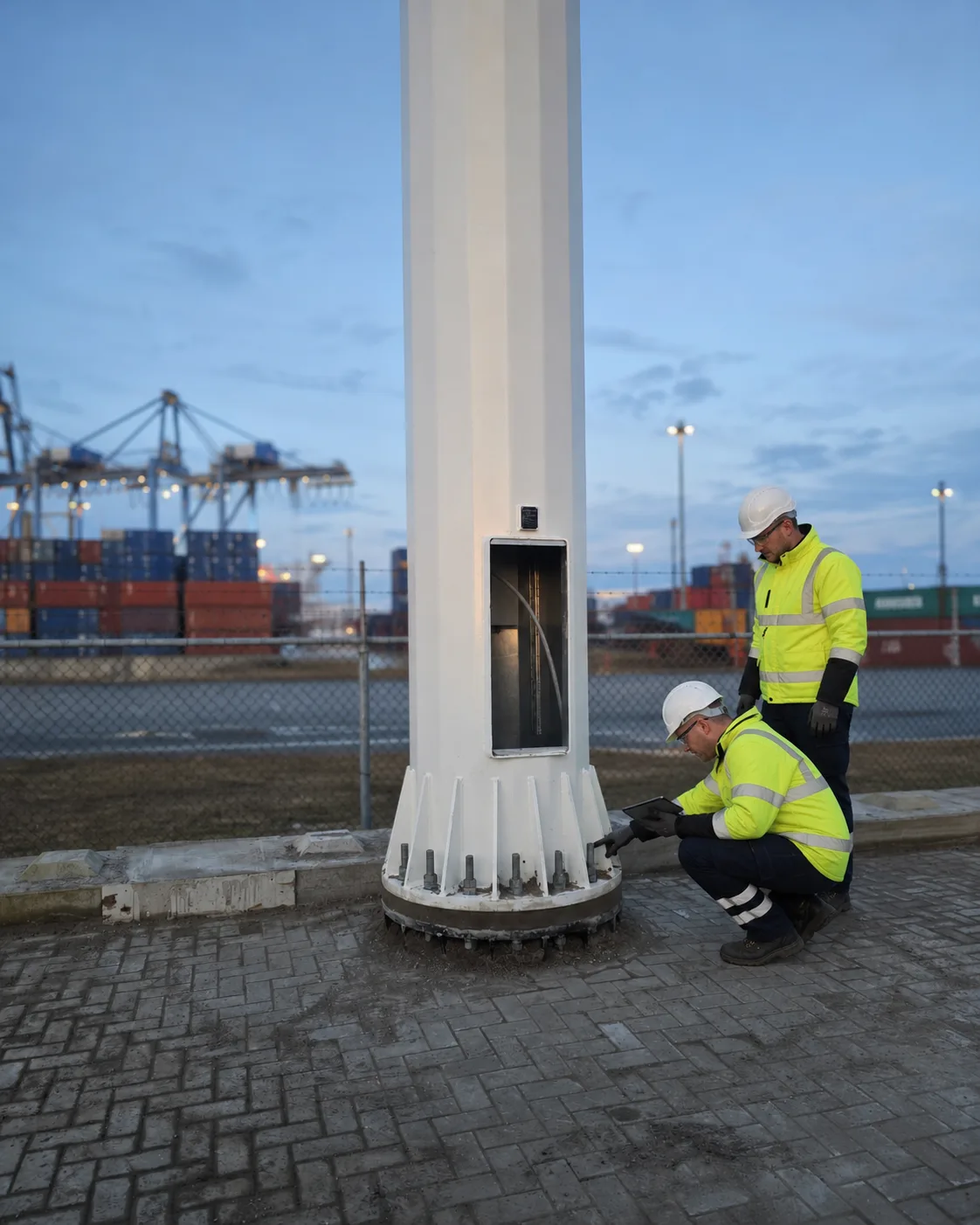
Marine exposure determines lifespan. Material selection, coatings, sealing, and inspection planning are essential for predictable performance and minimal downtime in port environments.
Harbors and terminals operate in aggressive environments: salty air, moisture under wind pressure, and frequent cleaning. These factors affect enclosures, fasteners, brackets, and electrical housings.
Engineering must tailor materials and coatings to the exposure zones, such as quay, terminal yard, or crane structure, and prevent water entrapment, crevice corrosion, and premature degradation.
Because access is costly and maintenance windows are limited, the design must support predictable inspection intervals and modular replacement when it reduces downtime and risk. The goal is stable operation over the asset's full lifespan, not just short-term good performance.
Discover the key terminal assets where lighting performance, integration, and lifespan strategies typically differ significantly.
High-mast and area lighting for large terminal surfaces with changing obstacles such as container stacks and equipment, and strict requirements for operational availability. The focus is on uniformity, glare control, corrosion resistance, and maintenance planning over the entire service life.
Lighting integration for ship-to-shore cranes, tailored to operator sightlines and shipboard tasks. Designed to minimize glare, withstand vibration and exposure, and support safe work areas under the boom and spreader.
Lighting for rubber-tired and rail-mounted gantry cranes operating over container lanes and yard blocks. Designed for consistent visibility between container stacks, reduced operator glare, and reliable performance under frequent movement and vibration loads.
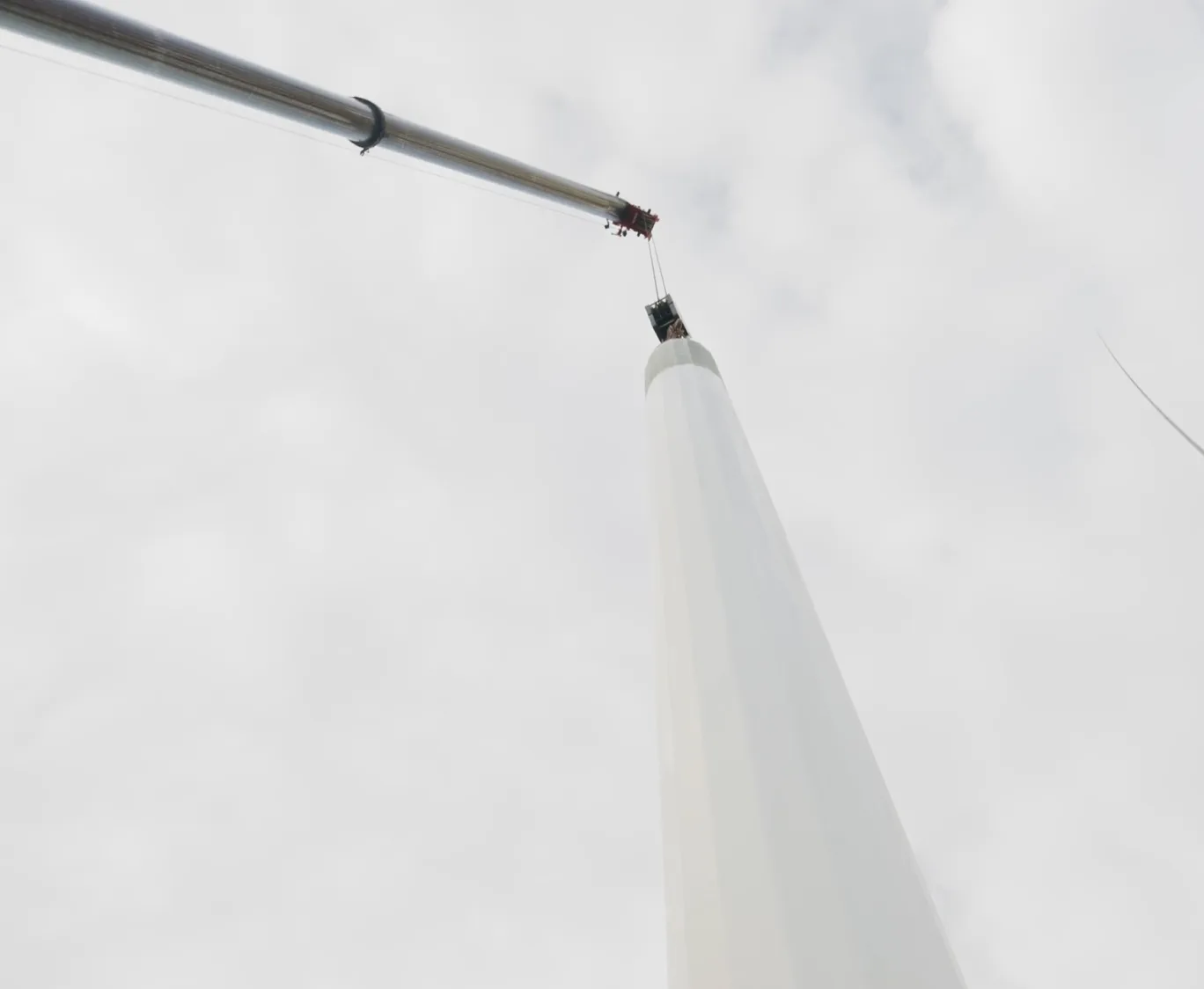
Lighting for reefer blocks, cable trays, power outlets, and inspection routes where high infrastructure density, limited space, and reliable visibility during inspection and maintenance are important.
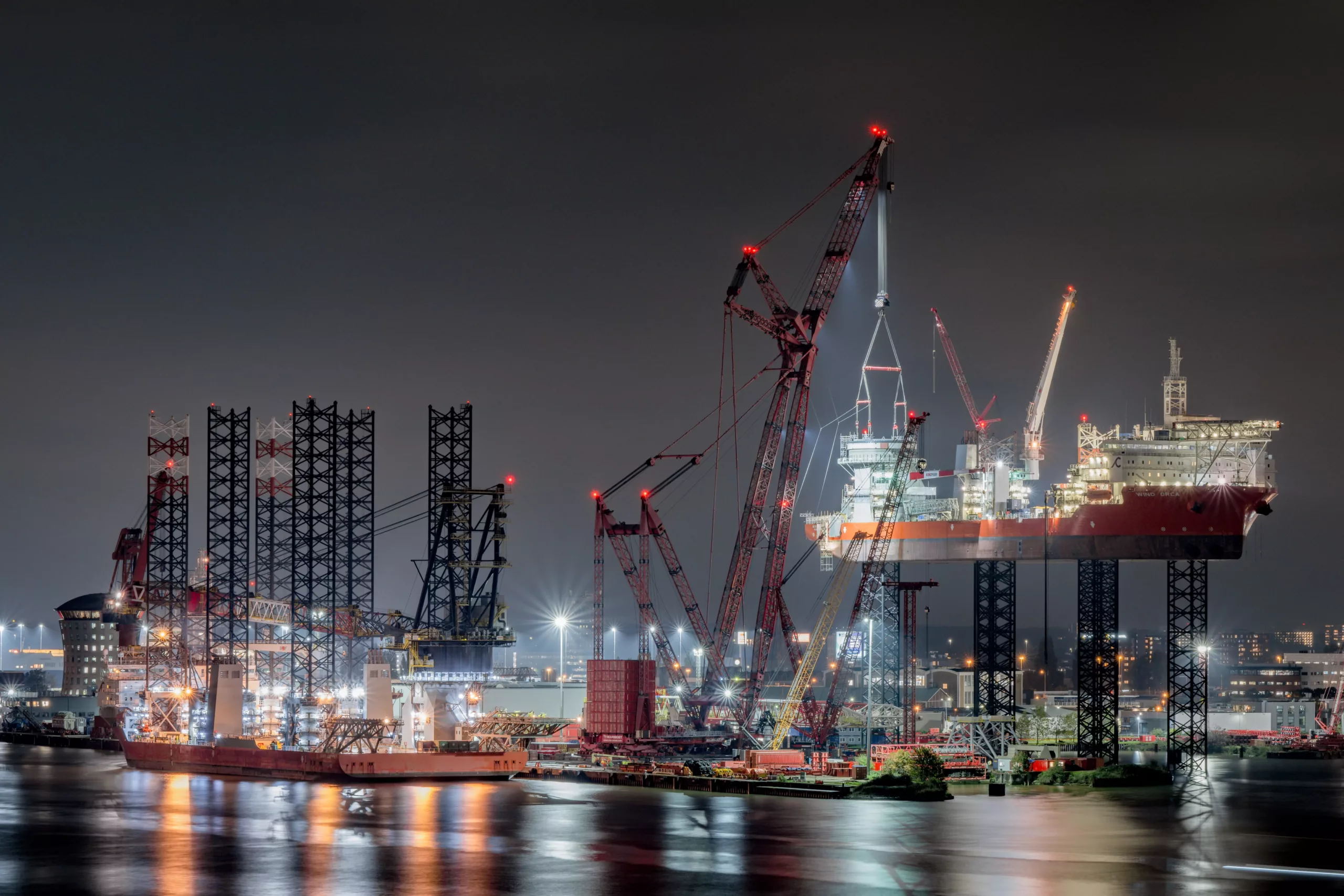
Contrasting, controlled illumination for critical hoisting and transport operations with variable load paths and temporary staging. Designed to limit shadowing, support safe signaling, and maintain visibility during peak operations.
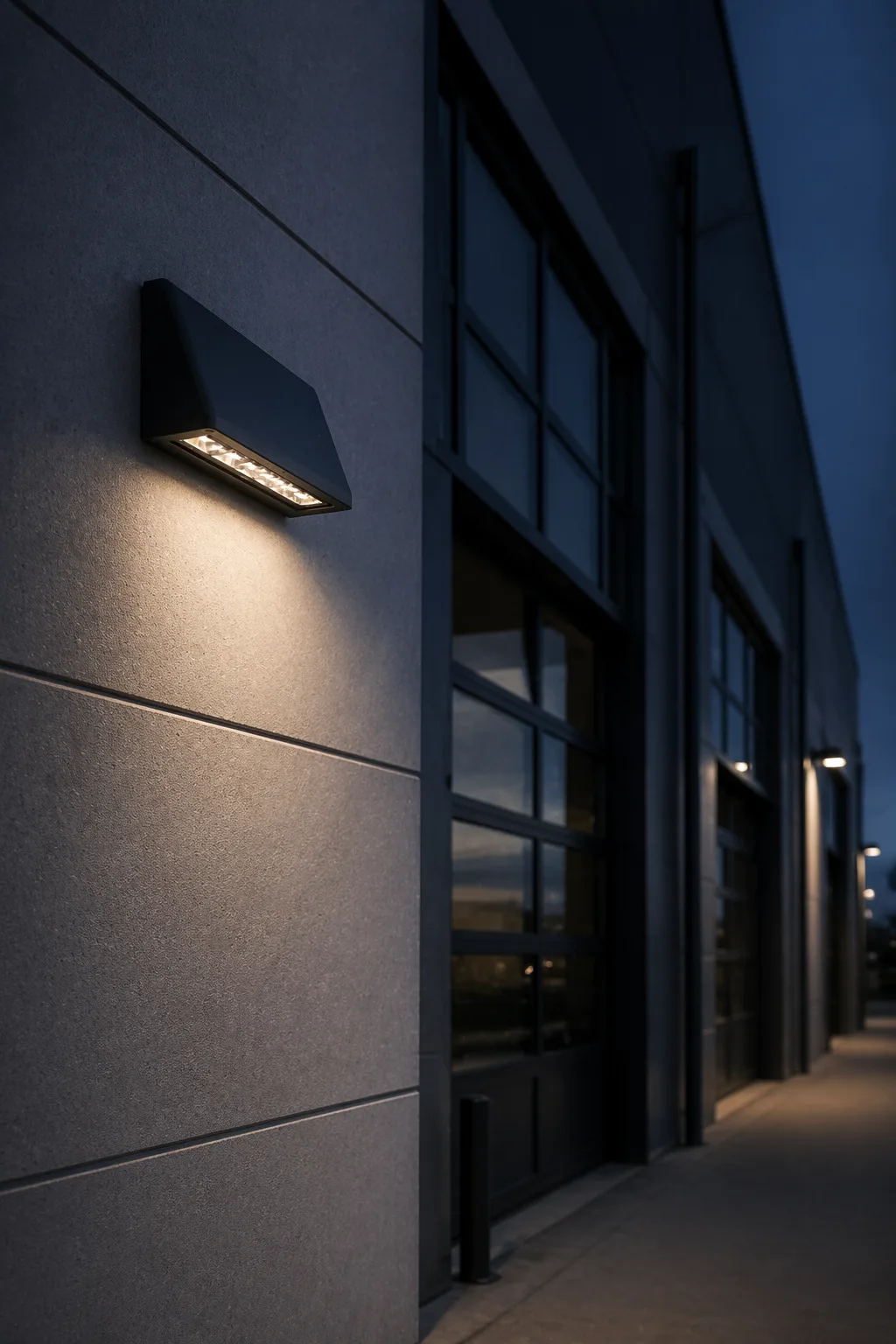
Task lighting for repair bays, inspection zones, and service routes where accuracy and safety are important. Designed around vertical illuminance, limited glare, and predictable maintenance cycles.
Terminal lighting projects are rarely dependent on a single type of fixture. Site lighting, crane lighting, pole structures, controls, and maintenance access must work together as one system.
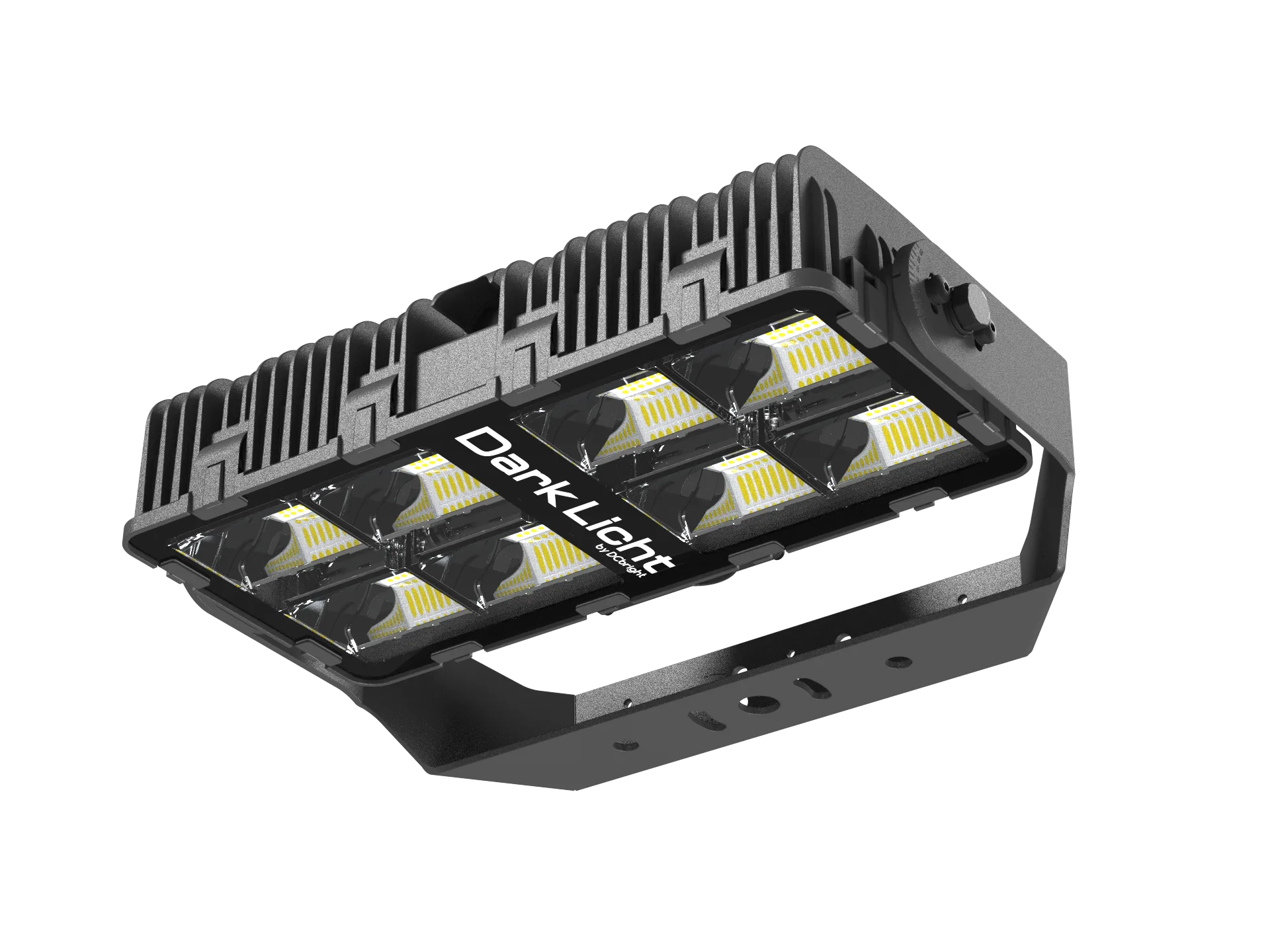
For large open terminal areas where uniformity, visual comfort, glare, pole spacing, and maintenance planning are critical.
Typical scope
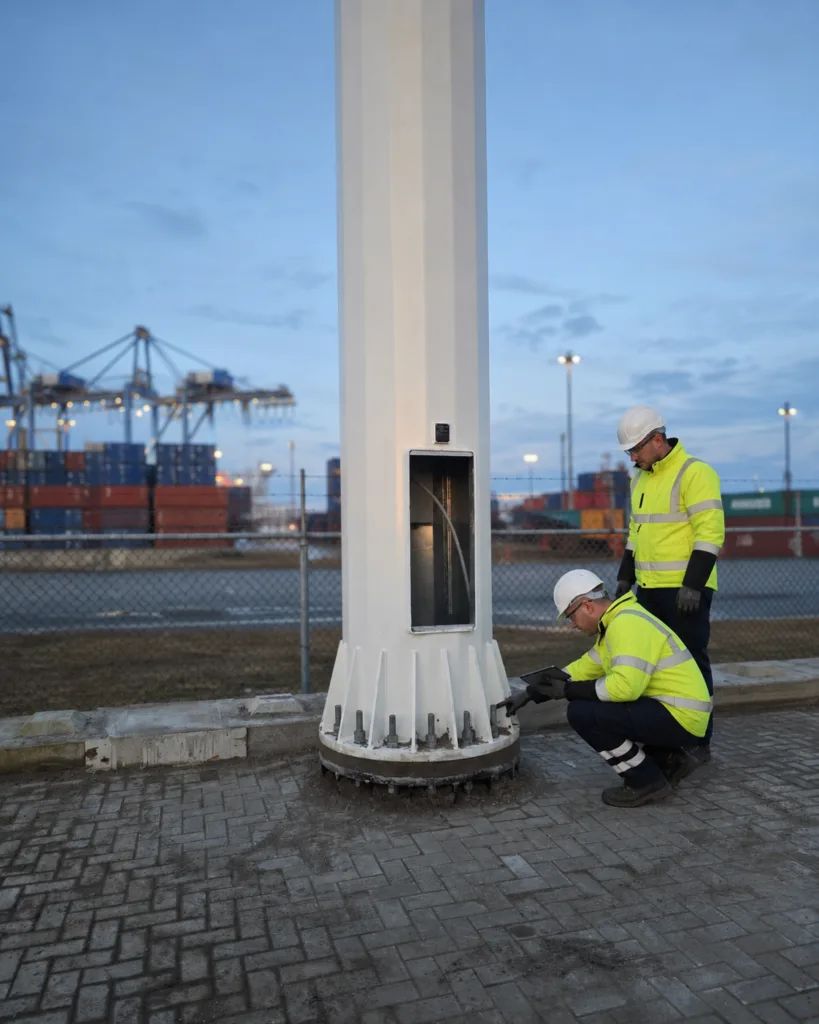
For projects where lighting performance depends on pole height, bracket design, load capacity, and structural verification.
Typical scope
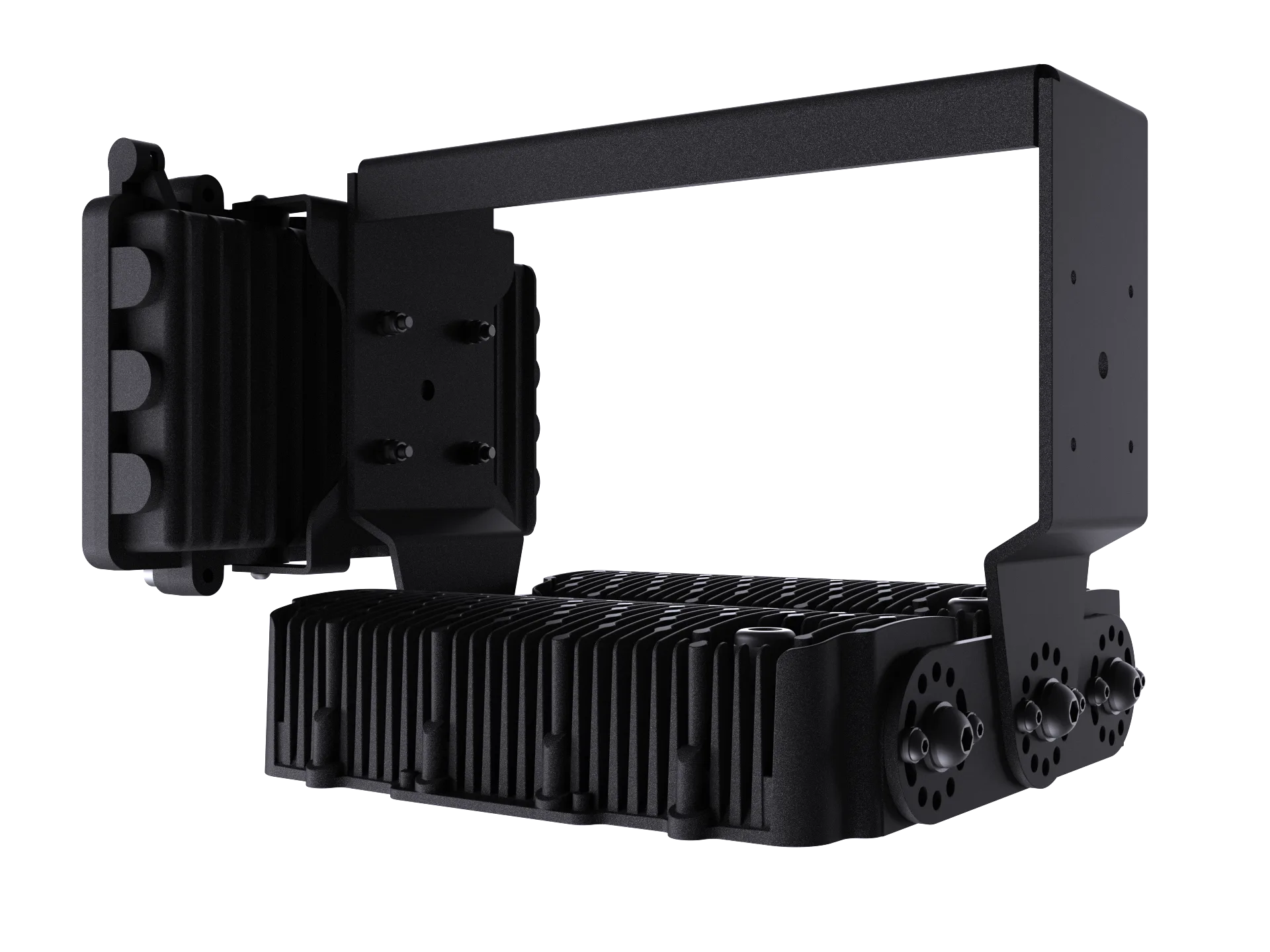
For STS, RTG, RMG, and heavy crane applications where visibility, weight, vibration, and operator comfort are decisive.
Typical scope
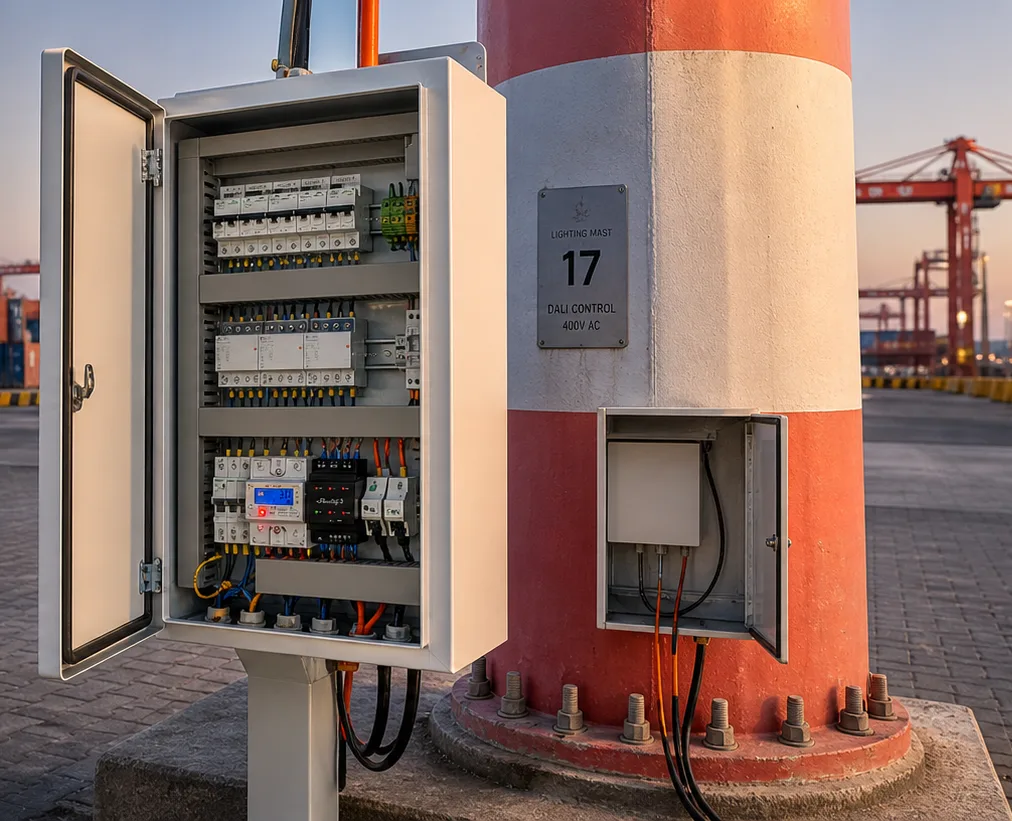
For terminals that require zone switching, dimming, energy reduction, operational control, or phased lighting strategies.
Typical scope
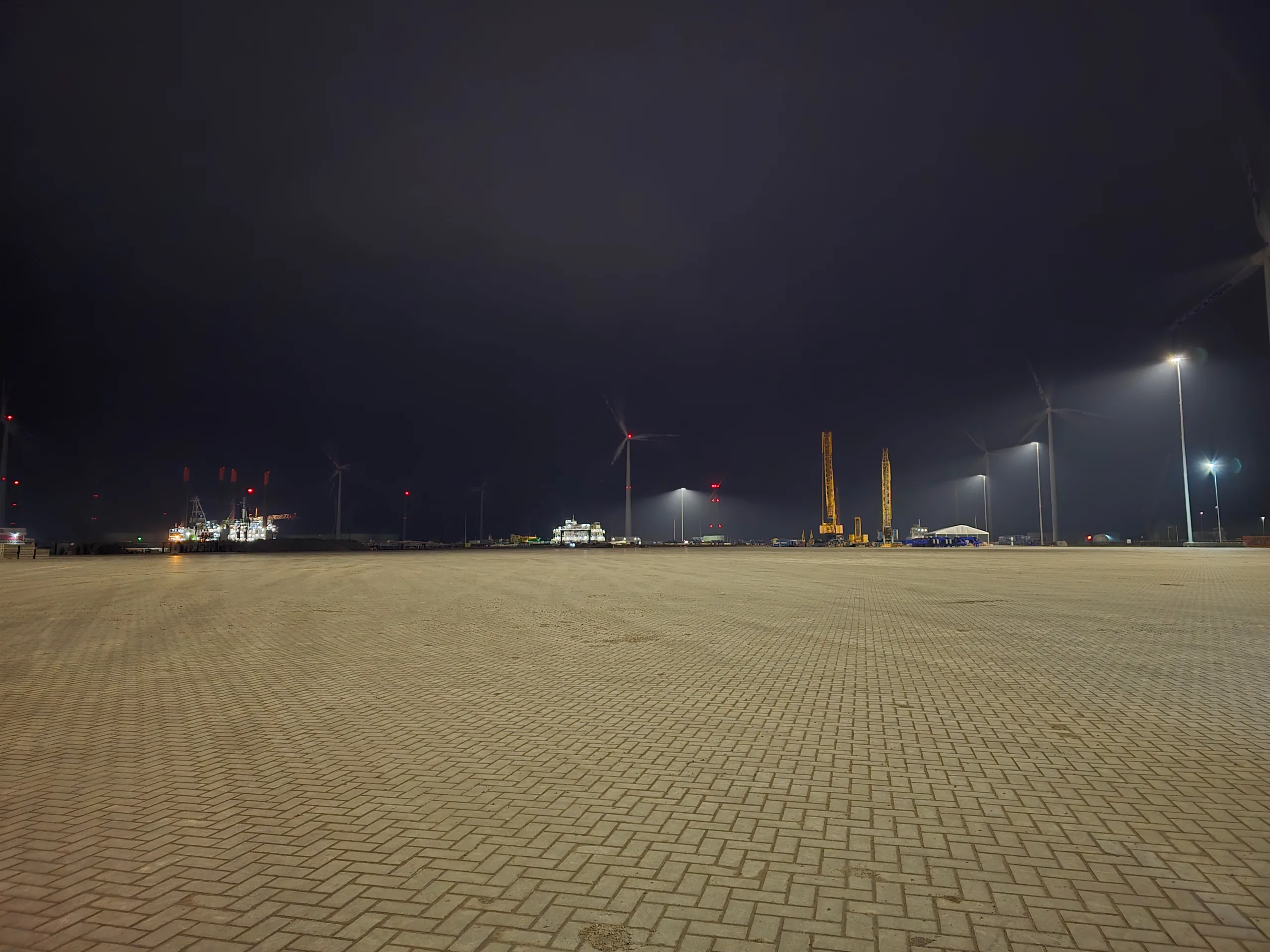
Construction of a terminal lighting project with 50-meter masts, engineering preparation, site coordination, installation and commissioning for a large offshore wind staging environment.
High-mast lighting
Eemshaven, Netherlands
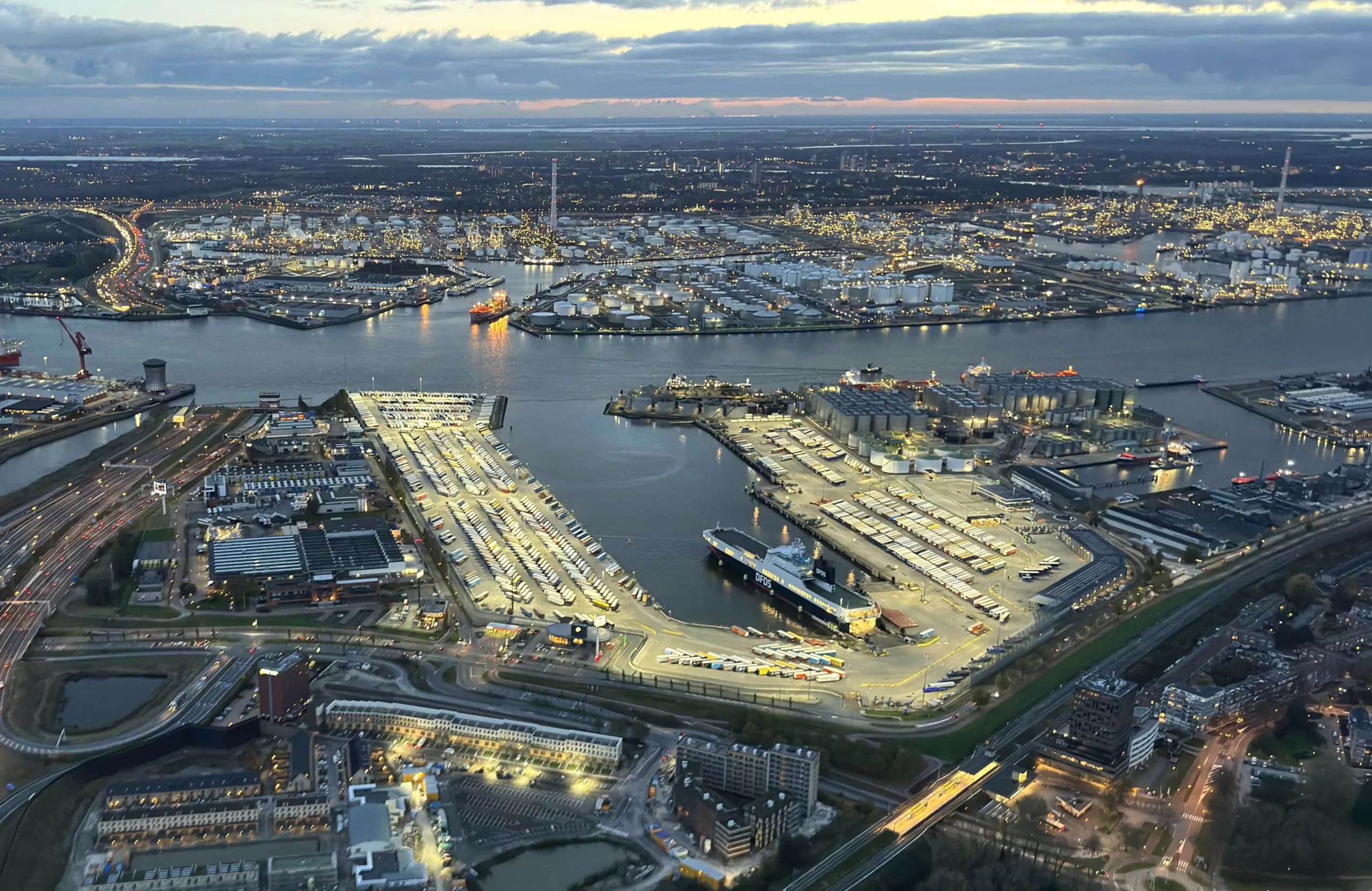
Long-term reference for terminal lighting with both new installation and retrofit, aimed at better visibility, lower energy consumption, and reliable operation in a busy logistics environment.
Retrofit van terminal lighting
Rotterdam, Netherlands
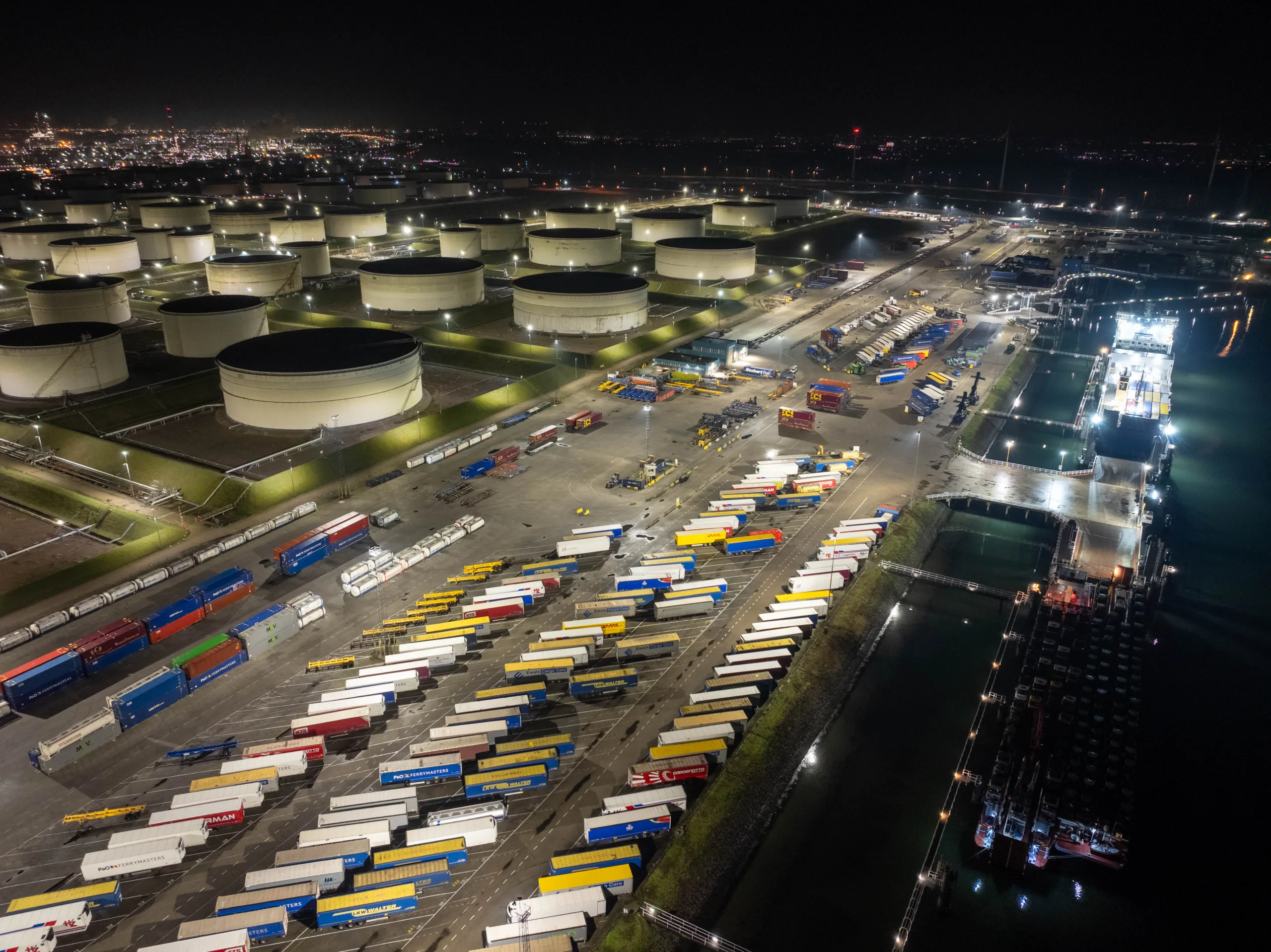
Design and optimization of a terminal lighting upgrade in a ferry and logistics environment where large area visibility, glare control, and operational continuity are essential.
High-mast lighting
Europoort, Netherlands
Proven in operational environments. You don't have to take our word for it; just ask our customers.









Terminal lighting must take into account moving cranes, changing container stacks, high wind loads, corrosion, glare, wet surfaces, heavy equipment, and limited maintenance windows.
Terminal areas, cranes, reefer zones, heavy-lift zones, access roads, maintenance areas, and technical infrastructure each require a different lighting approach.
Glare affects crane operators, truck drivers, and ground personnel. Poor glare control can reduce visibility, comfort, and safety during nighttime operations.
No. High masts are often effective for large terminal areas, but in specific zones, crane-mounted lighting, facade lighting, mobile lighting, or lower mounting positions may be better.
Yes. Retrofit projects often require inspection of existing poles, brackets, cabling, corrosion status, loads, and lighting performance before new fixtures are selected.
Terminal lighting is typically assessed based on requirements for outdoor workplace lighting, project-specific safety requirements, glare criteria, and local restrictions concerning light nuisance and light pollution.
We support industrial operators, contractors, and engineering firms in defining lighting systems that fit within their complete operational context.
+31 (0)33 785 9809
We use your data solely to assess your request in terms of content and to respond appropriately.