...

Home / Sectors / Mobile machinery and equipment

Sector

Lighting for mobile machinery and equipment

On a machine, lighting is a component rather than a fixture: it is connected to the vehicle's electrical system, has to withstand the voltage spikes of a starting engine, must not interfere with the onboard electronics, and is mounted on a structure that vibrates all day long. We supply work lights that fit into that chain, for cranes, telehandlers, excavators, and heavy equipment.

9 to 60 V DC

the voltage range within which the luminaires operate, with reverse polarity protection

4,800 to 51,300 lm

from compact work light to boom-mounted floodlight

1 machine first

test setup on a single machine, then rollout across the fleet without new engineering

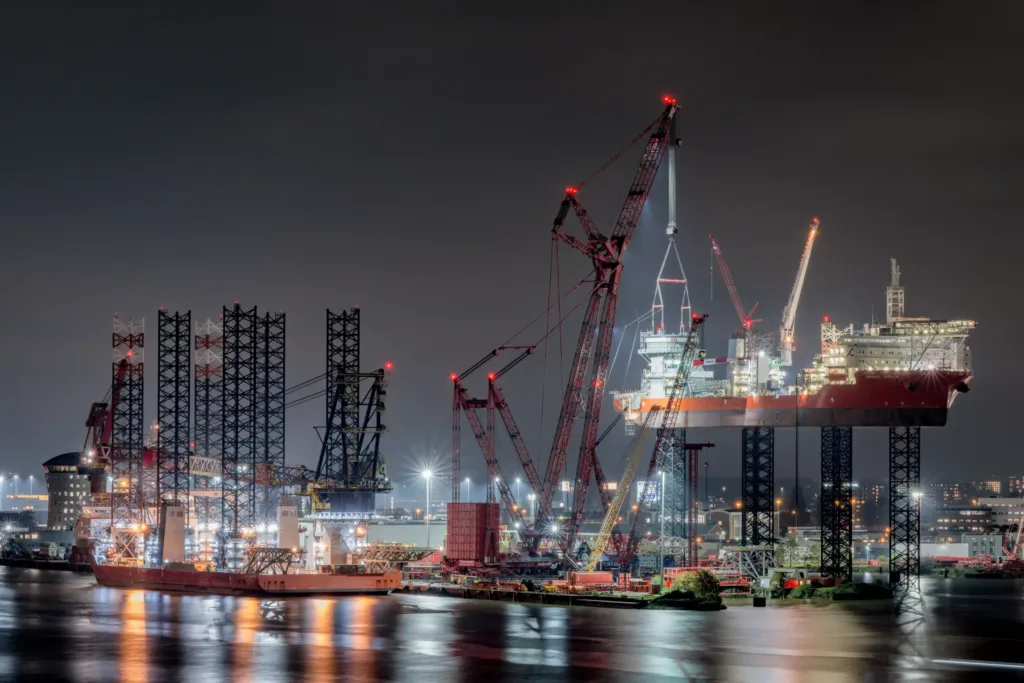
Mammoet PTC210 Ring Crane at Night with JEL LED Floodlights

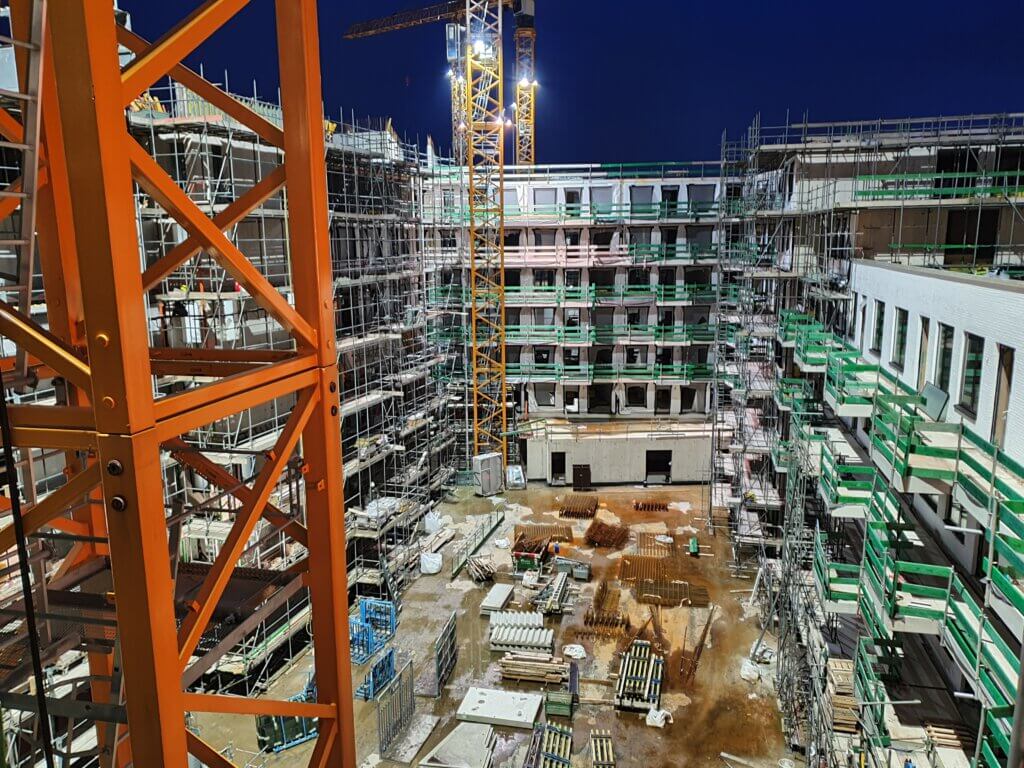
Mammoet PTC 210 DS: the ring crane illuminated from the construction itself, down to the working surface

This is what it looks like for you

What we encounter on machines

what we encounterwhat did it cost youwhat it is about
A lamp chosen by lumen and price, connected to the nearest wireStalling on the first cold start, and nobody knows whyvoltage range and protection
The crane operator looks into the bundle himself as soon as the boom lowersHe turns the lamp away or switches it off, and then the work front is darkbundle selection and direction
Cables that have been routed past moving parts because no feed-through was availableBreak at the feed-through after one season, and searching for the fault in the machine cabinetcable routing and strain relief
A lamp that interferes with the telephone, telematics, or on-board computerA malfunction that no one links to the lightingEMC iron
High-pressure cleaning after every shift, in the winter with road salt includedMoisture in the fixture and corrosion at the cable glandIP rating and material
What determines the design here

Eight factors that drive the choice of a machine

Design factorWhat is going on hereWhat determines it in the design
On-board voltage12, 24, and 48 V systems side by side, in practice 9 to 60 V DCVoltage range of the luminaire, reverse polarity protection, choice between DC and AC version
Voltage spikesStarting, loading, and switching heavy loads cause spikes and load dumpProtection according to standard automotive electrical tests, fuse location
Electromagnetic environmentCab with electronics, telematics, on-board computer and radioEMC iron, a type approval as soon as the machine hits public roads
Vibration and shockGeese, caterpillars, hammer work and transport on the siteVibration testing, fixation, strain relief, and connector selection
Assembly spaceLimited space, moving parts, cable glands that are already occupiedDesign and bracket, cable length and connectors, strain relief at the lead-in
Bundle for moving equipmentThe work surface moves with the machine, the beam does not. With a telescopic boom, the light pattern also shifts every time it extendsBeam angle and number of fixtures per position, glare for the operator, and the choice between dynamic tracking and stabilization
Lighting controlThe train driver cannot adjust the beam without getting out of the cab, so it is not adjusted and he works the entire shift with an incorrect light patternCrane Light Director for telescopic booms: tiltable modules, driver box, and in-cab control. Crane Light Stabilizer for lattice booms: a spring-loaded bracket that keeps the fixture stable.
Cleaning and winter saltPressure washer, mud and road saltIP class including IP69K where high-pressure cleaning, coating, and material are involved

Which version belongs to which machine, along with the mounting position, the number of fixtures, and the beam selection per type, can be found on the page for that machine type.

You keep control of the light yourself

A floodlight mounted fixed to a boom does precisely what the boom does. With a telescopic boom, the beam shifts with every extension; with a lattice boom, it swings along. In both cases, the operator is looking at a light pattern that is no longer on the work, and because he cannot reach it, it stays that way until the end of the shift.

We have two systems for that, and they solve different things. Crane Light Director is the complete system for telescopic crane booms: tiltable luminaire modules, single, duo, or as a T-bar, with driver box and in-cab control. That is the system that crane manufacturers install ex-factory, including on Sany cranes, and it has recently also been available as a retrofit for an existing fleet. The Crane Light Stabilizer is the spring-loaded bracket for lattice booms: mechanical, without hydraulics or electronics, with an adjustable degree of damping, and it is available separately.

In short: the Stabilizer keeps the beam still, the Director lets you steer it.
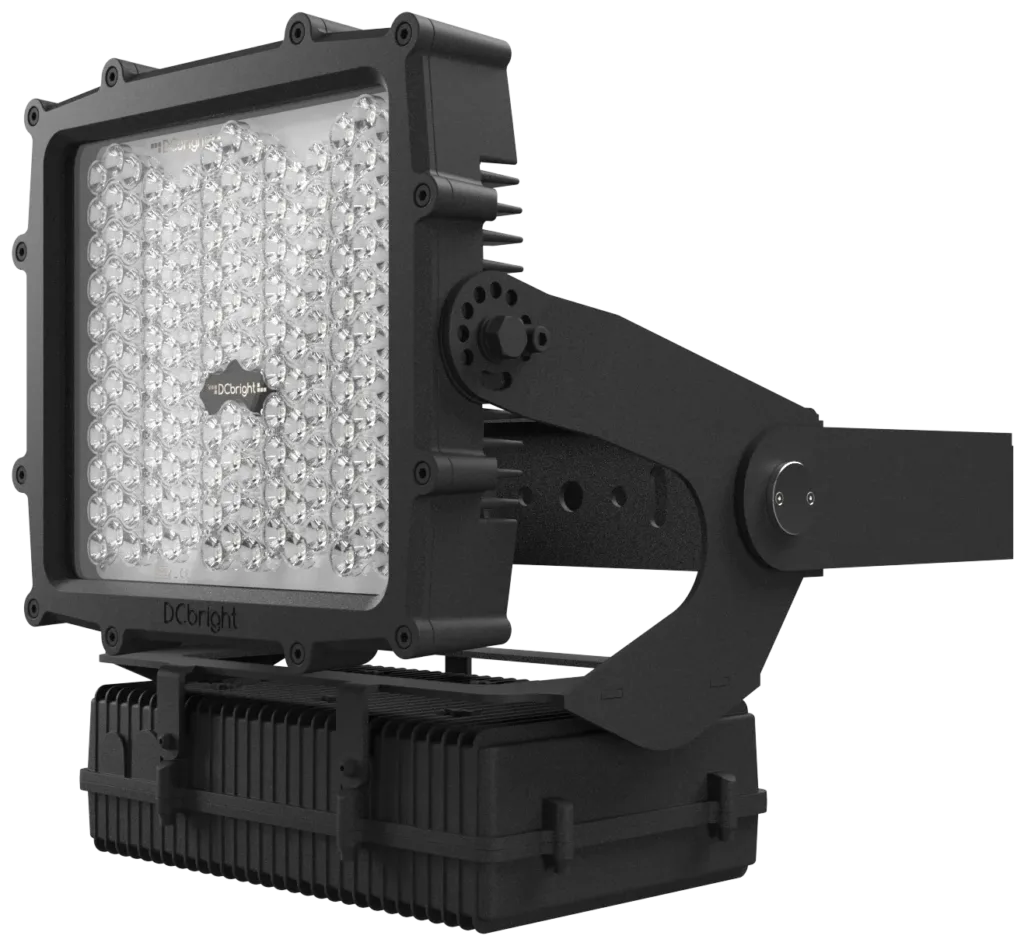
Orca in the Crane Light Stabilizer

Lattice boom

Crane Light Stabilizer

Spring-loaded bracket, mechanical, available separately. View the product
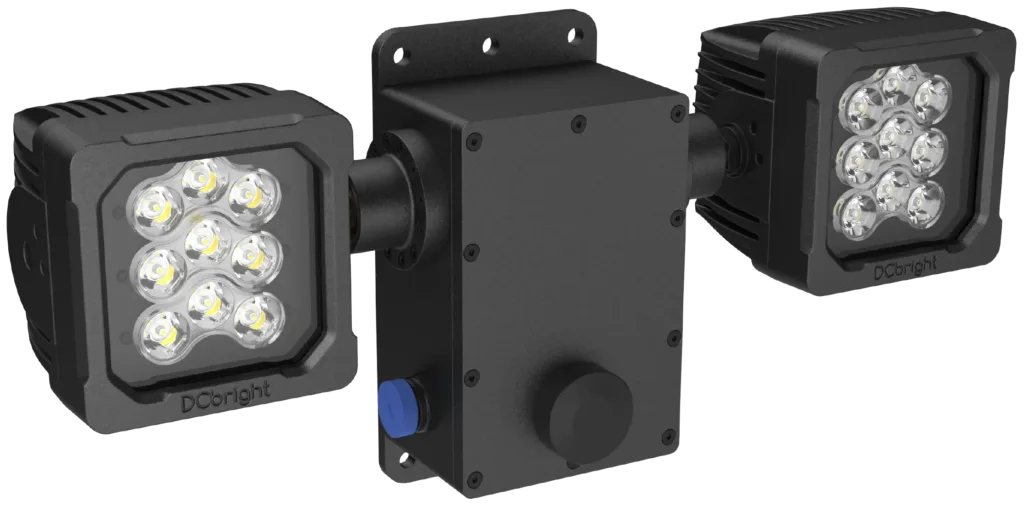
Crane Light Director, dual module with driver box

Telescopic boom

Crane Light Director

Tiltable modules, driver box, and in-cab controls. Factory-fitted or retrofit. View the system

Clients
This is how a process works

From machine type to assembly

STEP 1

Machine recording and mounting position

STEP 2

Choice of execution and bundle

STEP 3

Single-machine test setup

STEP 4

Fleet rollout

STEP 5

Maintenance and warranty

Questions from this sector

What machine builders and fleet owners ask us

Yes. Provide the machine type and quantity, and we will look into the design, connector, and delivery per batch.

Standard models from Nijkerk, series deliveries upon consultation.

Five years complete.

With the Crane Light Director, yes: the modules tilt and are operated from the cab. On a lattice boom, the Crane Light Stabilizer keeps the beam stable without manual control.

Yes, a test setup on a single machine is the normal first step.

No, not at this moment.

Submit your situation

Introduce your machine

Send us the machine type, the on-board voltage, and where the fixture needs to go. Preferably with a photo of the mounting position; that usually saves a whole round of back and forth.

Response within 1 working day, by an engineer
Lighting calculation free of charge, per zone
Test luminaire on your own mast, upon request
Warranty 5 years complete, 10 years on the housing with maintenance contract

Rather call directly: 033 785 9809

We respond within one working day. We deliver standard items within a week. Custom work, such as a different light colour, a different CRI or a bespoke version, by arrangement.