

Seven luminaires that illuminate a work zone or span a distance. Cast aluminum, IP69K, IK10, and a five-year warranty for heavy industrial use.
Response within 1 business day by an engineer. Free lighting calculation and trial luminaire possible.
A floodlight is positioned farther away from the work area than a work light and illuminates an area rather than a single point. The choice is therefore rarely based on lumens alone: mounting height, weight per mounting point, beam angle, and whether the location is accessible all determine which luminaire is the right one. Below, they are shown to scale relative to each other, so you can see what you’re installing. In practice, these luminaires are also called industrial spotlights, floodlights, or wide-beam lights; we use the international term “floodlight.”.
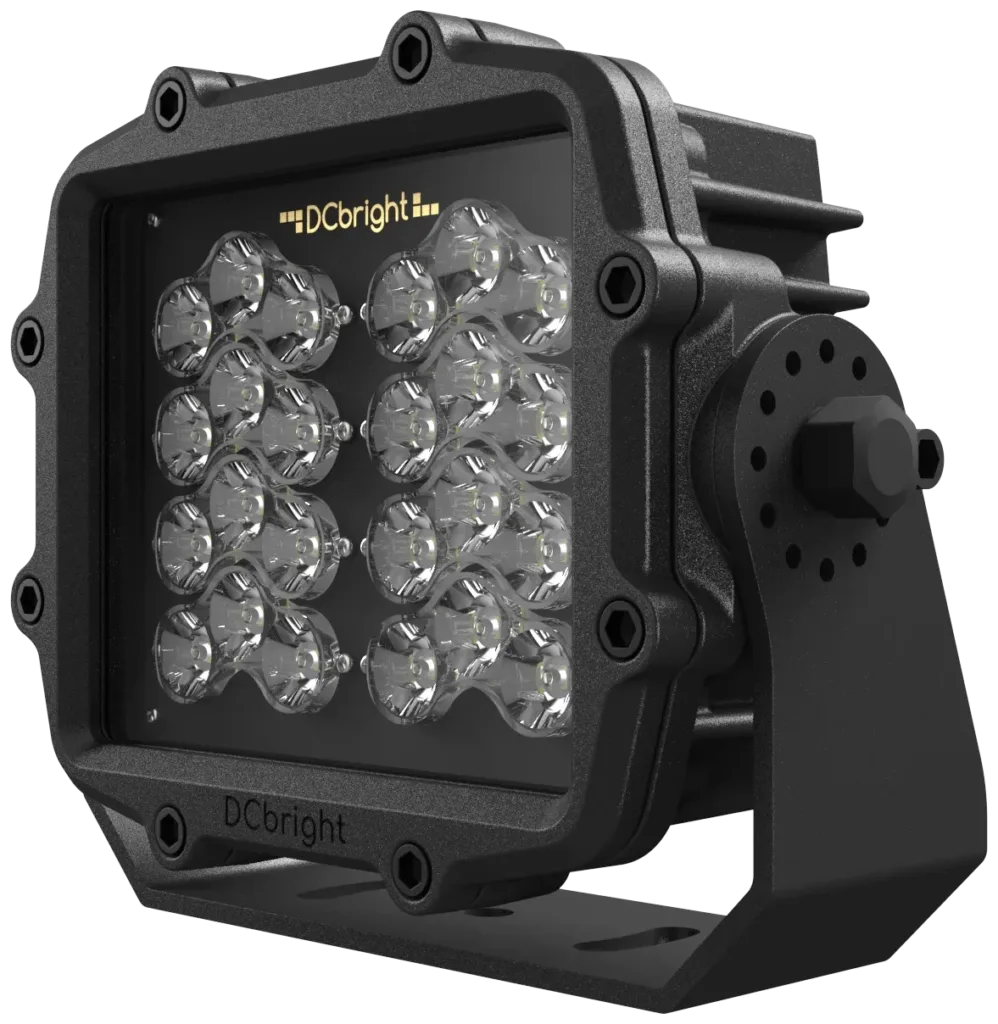
Marlin18,000 lm
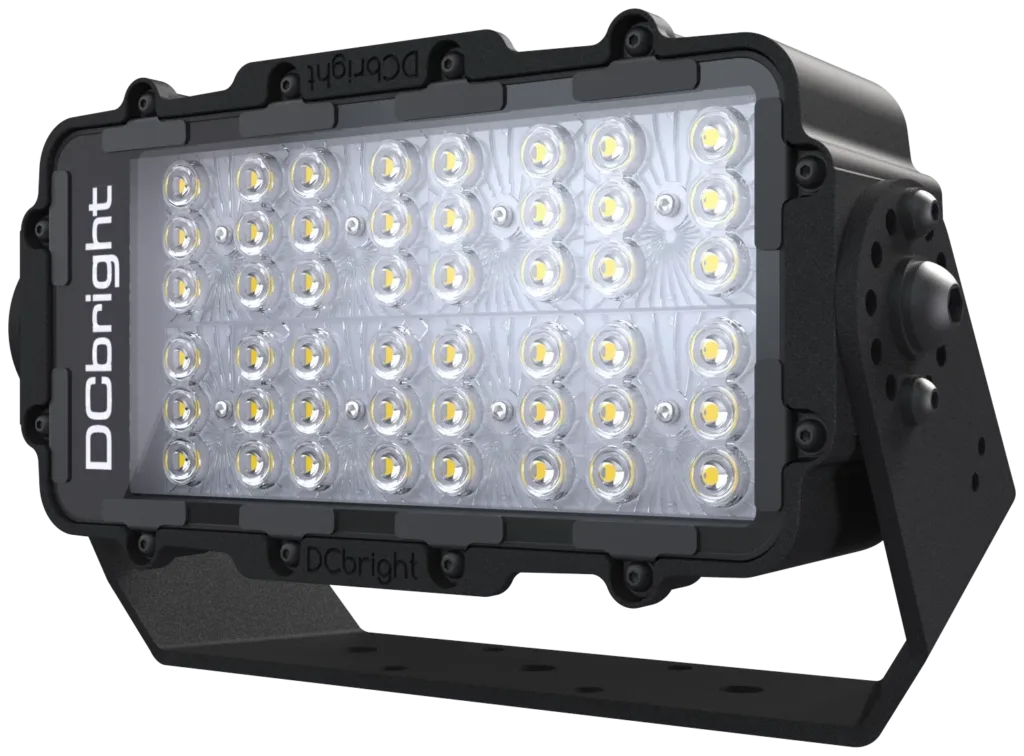
Snapper31,000 lm

Barracuda44,100 lm

Shark50,000 lm
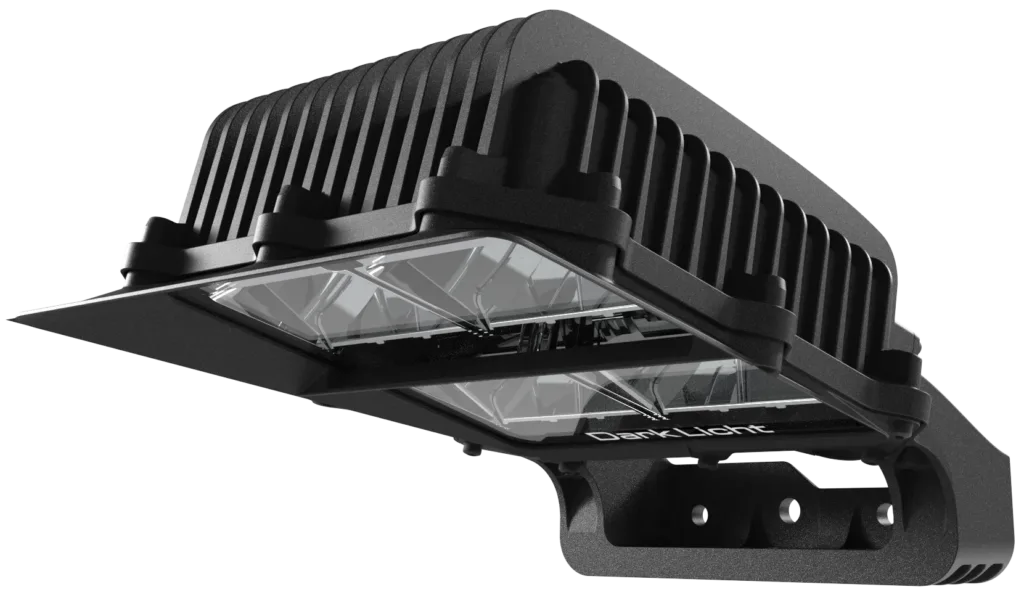
DarkLicht M51,300 lm

Snapper HC83,000 lm
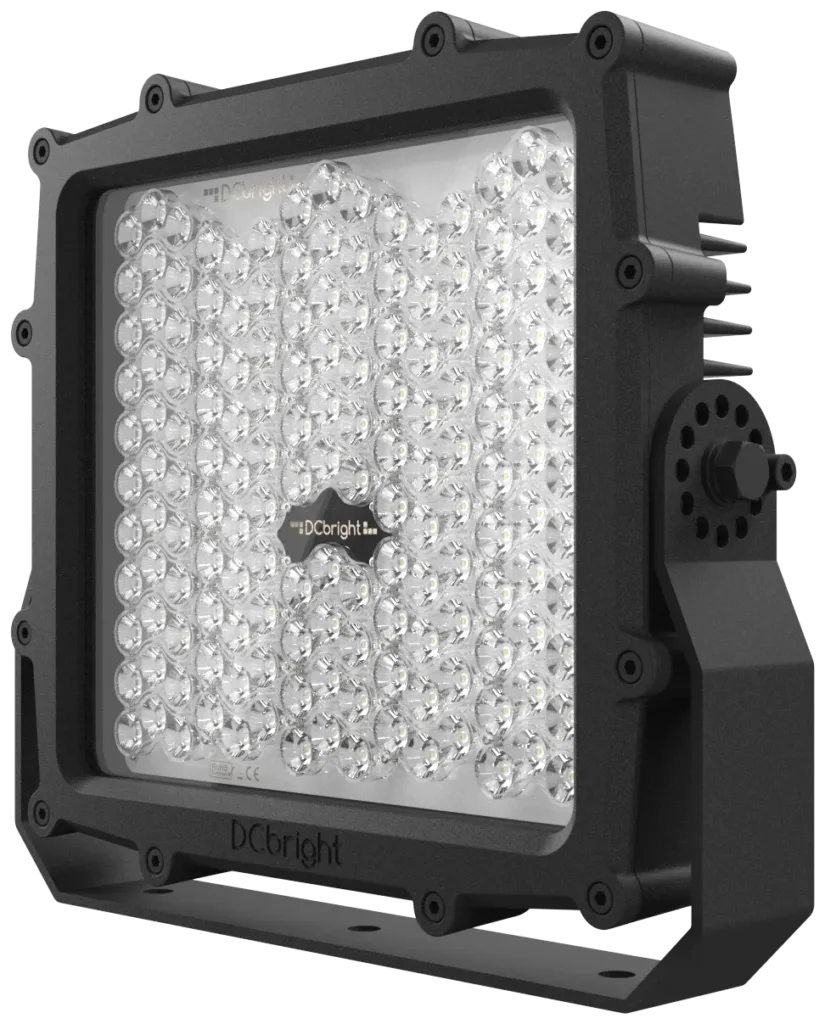
Orca111,300 lm
Highest output, Orca
Best efficiency, Shark
On the heavy-duty line, with IK10
Weight per luminaire
Sorted by luminous flux, from light to heavy. The luminaires are shown to scale relative to one another, so that in addition to the lumen output you can immediately see the corresponding size and weight; the target installation height is listed with each luminaire.
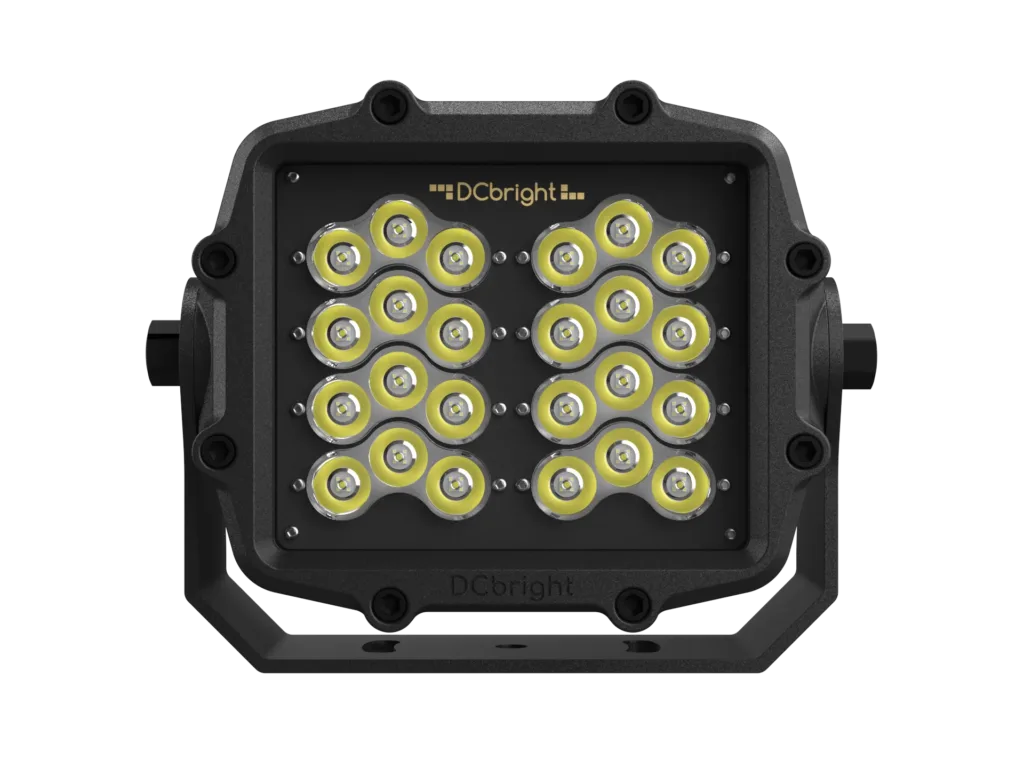
Up to 10 meters, compact work zones
The link between work light and heavy-duty floodlight, in a compact design.
120 W · IP69K / IK10 · 5.5 kg
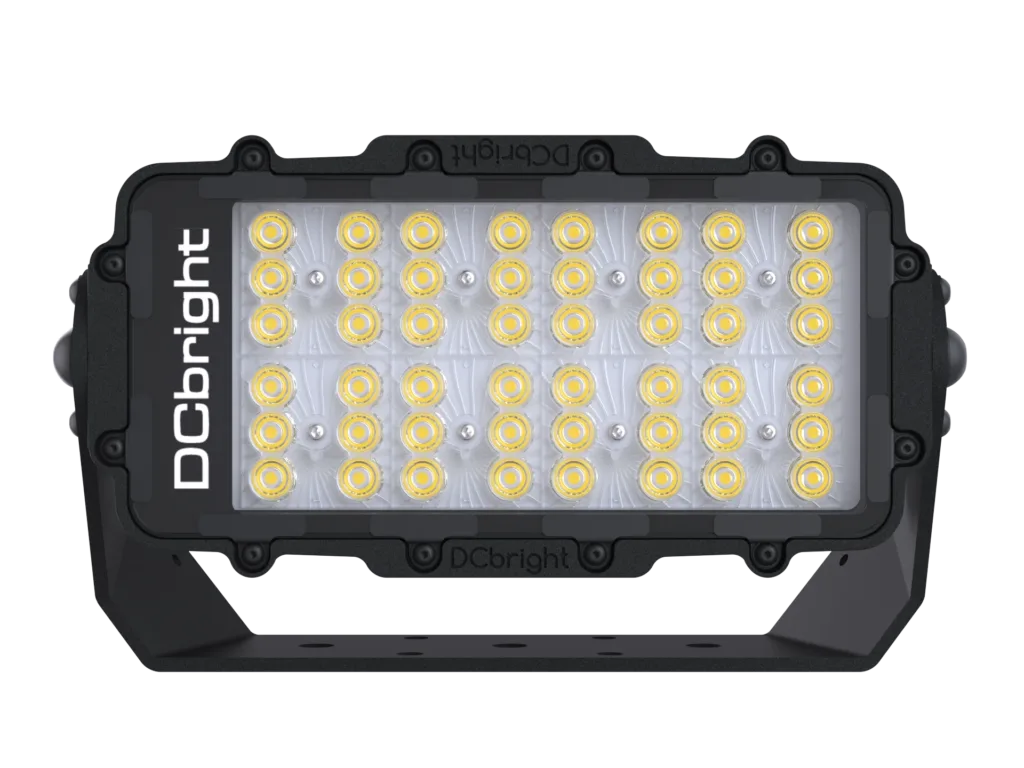
Up to 25 meters, highest lumens per kilo
Compact light-duty floodlight with maximum lumens per kilo.
150 to 180 W · IP68 / IK08 · 3.1 kg

10 to 25 meters, the harshest conditions
Indestructible floodlight with the most extensive mounting program.
240 to 320 W · IP69K / IK10 · 10.1 kg
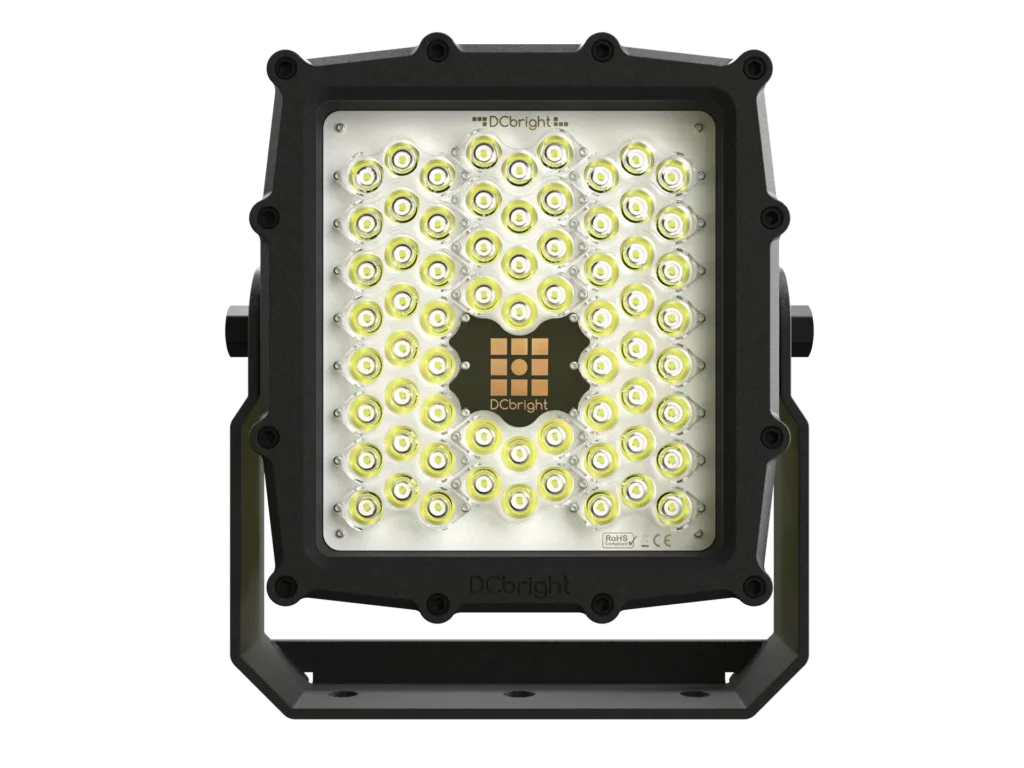
10 to 25 meters, best efficiency
The most efficient in its class, with the lowest weight per lumen.
320 W · IP69K / IK10 · 9.2 kg
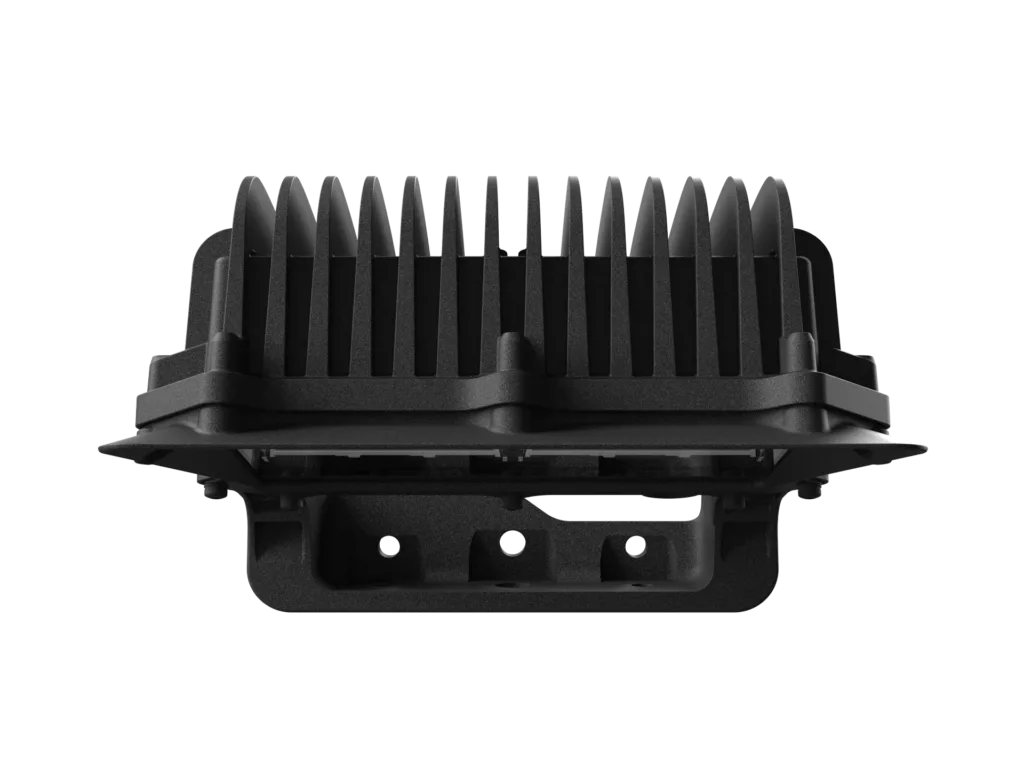
10 meters and higher, glare-free
Glare-free area and mast lighting with power.
150 to 300 W · IP69K / IK08 · 3.6 to 5.5 kg

Starting at 15 meters, multiple modules per point
Multi-configuration: maximum lumens per kilogram per mounting point.
270 to 500 W · IP68 / IK08 · 9.9 to 12.6 kg
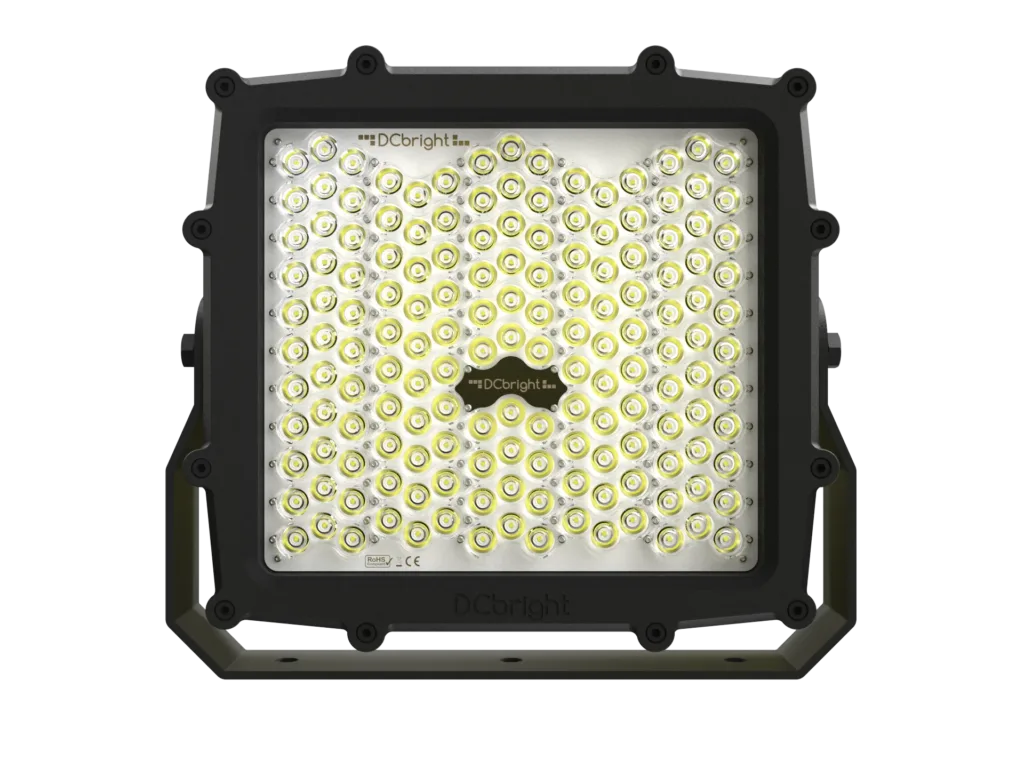
Over 25 meters, largest distances
The most powerful industrial floodlight from a single housing.
320 to 800 W · IP69K / IK10 · 22.7 kg
Maximum values per luminaire in the AC version at 6500K. The lumens per kilo column often says more than the luminous flux itself: on a boom, a mast, or a crane bridge, weight determines what is allowed to hang there.
| Luminaire | Power | Luminous flux | lm/W | Weight | lm/kg | IP and IK |
|---|---|---|---|---|---|---|
| Marlin | 120 W | 18,000 lm | 150 | 5.5 kg | 3.3k | IP69K / IK10 |
| Snapper | 150 to 180 W | 31,000 lm | 172 | 3.1 kg | 10k | IP68 / IK08 |
| Barracuda | 240 to 320 W | 44,100 lm | 138 | 10.1 kg | 4.4k | IP69K / IK10 |
| Shark | 320 W | 50,000 lm | 156 | 9.2 kg | 5.4k | IP69K / IK10 |
| DarkLicht M | 150 to 300 W | 51,300 lm | 171 | 3.6 to 5.5 kg | 9.3k | IP69K / IK08 |
| Snapper HC | 270 to 500 W | 83,000 lm | 166 | 9.9 to 12.6 kg | 6.6k | IP68 / IK08 |
| Orca | 320 to 800 W | 111,300 lm | 139 | 22.7 kg | 4.9k | IP69K / IK10 |
All luminaires are also available in 24-volt DC for vehicle electrical systems and mobile equipment, with a slightly lower luminous flux at the same power rating; the Shark is also available in 35 to 60 volts for large electric cranes. The Snapper HC is a multi-configuration model: the number refers to the “x3” configuration, which features three light modules mounted on a single mounting point.
Housing and cooling fins are a single aluminum alloy casting with less than 0.08 percent copper. Without bolted heat sinks or seams that could fail under vibration. The bolts are made of 316 and sealed in the housing.
The Marlin, Barracuda, Shark, and Orca have been tested for high-pressure and steam cleaning in accordance with DIN 40050-9, and the polycarbonate front panel is rated IK10. The Snapper and Snapper HC are rated IP66, IP67, and IP68 with IK08; the stainless steel version of the Snapper is rated IP69K.
Integrated for single mounting, or remote in a separate box when the position is hot, difficult to access, or subject to vibration. For the HT versions, remote mounting is mandatory: the driver must then be outside the hot zone.

| Beam angles | 14° to 90°, also asymmetric |
| Color temperatures | 6500K to 2700K, amber 2200K |
| Tilt Range | 360°, twelve positions · Snapper HC ± 180° |
| Service life | L90B05, 360,000 hours |
The Snapper and Barracuda are also available in all-316L stainless steel; the Snapper, Barracuda, and Orca are available in an HT version rated up to +120 °C, and the Shark is available in Marine White. See Extreme corrosion and high temperatures.
Three situations in which we direct you to another product group, even if you asked for a floodlight.
On a cab, a boom, or a frame just above the work, a work light is the right choice: smaller, lighter, and with a beam that does not cause glare at short distances.
In residential areas, in traffic, or when there is a permit requirement regarding light pollution, a full cut-off floodlight keeps the light within the designated zone. A tilted floodlight does not.
Whether it concerns a new light mast or an entire site layout, it starts with the construction and the lighting calculation; the luminaire follows from that.
Four routes to the application pages, which contain the setup, the assembly program and the standard justification.
Container terminals combine high masts, cranes, and strict light nuisance requirements. The standard justification per terminal type is available on the infrastructure and site page.
On booms and crane bridges, weight and vibrations determine the choice. The assembly program, of Crane Light Stabilizer to boom section, is on the crane page.
A site requires a layout: mast heights, beam angles, and a lighting calculation in lux on the floor.
Near ovens and smelters, the ambient temperature rises up to +120 °C. For these applications, there are the HT versions, with the driver located outside the hot zone.
Yes. Schijnwerper, verstraler and breedstraler are the Dutch names for the same type of luminaire: a light source that lights a zone from a distance. Internationally, and on this site, that is called a floodlight. A work light is something else: it sits close to the work and lights a single spot.
A work light provides illumination close to the machine or the task at hand, usually within a few meters. A floodlight is positioned farther away and illuminates an area or spans a distance. In practice, the deciding factor is the mounting height: above about four meters, a floodlight is almost always the right choice; below that, a work light is preferred.
Usually not. A construction floodlight is made for temporary use on a building site: lightweight, limited in impact resistance, and rarely tested for continuous operation, vibrations, or high-pressure washing. For a site, crane, or installation that will be there for years, an industrial floodlight with IP69K, IK10, and a die-cast housing is the right choice; for movable use, a work light or mobile lighting tower is more appropriate.
That cannot be expressed in a single number, because the mounting height, beam angle, and surrounding reflection carry equal weight. A narrow 30,000-lumen beam at 30 meters can put more usable light on the floor than a wide 80,000-lumen beam. Therefore, we calculate the setup and provide the result in lux on the floor.
The heavy-duty line includes 14° spot, 38°, 69°, and the asymmetrical 14 × 46° flare; the Snapper series includes 15°, 30°, 60°, and 90°, plus 20 × 50° and 20 × 85° asymmetric angles. The higher the luminaire is mounted, the narrower the angle. For outdoor installations, we often combine two angles in a single setup.
That depends on the mast height and the light pollution requirements. For high-mast installations above 25 meters, the Orca is the standard choice; for cranes, the Barracuda or Snapper HC; and where scattered light toward water or the surrounding area must be limited, the DarkLicht series is used.
On cranes, the Barracuda serves as the starting point: the mounting system with rear mount, Crane Light Stabilizer, and boom frame is built around it, and the heavy-duty bracket absorbs shocks of up to 200 G. For maximum load capacity per mounting point on STS and RMG cranes, the Snapper HC is the alternative.
IP69K means that the luminaire has been tested for high-pressure and steam cleaning in accordance with DIN 40050-9. IK10 is the highest impact resistance class and relates to impact: a gripper, a stone, or a cleaning lance. In environments with both, failure almost always occurs due to one of those two, not the LED.
On a fixed mast or building facade, weight is rarely an issue. On a boom, a crane bridge, or a moving part, however, it affects the structure, the lifting capacity, and the vibration load on the mounting. That is why the table also lists lumens per kilogram: the Snapper delivers 10,000 lumens per kilogram, while the Orca delivers 4,900.
Because on a boom, a crane bridge, or a mast, the permissible weight per mounting point is often the limiting factor rather than the light output. Two luminaires with the same luminous flux can differ by kilograms; the column makes that difference visible at a glance.
Usually yes, and weight per mounting point is the decisive factor: an existing mast has a maximum head load and windage area. With the lumens per kilo column, you can immediately see which luminaire delivers the most light within that limit. We include the arrangement and the load in the lighting calculation.
Yes, all floodlights are also available in DC, 24 or 48 volts, with a slightly lower luminous flux at the same wattage. On mobile harbor cranes, ships, and heavy equipment, that is often the only available power supply.
Yes, per project we coordinate the control: switching per group, dimming at fixed levels, or control from an existing control system. For sites with noise-sensitive neighbors, a night mode is often the simplest way to comply with a permit condition.
The specified 360,000 hours is an L90B05 value at an ambient temperature of +50 °C: at that point, at least 95 percent of the luminaires still deliver 90 percent of the original luminous flux. That is a stricter metric than the common L80B10 and says more about what you will actually have left after ten years.
Yes, you can test standard luminaires without obligation at your own location. When in doubt about the beam angle or mounting position, that is the fastest way to gain certainty. That does not apply to custom versions.
Standard five years on all luminaires, for heavy industrial use. The 316L stainless steel versions carry a twenty-year warranty on the housing and five years on the remaining components. Extended agreements are possible for projects.
The documents for every floodlight on this page are online: the installation and user manuals in five languages and the datasheets and downloads Per article.
Provide the dimensions of the site or zone, the mounting height, and the available positions. We will calculate the setup in a simulation program, in accordance with the NSVV code of conduct, and provide the number of luminaires, positioning, and the expected lux on the floor. That will cost you nothing.
Your request is being reviewed by an engineer. We will respond within 1 business day.

| Lighting calculation | free of charge, in lux at ground level |
| Trial luminaire | without obligation regarding your own position |
| Warranty | 5 years, 20 years on 316L case |
Response within 1 business day · No obligation · By an engineer
We use your information solely to review your request and respond to it.