Home " Sectors " Mobile Machinery & Equipment Lighting
Mobile Machinery & Equipment Lighting
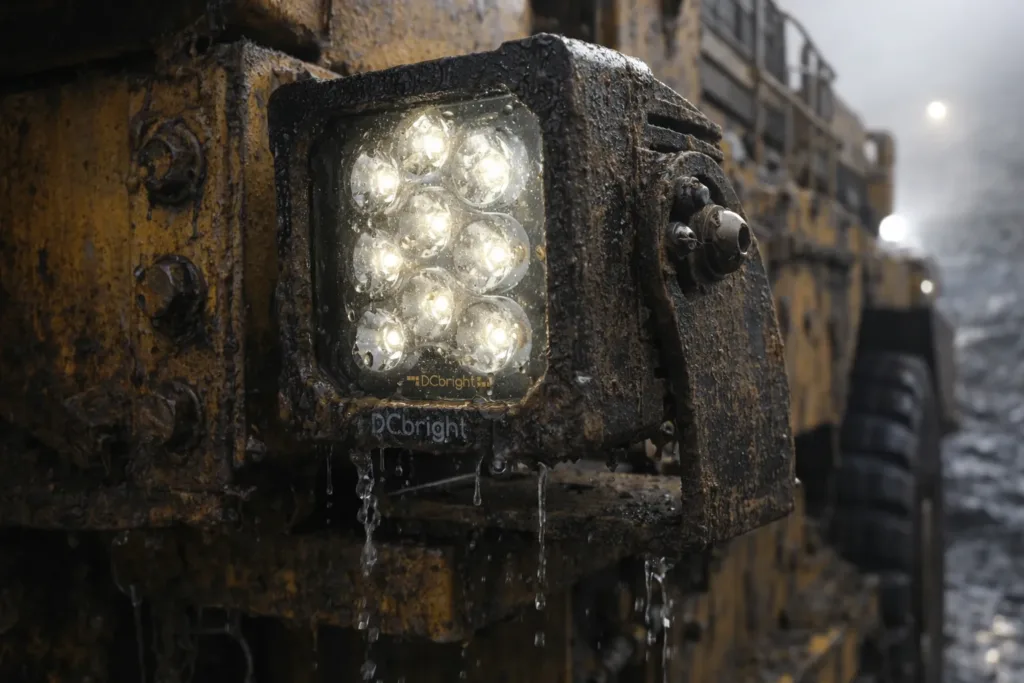
Mobile machinery and heavy equipment operate in environments where lighting is constantly subjected to vibration, impact, dust, mud, water, heat, and changing work zones. JEL Products supplies industrial LED work lights and machine lighting for mobile cranes, mobile tower cranes, mining machinery, asphalt pavers, excavators, and other heavy equipment where visibility directly impacts safety and productivity.
Robust LED work lights for machinery, cranes, and heavy equipment
Task lighting for operators, mechanics, and work areas
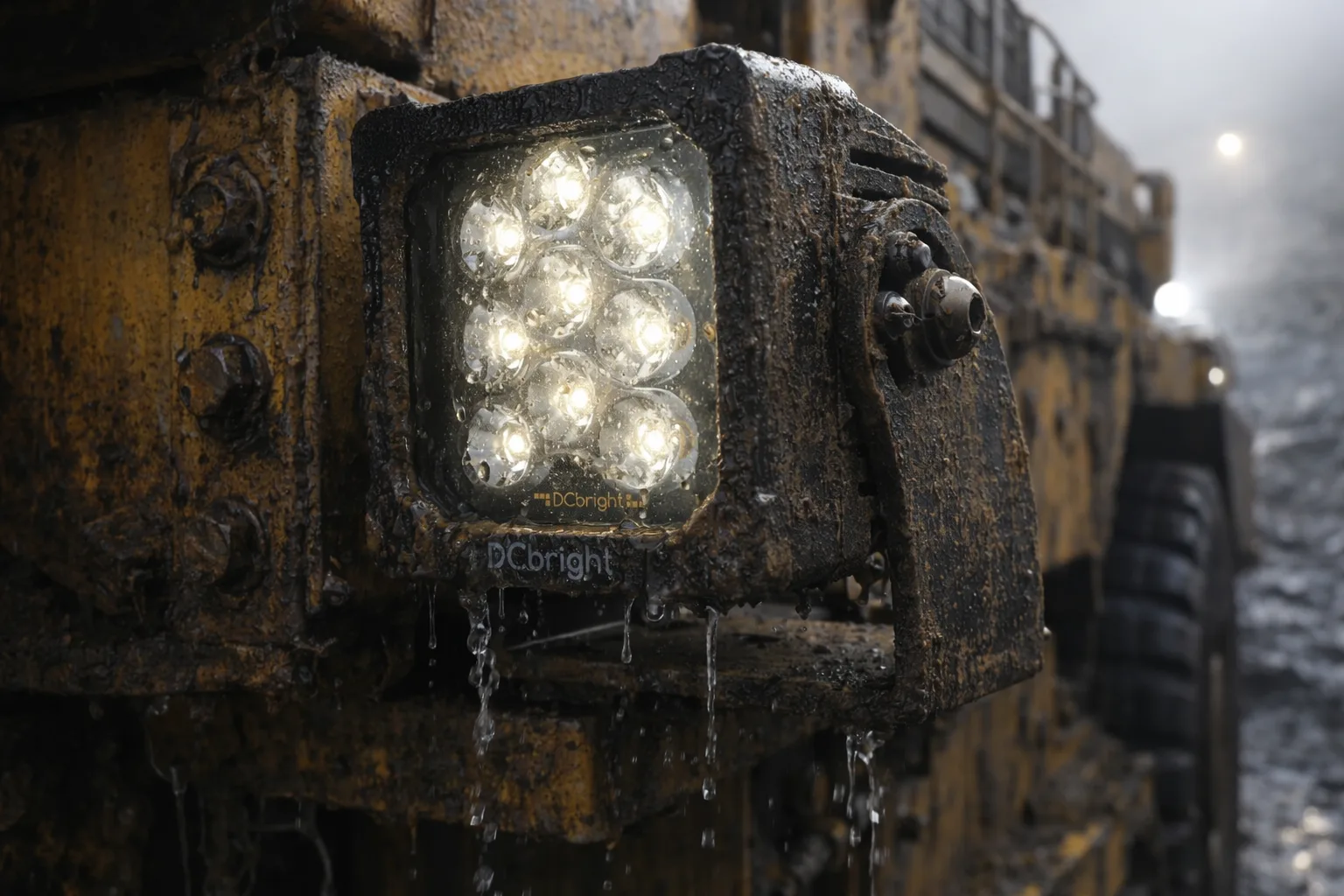
Vibration-resistant solutions for dust, mud, water, impact and intensive use
Lighting on mobile machines is not a standard accessory. The lamp moves with the machine, experiences vibrations, is exposed to dirt and water, and must illuminate precisely the part of the work zone that the operator, driver, or mechanic relies on. Good machine lighting supports visibility of the immediate work zone, moving parts, tools, load, bucket, boom, mast, undercarriage, asphalt bed, direction of travel, or service position.
Typical challenges
Vibration, shock load, and mechanical impact
Dust, mud, water, oil, brine, and cleaning
Compact mounting positions on rolling stock
View of bucket, boom, load, mast, work zone, or direction of travel
Glare towards operator, bystanders, or traffic
Electrical integration with AC, DC, or machine systems
Maintenance under time constraints and harsh conditions
Technical summary
JEL Products supplies industrial LED lighting for mobile machinery, cranes, construction equipment, mining machinery, asphalt equipment, excavators, work vehicles, and technical equipment where standard lamps are not sufficiently reliable.
Typical applications
Mobile cranes, mobile tower cranes, mining machines, asphalt pavers, excavators, shovels, loaders, dump trucks, terminal equipment, service vehicles, industrial vehicles, and machine frames.
Vibration, shock loads, dust, mud, water, high-pressure cleaning, oil, temperature fluctuations, heat, impact, confined spaces, mobile work zones, and intensive operating hours.
Best app
Machine builders, equipment services, rental companies, contractors, mining companies, asphalt companies, crane companies, technical services, and OEMs seeking heavy-duty and professional use lighting.
Not intended for
Decorative vehicle lighting, standard automotive lighting, signal lighting, beacons, headlight replacements for road legality or ATEX/IECEx applications without project-specific certification control.
Important design factors
Vibration, shock load & assembly
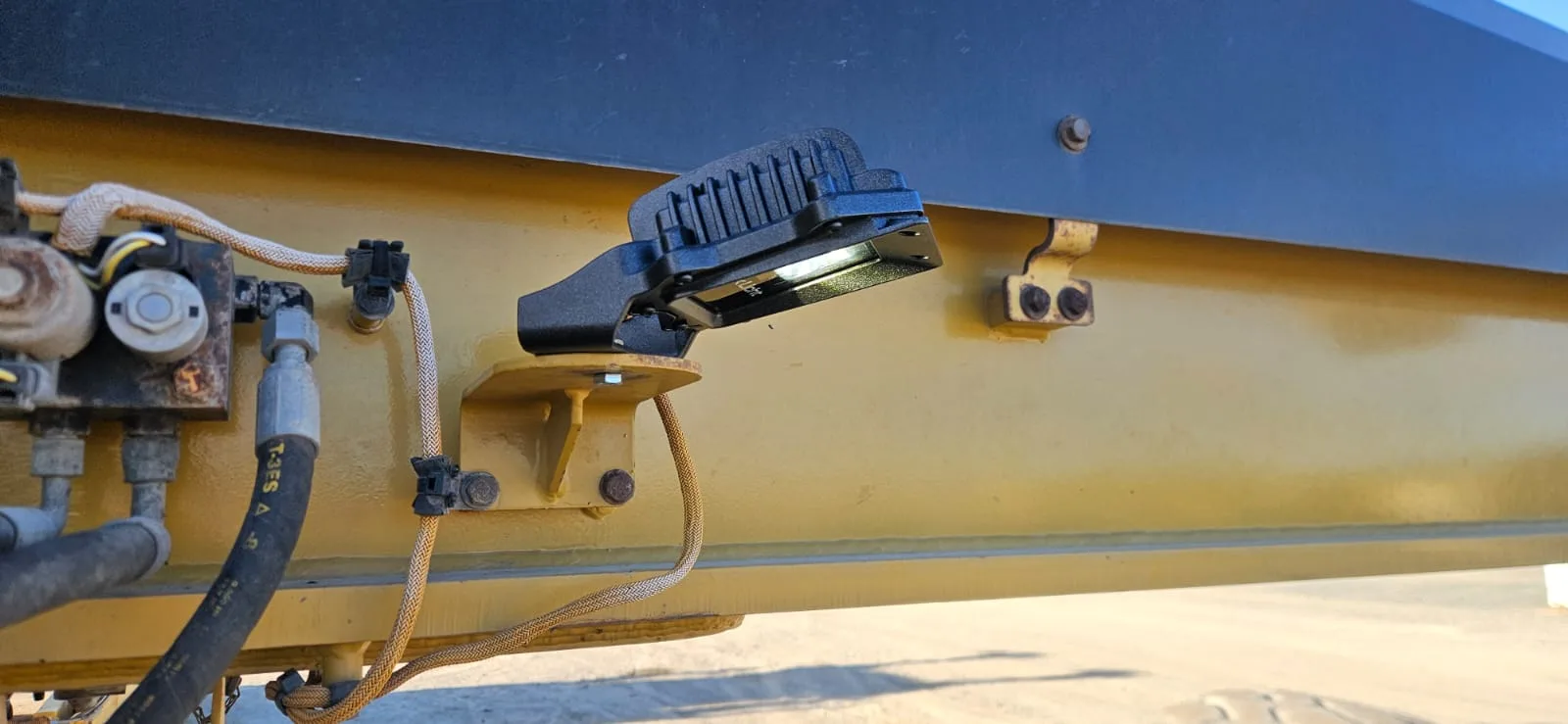
Mobile machines cause continuous vibrations and occasional shocks. A work light on an excavator, crane boom, asphalt paver, or mining machine is subjected to different stresses than a fixture on a building or pole.
Vibration-resistant fixtures and brackets
Protection against shock load and impact
Compact assembly on machine frames
Cable routing along moving parts
Confirmation suitable for intensive use
Read more...
In machine lighting, the mounting often determines the system's lifespan. A strong lamp can still fail prematurely if the bracket, cable entry, or mounting position doesn't suit the machine's movement.
Therefore, we look at the entire application: mounting surface, vibration source, moving parts, cable protection, service access, and the direction in which the lamp is mechanically stressed. This is especially important for retrofit projects, as existing mounting points are not always suitable for a new lighting setup.
Work zone, operator visibility & safety
Machine lighting should not only provide a lot of light, but especially make the right part of the work zone visible. The operator must be able to see where the machine is working, moving, lifting, digging, paving, or positioning.
View of tub, boom, load, mast, or work area
Less glare towards the driver or surroundings
Recognition of people, edges, and obstacles
Light image adapted to task and distance
Safe machine guarding
Read more...
With heavy machinery, the work zone is often dynamic. The machine turns, drives, lifts, slides, digs, or moves past people, vehicles, and objects. An incorrectly chosen light beam can cause shadows, distracting reflections, or glare.
A good lighting setup supports the operator's visibility without unnecessarily burdening the environment. The goal is not maximum light output, but usable visibility in the areas where the machine actually operates.
Environmental tax & protection
Mobile machines often work in dirtier conditions than fixed installations. Dust, mud, water, oil, rubble, asphalt residue, brine, and cleaning can put a heavy strain on the fixtures.
IP and IK protection tailored to the application
Resistant to dust, mud, water, and cleaning
Shatter-resistant lenses and robust housings
Suitable for outdoor use and heavy industry
Material selection appropriate for environment and maintenance
Read more...
A work light on a machine must continue to function while the environment changes. Consider wet construction sites, dusty mining locations, hot asphalt environments, muddy earthworks, or machines that are cleaned daily.
Therefore, protection against water and impact is not enough. Lens material, housing, sealing, cable entry, coating, and heat dissipation also determine whether a fixture remains reliable long-term.
Electrical Integration & Maintenance
Mobile machines have different electrical requirements than fixed installations. Voltage range, current consumption, EMC behavior, cable routing, connectors, and serviceability must be compatible with the machine system.
AC/DC configurations depending on the machine
Compact driver and cable construction
Replaceable components where possible
Low-maintenance assembly
Reliability over lowest purchase price
Read more...
For machine lighting, the technical service must be able to inspect, replace, or adjust it quickly. A lamp that is difficult to reach, illogically wired, or incompatible with the machine's voltage system will cause unnecessary downtime.
That's why we not only assess the fixture, but also the electrical integration. A predictable maintenance strategy is particularly important for OEM applications, retrofit projects, and rental equipment.
What we offer
Applications in mobile machinery & equipment
Discover the key applications where machine lighting, work zone visibility, mechanical load, and maintenance strategy differ significantly.
Hysteria zones
Operator view
Trilling
Safety
Blinding glare
Mobile cranes
Lighting for mobile cranes where visibility of the load, hook, boom, outriggers, swing radius, and work zone is essential for safe lifting operations.
View of hook, load, and lifting zone
Less glare towards the driver
Vibration-resistant mounting on boom or frame
Compact work lights for confined spaces
Cable protection along moving parts
Mast
Giek
Area of operation
Compact assembly
Safety
Mobile tower cranes
Lighting for mobile tower cranes and self-erecting cranes where the mast, boom, hook area, construction site, and immediate work zone must remain clearly visible.
View of hook, boom, and work area
Light image adapted to construction site environment
Limiting nuisance to the surroundings
Robust mounting on crane structure
Suitable for rental, assembly, and disassembly
Dust
Impact
Continuity
Heavy load
Blinding glare
Mining machines
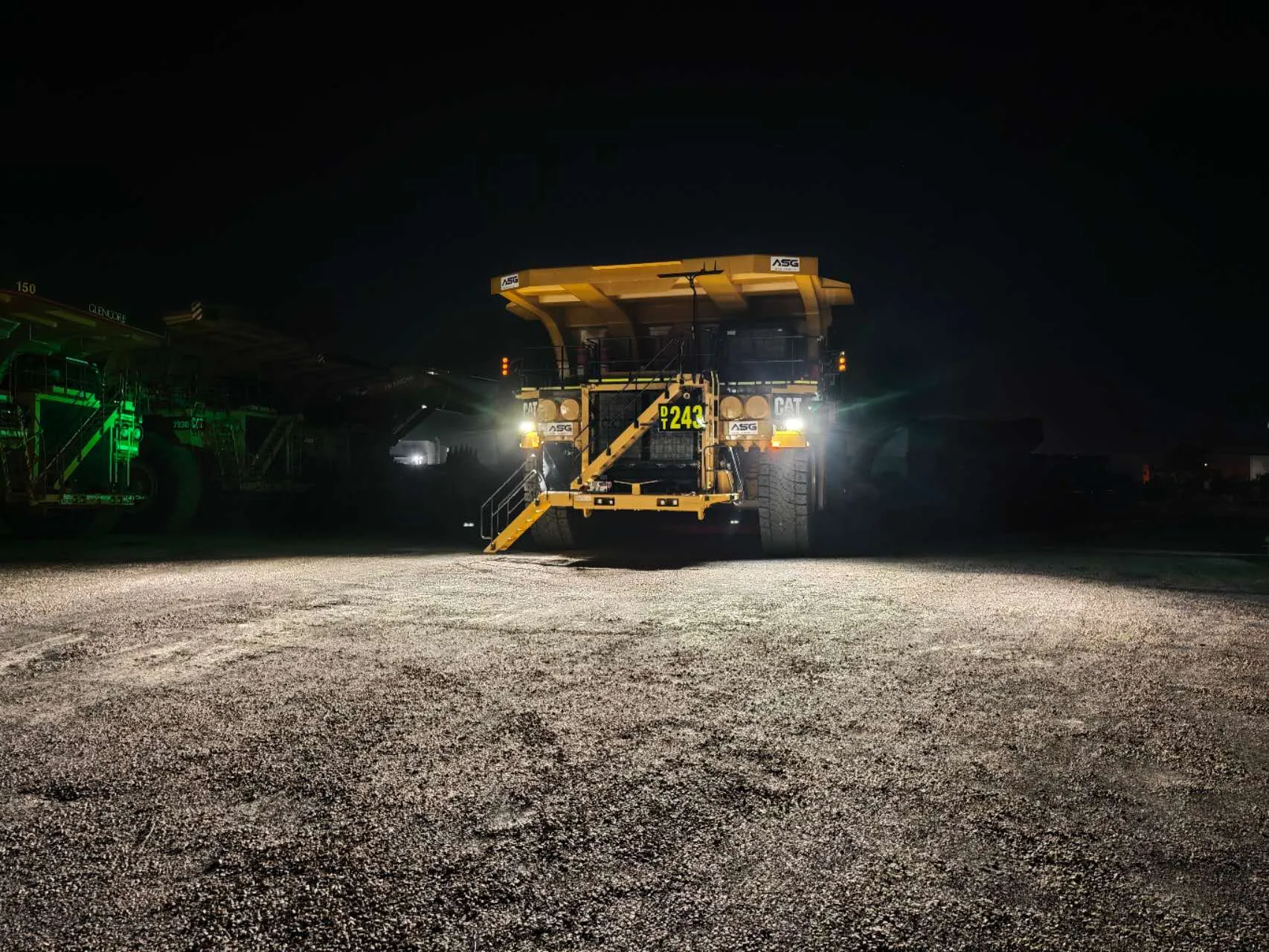
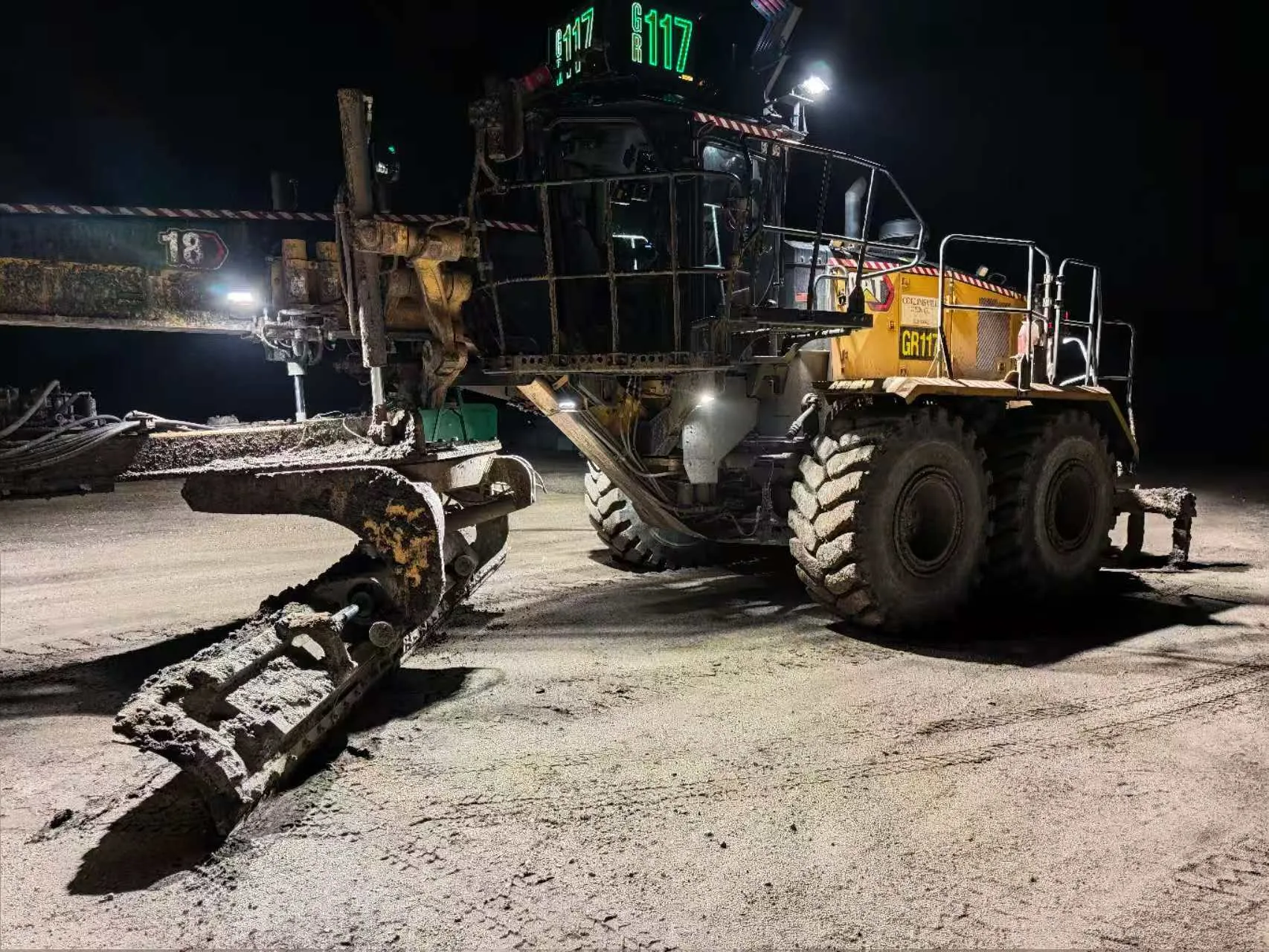
Lighting for mining machinery, loaders, dumpers, excavators, and heavy industrial equipment where dust, impact, vibration, and long operating hours dictate fixture selection.
Resistant to dust, mud, and impact
High light output for large machines
Machine and work front visibility
Robust housings and impact-resistant lenses
Heavy-duty maintenance strategy
Heat
Luminous traffic
Working width
Service
Asphalt pavers
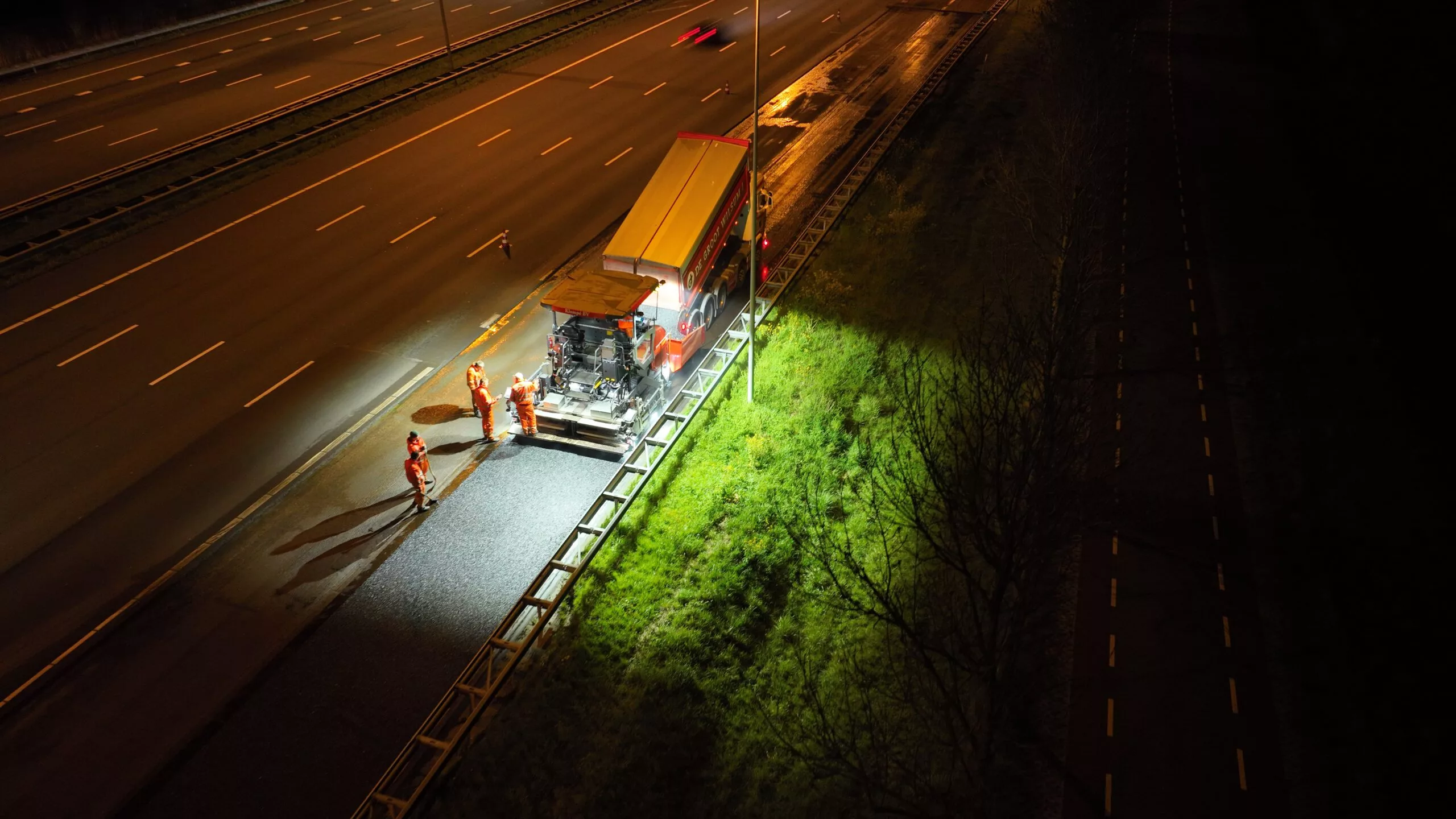
Lighting for asphalt pavers where visibility of the feedstock, working width, screed, edges, travel paths, and service points is important during production and finishing.
View of asphalt bed and working width
Resistant to heat, dirt, and vibration
Compact assembly under the hood or machine frame
Task lighting for service and adjustment points
Light image without hindrance for operator and crew
Groundwork
Back view
Modder
Panorama
Blinding glare
Excavators
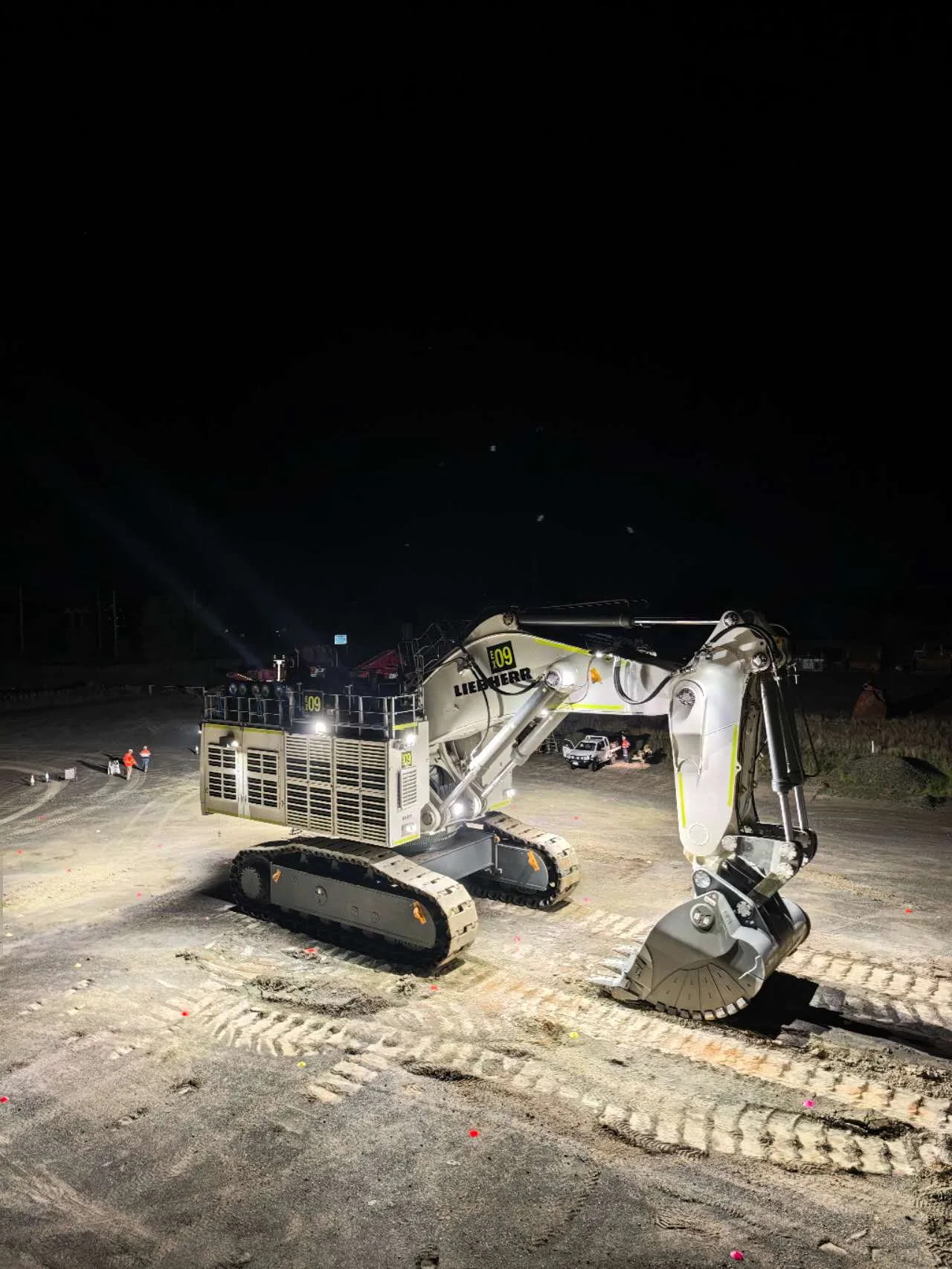
Lighting for excavators where visibility of the bucket, boom, swing radius, tracks, excavation pit, trench, slope, and surroundings is crucial for safe and efficient operation.
View of bucket, boom, and digging area
Panoramic view when turning and positioning
Resistant to mud, water, and impact
Compact work lights on cab, boom, or frame
Less glare towards the driver
Service
Equipment
Workshop
Retrofit
Blinding glare
Heavy construction equipment & service vehicles
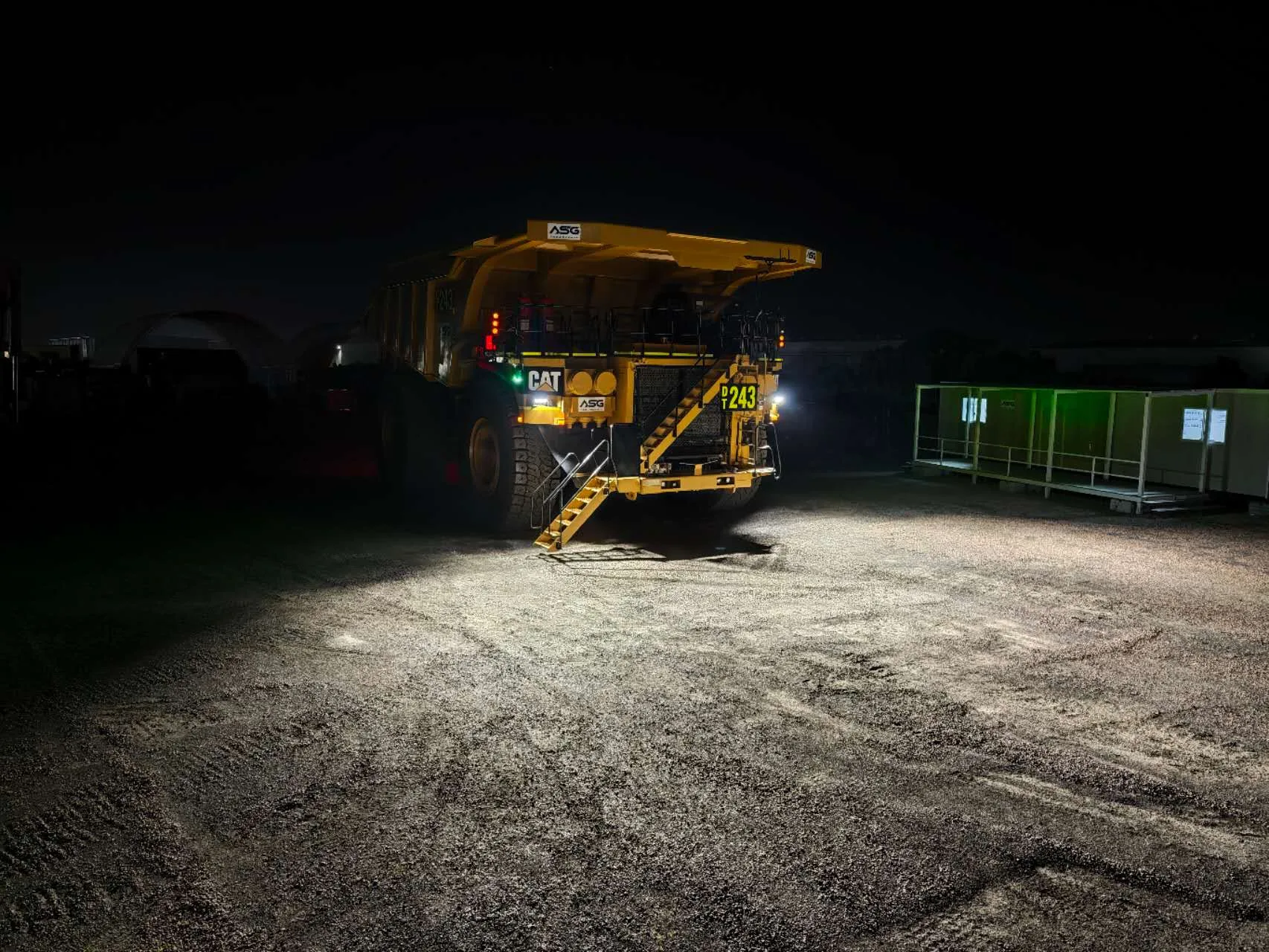
Lighting for shovels, loaders, dumpers, service vehicles, terminal equipment, and other heavy machinery where robust work lights are needed for daily use.
Task lighting around a machine or vehicle
Robust mounting on frame or cabin
Suitable for retrofit and replacement
DC configurations for machine power
Low-maintenance cable and connector construction
Solution layers for mobile machines & equipment
Lighting on mobile equipment requires more than a single work lamp. The choice of fixture, light beam, mounting, cable routing, power supply, and maintenance must suit the machine and how it is used.
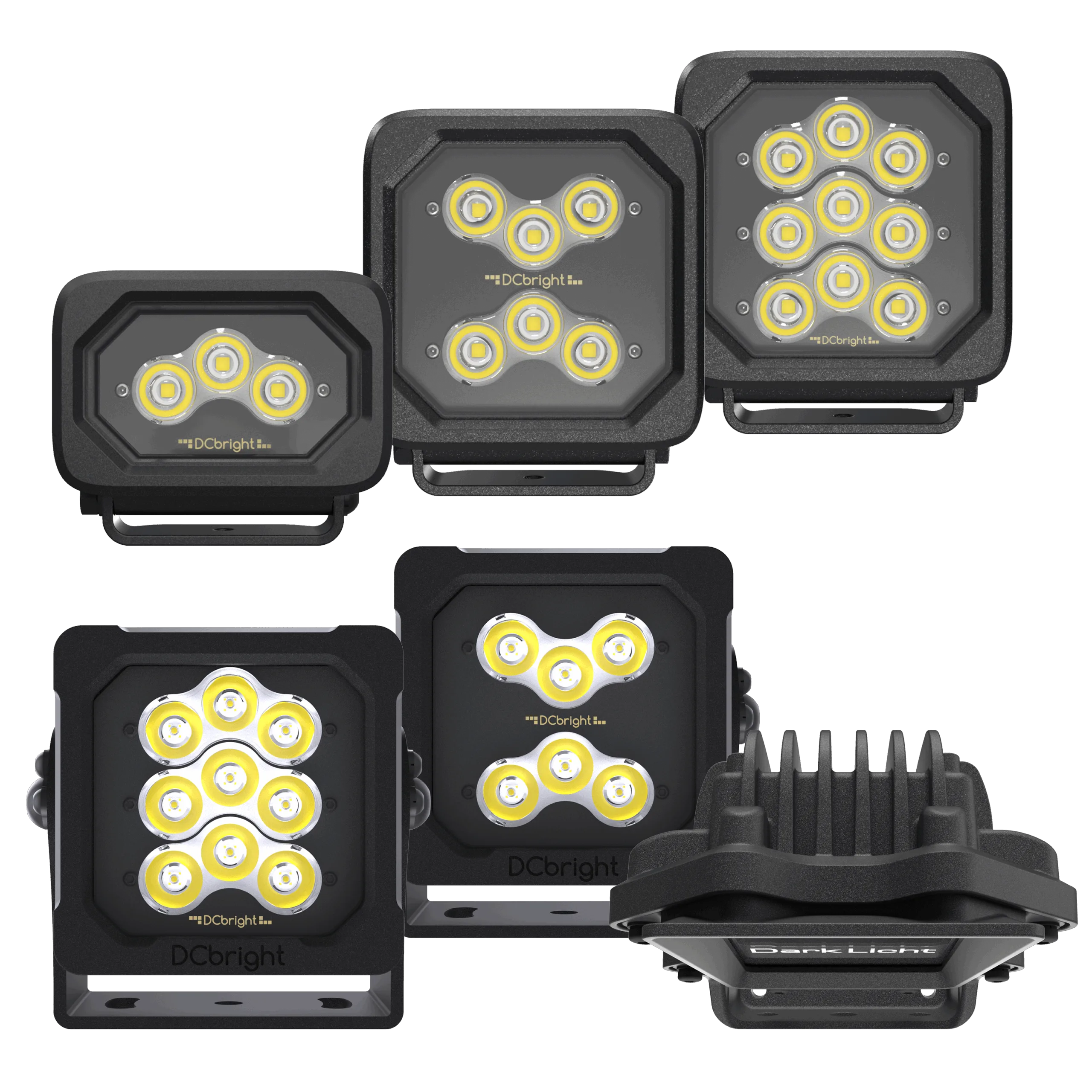
For excavators, loaders, asphalt pavers, service vehicles, and heavy equipment requiring compact, robust lighting on the cab, frame, boom, or undercarriage.
For machine builders, rental companies, technical services, and equipment managers looking to replace, standardize, or integrate lighting into new machines.
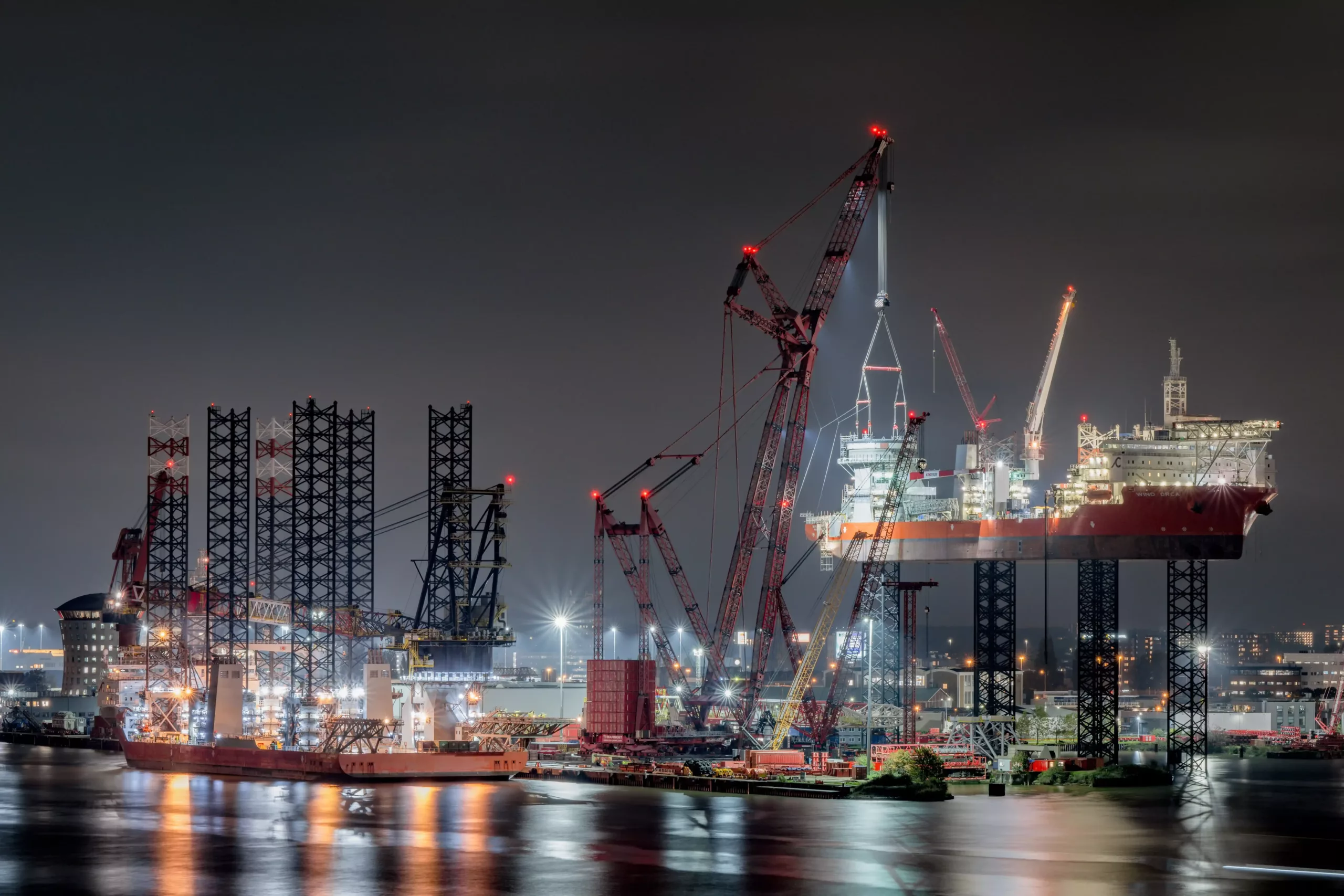
Lighting project for Mammoet’s PTC210-DS, at the time the world’s largest land crane. Using just five carefully positioned fixtures, JEL Products created a targeted crane lighting setup for large-scale lifting operations under demanding site conditions.
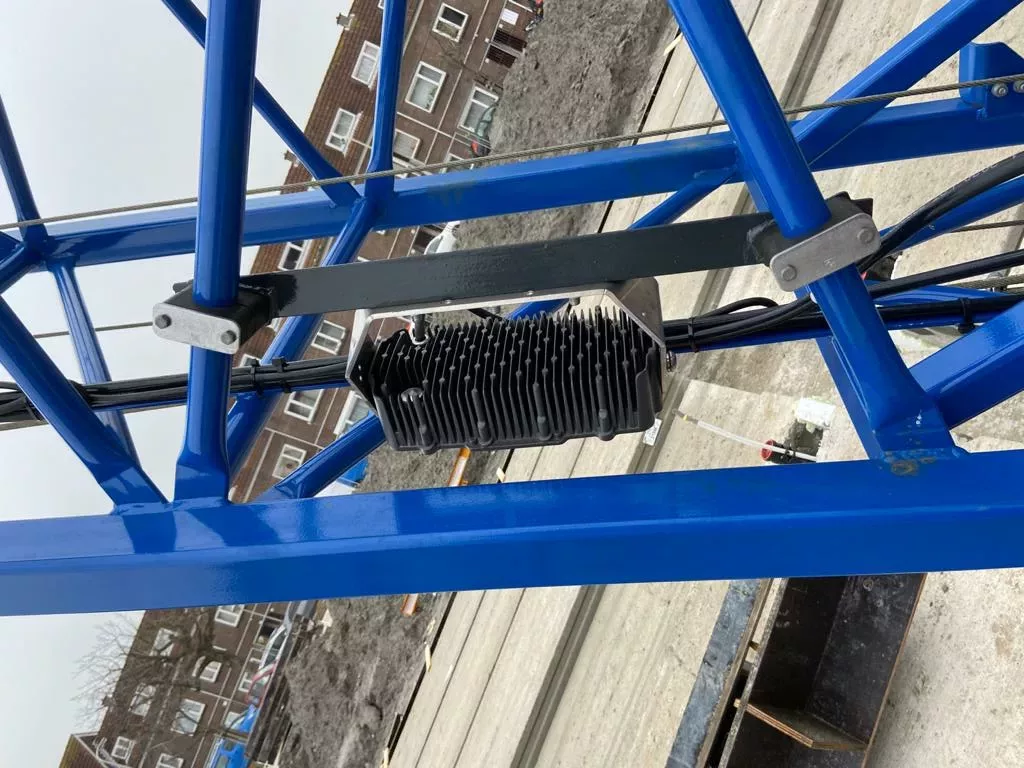
JEL Products supplies lighting for crane and construction equipment applications where reliability, visibility of the work area, and rugged mounting are essential. Mobile tower cranes and construction site equipment require lighting that can withstand installation, dismantling, transport, and daily use.
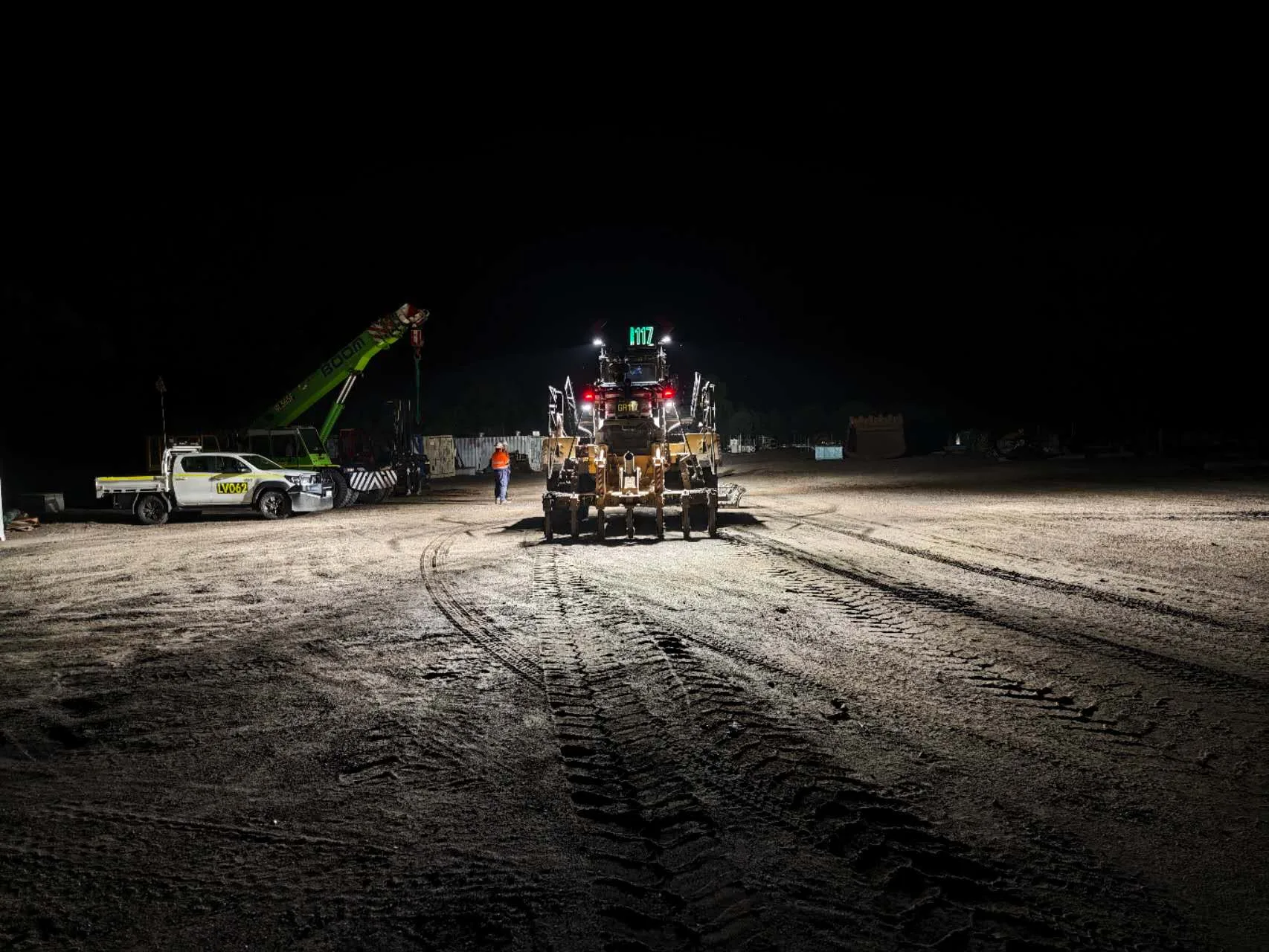
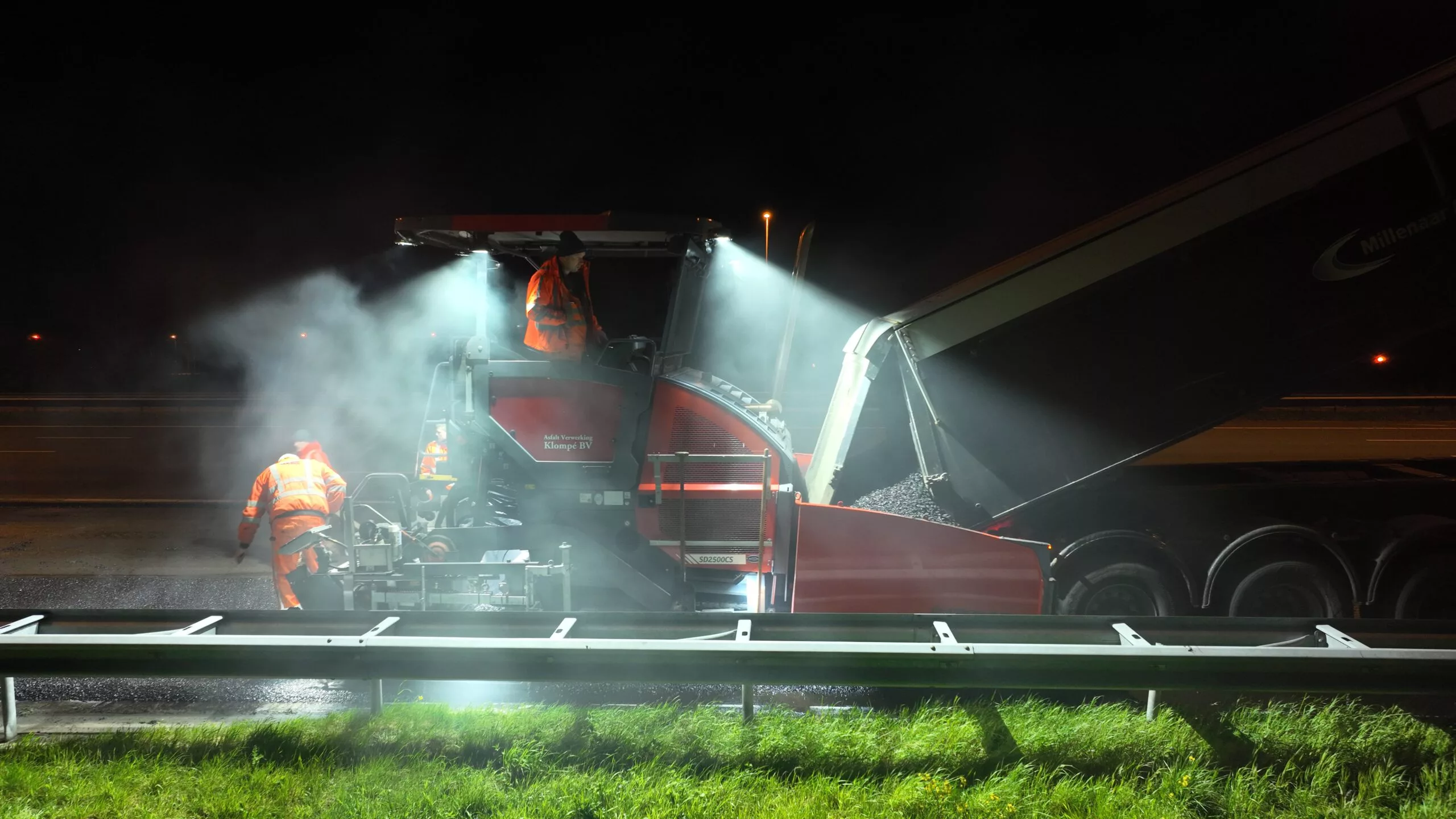
Applications for asphalt pavers and heavy mobile equipment that require compact work lights for visibility of the working width, service points, machine frame, and immediate work zone. The lighting must be resistant to vibration, dirt, heat, and heavy use.
“We use JEL Products lighting on all our tower cranes. The visibility, product quality, and service have proven themselves in daily use. Now that we’ve worked with this solution, we wouldn’t want to go back to anything else.”
Marcel P.Schot Vertical Transport
“The collaboration was excellent. In the end, we implemented a high-quality solution for our terminal. I would definitely recommend JEL Products to others in the industry.”
Jesse M.Project Manager | BUSS Terminal Eemshaven
“JEL Products has transformed the lighting on our asphalt paver into a controlled work environment. Our crew works safely within a clearly defined ‘umbrella’ of light, while surrounding traffic and the surrounding area are not unnecessarily blinded.”
Mark R.Klompé Asphalt Company
A selection of our valued clients
Frequently Asked Questions
What makes machine lighting different from standard work lamps?
Machine lighting is exposed to vibration, shock load, dirt, water, impact, and moving mounting positions. The lamp must not only provide ample light but also be mechanically and electrically compatible with the machine.
What lighting is suitable for mobile cranes?
For mobile cranes, we focus on visibility of the hook, load, boom, outriggers, slew radius, and work zone. The right solution depends on mounting position, working distance, supply voltage, vibration load, and desired beam.
Can you supply lighting for mobile tower cranes?
Yes. Mobile tower cranes require robust lighting suitable for transport, assembly, disassembly, and changing construction sites. Furthermore, limiting glare and disturbance to the surroundings is often important.
What lights are suitable for asphalt pavers?
For asphalt pavers, compact and robust work lights are needed that can withstand vibration, dirt, heat, and intensive use. The lighting should provide visibility of the working width, screed, edges, and service points without obstructing the paver.
Is IP69K important for mobile machinery?
In many cases, yes. Machines are often exposed to water, mud, dust, and cleaning. IP69K can be important, but overall reliability also depends on the housing, lens, cable entry, mounting, and electrical connection.
Can existing halogen or LED work lights be replaced?
Yes. During retrofitting, we assess the existing installation, supply voltage, current consumption, cable routing, light pattern, operator visibility, and available space. Afterwards, we select a suitable LED solution.
Do you also supply automotive headlights or road-legal lighting?
No. Our focus is on industrial work lighting and machine lighting. Headlights, signal lights, beacon lights, and road-legal lights fall outside our standard scope.
What information is needed for a technical consultation?
Preferably, we would like to receive photos of the machine, the mounting position, supply voltage, existing lamp data, desired working area, cable possibilities, and information about dust, water, heat, vibration, or impact.
Discuss your machine or equipment application
Are you looking for robust LED lighting for a mobile crane, mobile tower crane, mining machine, asphalt paver, excavator, or other heavy equipment?
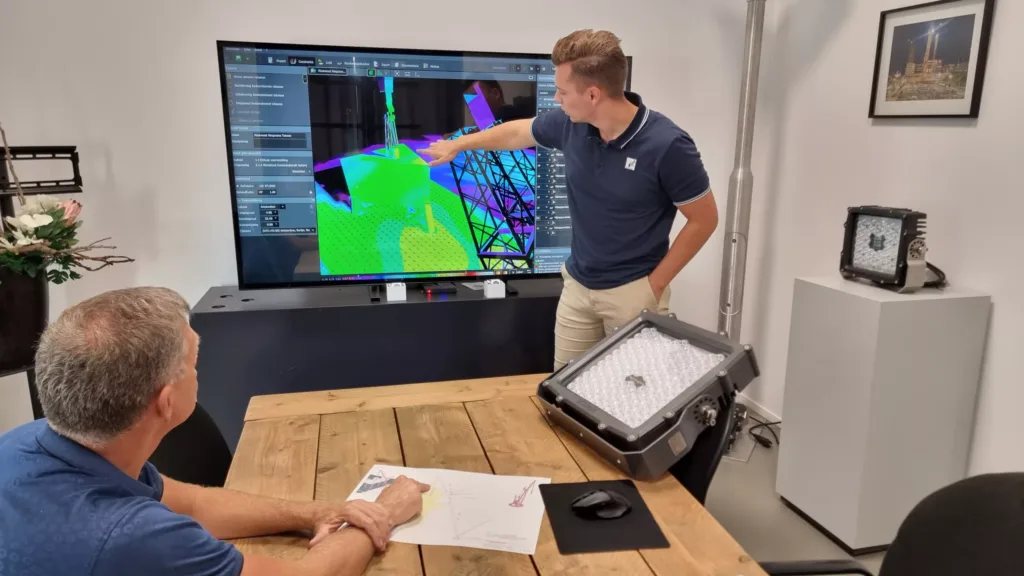
JEL Products helps machine builders, contractors, rental companies, technical service providers, and equipment managers choose the right lighting based on the work area, mounting position, supply voltage, light beam, vibration exposure, maintenance requirements, and operating environment.
Your request will be assessed by our technical team. We normally reply within one business day.