

Short answer
EN 12464-2 sets lux, uniformity and glare per zone; the Working Conditions Act makes the employer responsible for them.
In the Netherlands and Europe, multiple mandatory standards and safety regulations apply to terminal lighting, including EN 12464-2 for outdoor workplaces and the ATEX directives for explosion-hazardous areas. These requirements are binding for anyone designing, installing, or managing lighting at ports, container terminals, and industrial transshipment locations. This article answers the most frequently asked questions about safety regulations for terminal lighting, from minimum illuminance levels to IP classes and ATEX certification.
20 lux
roadways and traffic routes, U0 0.25
100 to 200 lux
active work zones at cranes and lifting equipment
GR 50
maximum glare rating on work sites
What standards and legislation apply to terminal lighting?
Terminal lighting must comply with the European standard EN 12464-2, which specifies minimum illuminance levels, uniformity, and glare limitation for outdoor workplaces. Additionally, the Working Conditions Decree requirements for a safe workplace apply, as does the ATEX Directive 2014/34/EU in explosion hazard zones, and the EMC and Low Voltage Directives for electrical installations.
In practice, this means that a terminal cannot simply install lights that appear bright enough. The lighting installation must demonstrably meet measurable parameters. The EN 12464-2 standard describes, among other things, the average illuminance (Em), the uniformity ratio (Uo), and the glare rating (GR value). For terminals and ports with special activities, such as the loading and unloading of hazardous materials, additional requirements arise from ATEX legislation and sometimes from sector-specific regulations from the Harbourmaster or Port Authority.
In addition to European standards, there are also national interpretations through the Building Decree and NEN 3140 for electrical installations. A thorough Custom lighting advice is therefore not a luxury, but a necessary step to meet all applicable requirements.
What is the minimum illuminance required in terminal ports?
According to EN 12464-2, general outdoor work areas have a minimum average illuminance of 20 lux. However, for active work zones in terminals, such as crane paths, loading and unloading docks, and forklift lanes, the requirement is significantly higher, typically between 50 and 200 lux, depending on the task.
The required illuminance depends on the visual task requirements at a specific location. A distinction that is regularly made in practice:
| Zone | Minimum requirement |
|---|---|
| Roadways and traffic routes: | a minimum of 20 lux on average, with a uniformity of at least 0.25 |
| Loading and unloading platforms: | a minimum of 50 lux, with higher uniformity requirements |
| Active Work Zones at Cranes and Hoisting Machines | 100 to 200 lux, depending on the accuracy of the actions |
| Safety and emergency routes: | at least 1 lux, with an emergency lighting requirement of 0.5 lux on escape routes |
Uniformity is at least as important as absolute light intensity. Poorly distributed light levels, with bright spots and dark zones, increase the risk of accidents as eyes constantly have to adjust. Terminal lighting in ports therefore requires a well-thought-out lighting plan that takes into account both horizontal and vertical illuminance.
| Outdoor zone | Guide value according to EN 12464-2 |
|---|---|
| Walkways for pedestrians | 5 lux |
| Roadways for slow traffic, up to 10 km/h | 10 lux, U0 0.40 |
| Roadways for regular traffic, up to 40 km/h | 20 lux, U0 0.40 |
| Short-term handling of large units and bulk | 20 lux, U0 0.25 |
| Continuous loading, unloading and stacking | 50 lux, U0 0.40 |
| Reading labels, covered loading platforms, working with tools | 100 lux, U0 0.50 |
| Difficult assembly, electrical and mechanical work outdoors | 200 lux, U0 0.50 |
What are the requirements for anti-glare in terminal lighting?
For outdoor workspaces such as terminals, EN 12464-2 uses the GR rating (Glare Rating) as a measure of glare. The maximum GR rating for work areas is typically 50, with a lower value meaning less glare. Stricter requirements apply to areas where crane operators or vehicle drivers work due to the increased safety risks.
Glare on a terminal is not a comfort issue, but a direct safety factor. A crane operator who is temporarily blinded by a poorly aimed floodlight loses sight of the load and the surroundings. This can lead to serious accidents. The anti-glare requirements in the standard are therefore not optional.
In practice, anti-glare requirements are met by:
Controlling glare
Modern LED floodlights For industrial use, increasingly precise optical systems are available that allow the GR value to be precisely controlled without compromising the required illuminance.
Standards check
We check your terminal lighting against EN 12464-2
Send the yard layout and the current mast positions, or request a measurement on site. You receive per zone the measured or calculated lux, the uniformity and the GR value, with the changes needed to demonstrably comply with the standard.
Free of charge and without obligation · Response within 1 working day from an engineer
How does the IP protection class affect the safety of terminal lighting?
The IP rating (Ingress Protection) indicates the degree to which a luminaire is protected against the ingress of dust and water. For outdoor lighting luminaires in external environments, a minimum IP65 rating is required, which guarantees complete dust-tightness and protection against water jets. In areas with direct exposure to seawater or high-pressure cleaning, IP66 or higher is necessary.
An insufficiently high IP rating on terminals not only leads to premature failure of luminaires, but also to direct safety risks. Moisture in a luminaire can cause short circuits, resulting in fire hazards or power outages at critical moments. At a terminal, where 24/7 operations are the norm, unexpected lighting failure is a serious incident.
Besides the IP rating, the IK rating is also relevant. The IK rating indicates the mechanical impact resistance. At terminals, where luminaires can be hit by passing machinery, falling objects, or crane vibrations, at least IK08 or IK10 is recommended. More information on how these classifications work can be found on the page about IP and IK ratings for industrial lighting.
What safety risks arise from insufficient terminal lighting?
Insufficient terminal lighting significantly increases the risk of work accidents, collisions, falls, and operational errors. In environments where heavy machinery, forklifts, cranes, and pedestrians converge, visibility is a primary safety requirement. Poor lighting is therefore not just a violation of standards, but a demonstrable risk factor.
The most common safety risks with insufficient lighting at terminals are:
Self-check
Does one of these risks apply to your terminal?
In practice, each of these points can be traced back to too little light, poor uniformity or glare.
- Collisions Forklift and terminal vehicle drivers miss moving objects or pedestrians in dark zones
- Traffic incidents employees trip over obstacles, changes in level, or unmarked hazards that are not visible in the dark
- Loading and unloading errors: Crane operators misjudge distances and positions due to insufficient vertical lighting
- Delayed emergency response During emergencies, escape routes and emergency exits are not clearly visible.
- Increased mental load Working in poorly lit environments increases cognitive effort and reduces concentration, which leads to errors.
Under the Dutch Working Conditions Act (Arbowet), employers are obligated to provide a safe working environment. Insufficient lighting can be deemed a breach of this duty of care in the event of a workplace accident, with legal and financial consequences.
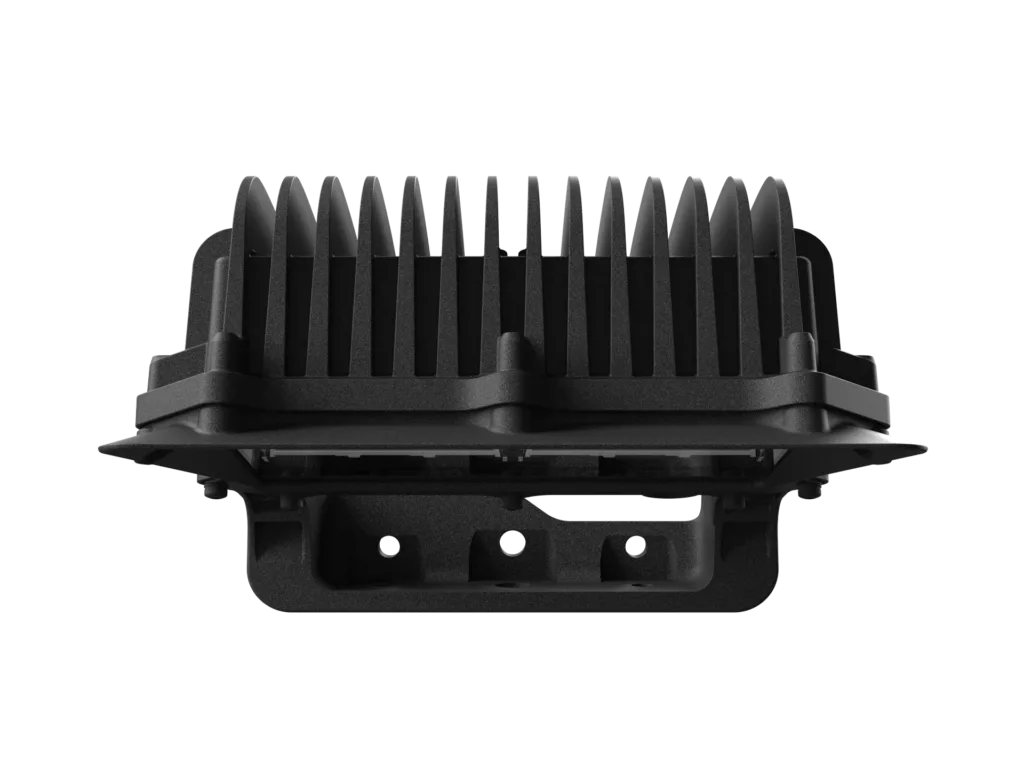
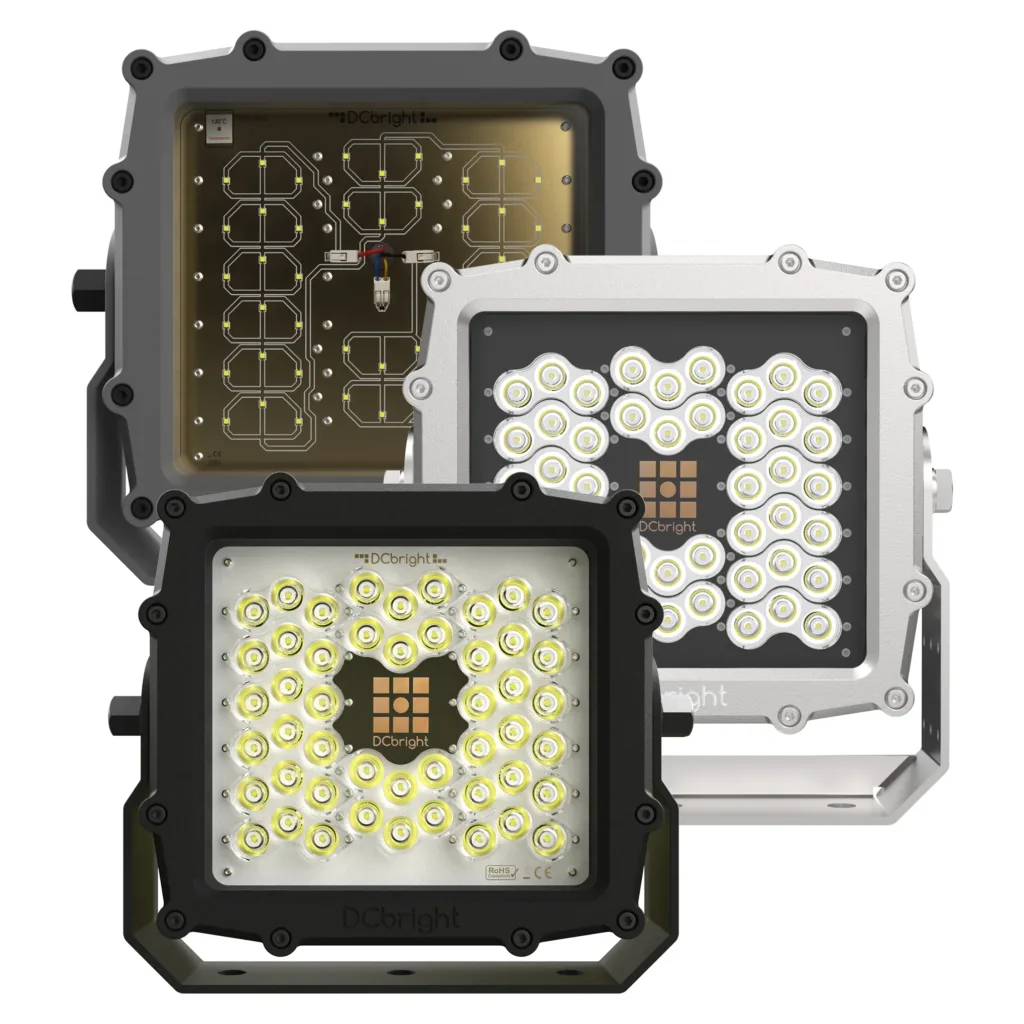
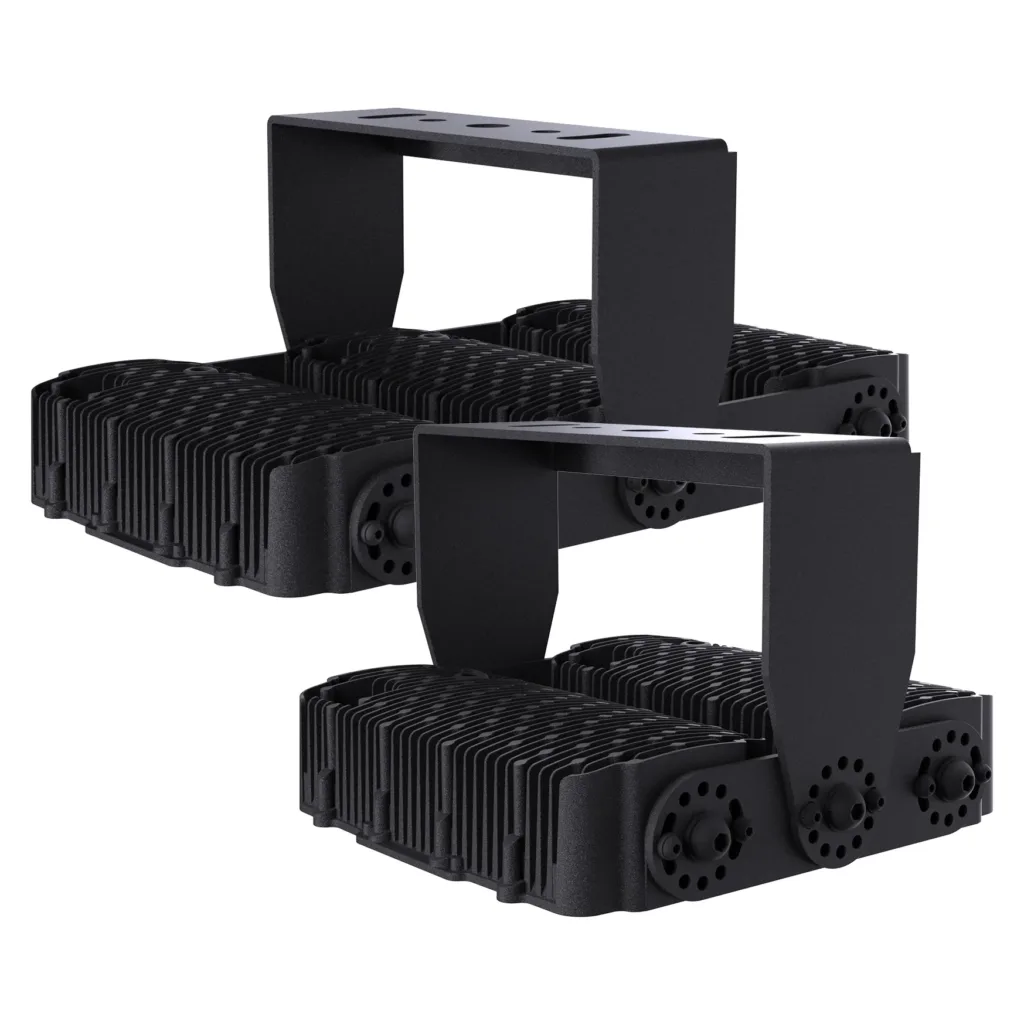
Luminaires for terminals
When is ATEX certification mandatory for terminal lighting?
ATEX certification is mandatory for lighting luminaires installed in areas where an explosive atmosphere may arise due to flammable gases, vapors, mists, or dust. At terminals, this specifically applies to storage areas for fuel, chemicals, or LNG, loading and unloading facilities for hazardous substances, and zones around tankers or gas terminals.
The ATEX Directive 2014/34/EU divides explosive atmospheres into zones (zone 0, 1, 2 for gas and zone 20, 21, 22 for dust). Specific requirements apply to the luminaire category for each zone. It is the operator's responsibility to establish a zone classification and select the appropriate lighting class based on this.
Outside of defined ATEX zones, standard industrial LED lighting is permitted, provided it complies with other applicable standards. However, it is essential that the zone boundaries are correctly determined and that luminaires placed in or near an ATEX zone are certified for the relevant zone category. An incorrect assessment of the zone classification is one of the most common causes of non-compliance in industrial sites.
Project · Ports and terminals
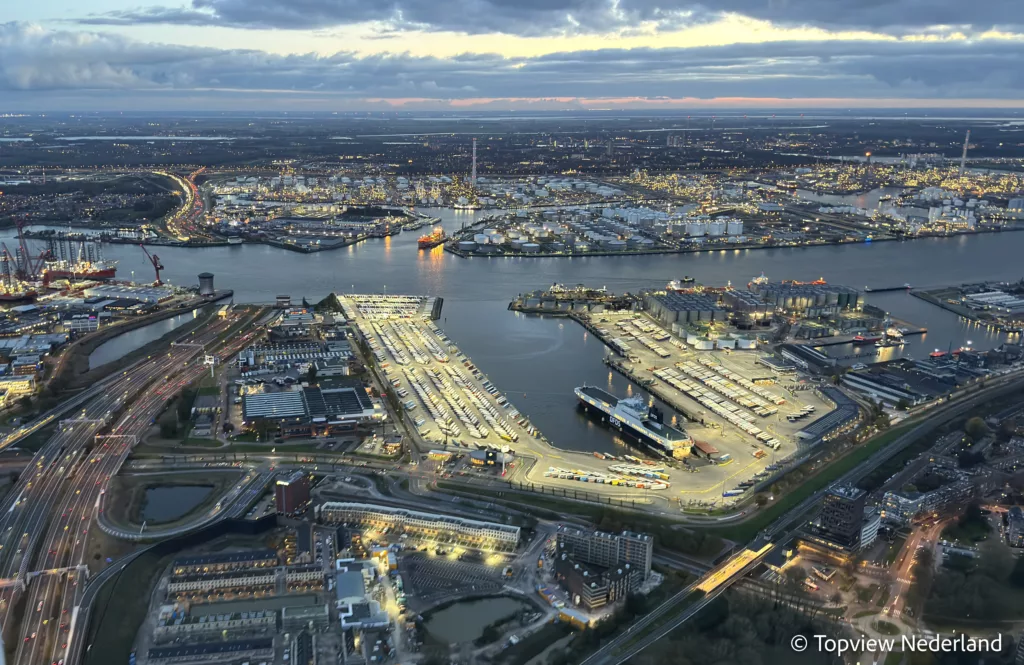
High-mast terminal lighting for DFDS Vlaardingen
New lighting design on 30 m masts with 145 m between the masts, next to a residential area and on a terminal that runs 24/7. About 180 DarkLicht luminaires with controlled light nuisance.
145 m
mast spacing with 30 m masts
50 lux
average, uniformity 0.35 to 0.45 against 0.25 in the standard
30%
less energy than the other A-brands offered
Further reading
How JEL Products Helps with Terminal Lighting That Meets All Safety Regulations
JEL Products provides comprehensive lighting solutions for terminals and ports, with safety regulations, standards, and technical requirements as the starting point,not an afterthought. As an ISO 9001- and VCA**-certified specialist in industrial LED lighting, they guide the entire process: from lighting design and compliance checks to delivery, installation, and commissioning.
What sets JEL Products apart for terminal projects:
- Lighting designs that demonstrably comply with EN 12464-2, including GR values and uniformity calculations
- Luminaires with high IP and IK ratings, suitable for the toughest port conditions
- Lighting for the site areas outside the ATEX zones, with referral to a certified Ex manufacturer for the zones themselves
- Full-cutoff and anti-glare optics for safe work on cranes and runways
- Guidance on subsidy trajectories and investment deductions for energy-efficient LED installations
Whether it's a new terminal, a renovation of an existing facility, or a specific challenge in an extreme environment: take on contact JEL Products for a no-obligation consultation and discover which lighting solution suits your situation.
Related Articles
- What role does lighting play in the safety of evacuation routes during heatwaves?
- Why does glare occur at loading and unloading docks?
- The importance of uniform lighting at a loading and unloading dock is that it improves visibility and safety.
- What LED lighting is suitable for a production hall?
- What are the risks of flickering lights at a container terminal?