

Short answer
You light a terminal zone by zone: masts for the yard, crane lighting for the work area and work lights on the equipment, all without glare.
Choosing the right lighting for a container terminal starts with understanding the specific requirements of the environment: large outdoor areas, crane operations, 24/7 operations, and strict safety standards demand a thoughtful approach. High-lumen LED luminaires, robust protection classes, and a well-designed lighting plan form the basis of any reliable terminal lighting system. In this article, we answer the most frequently asked questions about container terminal lighting, from standards and luminaire selection to costs and ATEX obligations.
20 to 50 lux
traffic routes and storage areas
100 lux
or more in active work zones and at cranes
IP66
and IK08 or higher, in C5-M against sea air
On the page port lighting you can read how JEL Products lights ports and terminals.
What lighting standards apply to a container terminal?
For a container terminal, European standards from the EN 12464 series apply, specifically EN 12464-2 for outdoor workplaces. This standard prescribes minimum lighting levels based on the task performed. For driving routes and storage areas, a minimum horizontal illuminance of 20 to 50 lux typically applies, while active work zones and crane locations can reach 100 lux or more.
In addition to illuminance, the standard also regulates uniformity: the difference between the darkest and brightest spot on a site must not be too large. Poor uniformity causes dangerous contrasts, especially with fast vehicle movements in the dark. The lighting class for roadways on the site also falls under the NEN-EN 13201 standard for road lighting.
Terminals subject to BRZO regulations or Seveso directives have additional requirements for emergency lighting and escape routes. It is advisable to always include applicable national and sector-specific regulations when preparing a lighting plan.
| Outdoor zone | Guide value according to EN 12464-2 |
|---|---|
| Walkways for pedestrians | 5 lux |
| Roadways for slow traffic, up to 10 km/h | 10 lux, U0 0.40 |
| Roadways for regular traffic, up to 40 km/h | 20 lux, U0 0.40 |
| Short-term handling of large units and bulk | 20 lux, U0 0.25 |
| Continuous loading, unloading and stacking | 50 lux, U0 0.40 |
| Reading labels, covered loading platforms, working with tools | 100 lux, U0 0.50 |
| Difficult assembly, electrical and mechanical work outdoors | 200 lux, U0 0.50 |
What types of lighting are suitable for a container terminal?
The most suitable lighting types for a container terminal are high-power LED floodlights on light poles, crane lighting for gantry cranes and reach stackers, and focused work lighting for active loading and unloading zones. Each type serves a different function within the overall lighting plan.
| Type | Function at the terminal |
|---|---|
| LED floodlights on poles | provide broad area lighting over large surfaces. They are suitable for storage yards, driveways, and access roads. |
| Crane lighting | specifically designed for gantry cranes, reach stackers, and other lifting machines. Requires vibration resistance and a precise light beam. |
| Work lights for machines and vehicles: | illuminate the operators' immediate work environment, without glare towards bystanders or oncoming traffic. |
| Floodlights and luminaires for warehouses: | for covered storage areas and workshops on the terminal grounds. |
When choosing the type of lighting, factors such as mast height, environmental class, and type of activity play a decisive role. lighting on harbor cranes Are there specific technical requirements that deviate from standard area lighting?.
What are the main technical requirements for terminal lighting?
The most important technical requirements for lighting at a container terminal are a high IP protection rating, mechanical shock resistance, corrosion resistance, and suitability for outdoor use in varying temperatures. Terminals are exposed to sea air, dust, rain, and mechanical vibrations, which place high demands on the durability of luminaires.
Specifically, the following requirements apply:
Technical requirements
More background information on protection classes can be found on the page about IP and IK ratings. Knowledge of these classifications helps in comparing luminaires and setting the right specifications in a quotation process.
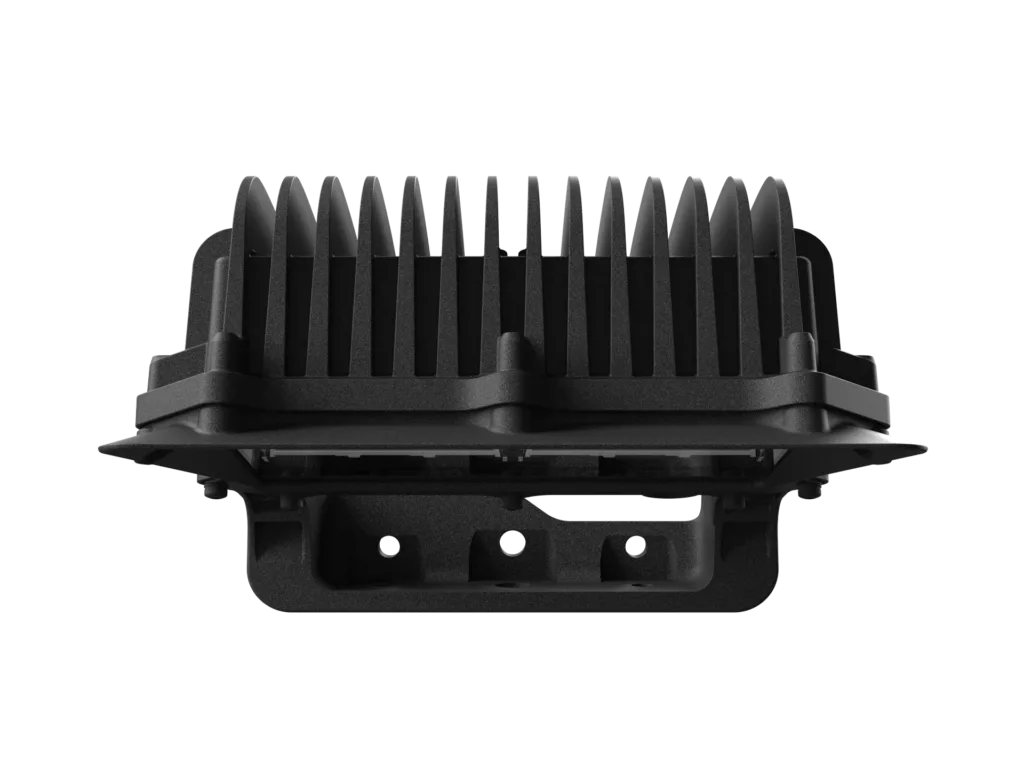
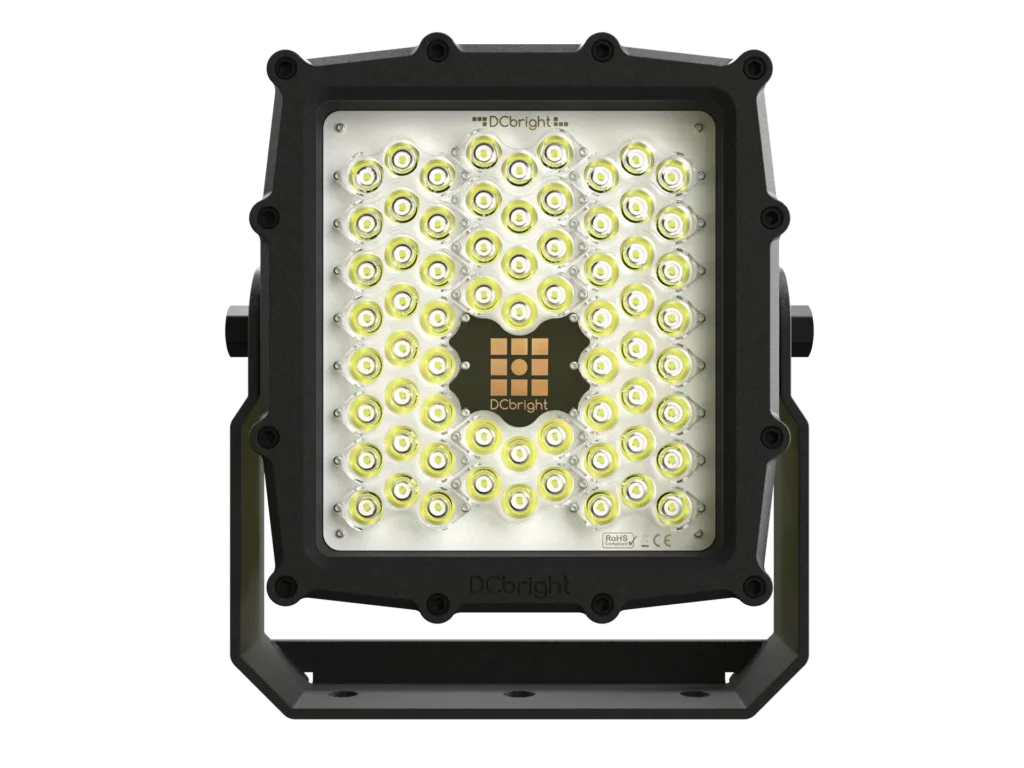
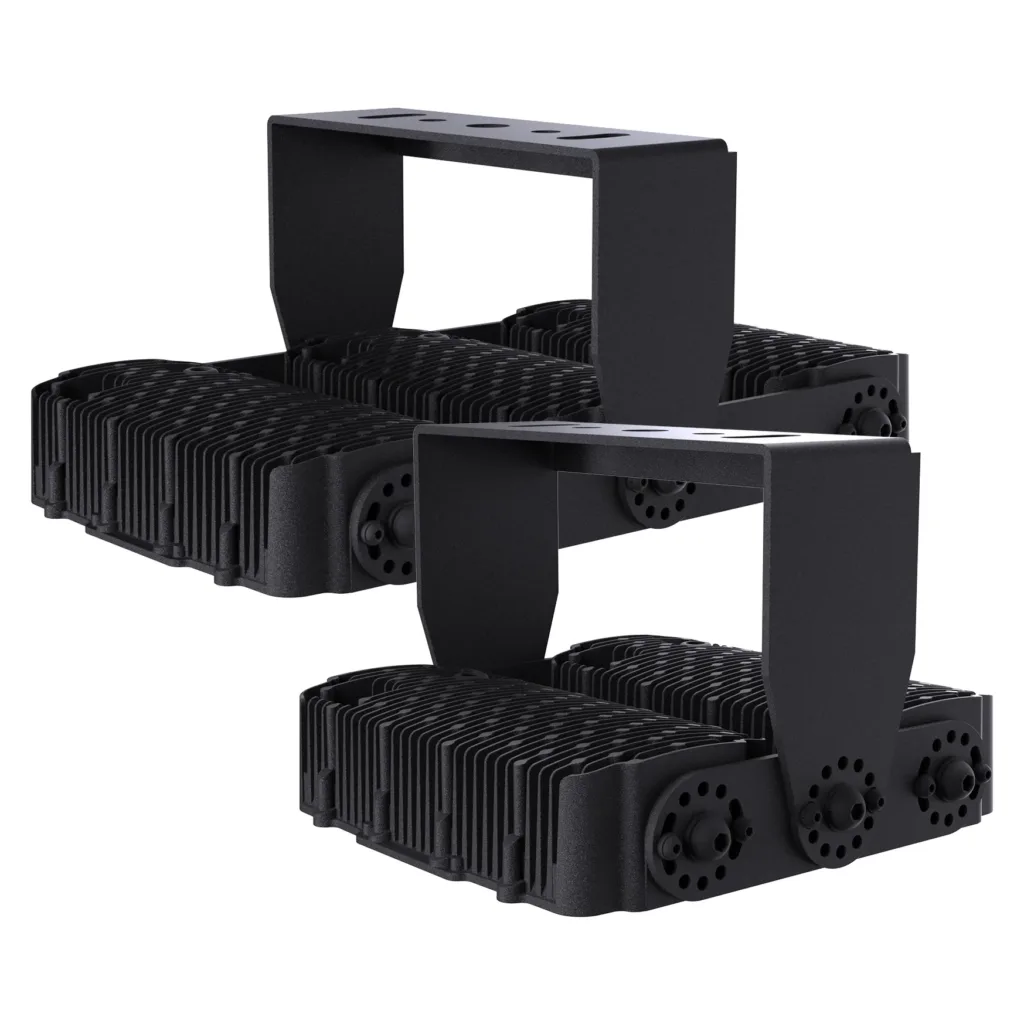
Luminaires for terminals
How do you determine the right lighting design for a terminal?
The correct lighting design for a container terminal is determined by starting with a lighting calculation based on the site layout, the activities per zone, and the applicable standards. A professional lighting plan takes into account mast positions, beam angles, mutual distances, and the desired uniformity level.
A good design goes through the following steps: first the zones are divided based on use, then the lighting points are calculated using simulation software such as Dialux or Relux. After that, pole heights and luminaire types are chosen that achieve the desired lighting levels without disturbing glare towards the environment or operators.
Glare is a specific concern in terminals. Crane and forklift operators must not be hindered by direct light in their field of vision. Luminaires with full-cutoff optics or precisely adjustable beams prevent this problem. A good custom lighting advice helps to make this assessment professionally and prevent execution errors.
Terminal lighting
We design terminal lighting from the operation outwards
Send the yard layout, the crane positions and the traffic routes. You receive a lighting design with mast positions and heights, the lux and uniformity per zone and the glare towards operators and surroundings, including masts, foundations and installation if you wish.
Free of charge and without obligation · Response within 1 working day from an engineer
What does lighting for a container terminal cost?
The costs for lighting at a container terminal vary greatly depending on the size of the site, the number of light points, the mast height, and the chosen luminaire quality. For a medium-sized terminal project, the total investment costs including engineering, masts, and installation can quickly amount to tens of thousands to hundreds of thousands of euros.
In addition to the initial investment, operating costs are decisive for the total cost. LED lighting consumes significantly less energy than conventional alternatives and requires less maintenance due to a longer lifespan. For 24/7 operations, a quality LED installation pays for itself through lower energy bills and reduced replacement costs.
In the Netherlands, there are fiscal advantages available for energy-efficient investments. The Energy investment allowance (EIA). makes it possible to deduct part of the investment for tax purposes, which considerably shortens the payback period. It is advisable to also include subsidy and financing options in the budgeting.
Project · Ports and terminals
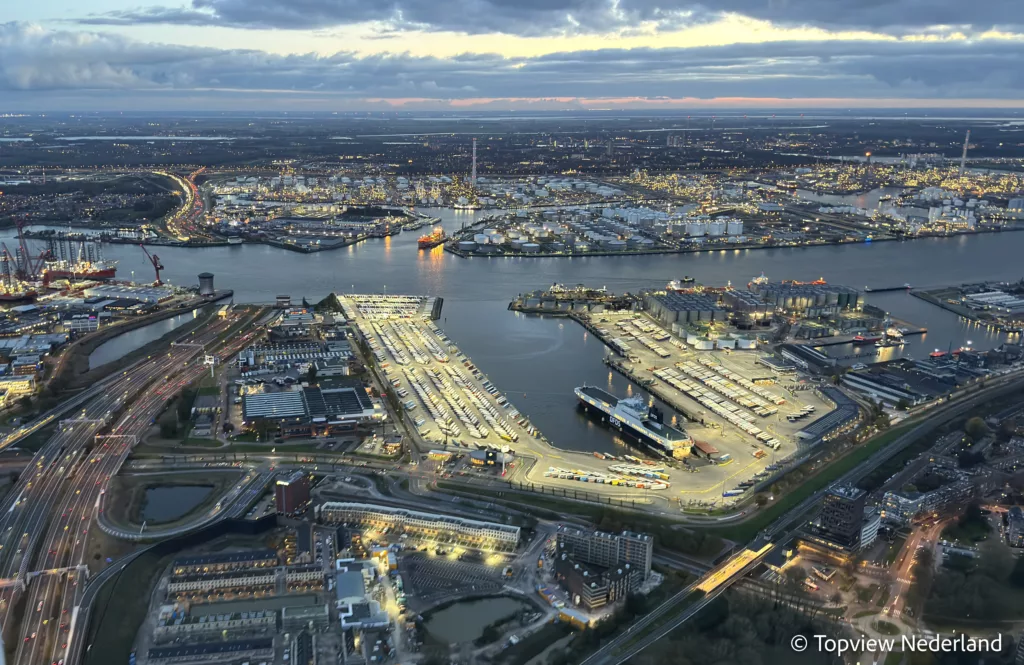
High-mast terminal lighting for DFDS Vlaardingen
New lighting design on 30 m masts with 145 m between the masts, next to a residential area and on a terminal that runs 24/7. About 180 DarkLicht luminaires with controlled light nuisance.
145 m
mast spacing with 30 m masts
50 lux
average, uniformity 0.35 to 0.45 against 0.25 in the standard
30%
less energy than the other A-brands offered
When is ATEX lighting mandatory at a terminal?
ATEX lighting is mandatory at a container terminal when there are potentially explosive atmospheres, such as storage locations for flammable liquids, gases, or chemicals. European ATEX directives require the use of certified luminaires in zones classified as Zone 0, 1, 2 (gas) or Zone 20, 21, 22 (dust).
On a container terminal, ATEX requirements apply in specific locations such as tank farms, bunkering stations, areas where flammable bulk is handled, and technical rooms with flammable gases. Outside of these zones, standard industrial lighting is sufficient.
The area classification is determined by the safety officer or HSE manager based on an explosive atmosphere assessment document (EVD). Lighting in ATEX zones must be equipped with the correct Ex marking and meet the specific category requirements. If there is any doubt about the area classification or the correct luminaire selection, specialist advice is indispensable. More information about related applications can be found on the page about offshore and maritime lighting, where similar ATEX issues arise.
Further reading
How JEL Products Helps Provide Lighting for Container Terminals
JEL Products provides comprehensive lighting solutions for container terminals and port environments, from the initial lighting design through installation, commissioning, and maintenance. As a specialist in lighting for ports and terminals combines JEL Products's technical depth with practical implementation.
What JEL Products specifically offers for terminal projects:
- Professional light calculations and custom lighting plans
- Robust LED luminaires suitable for outdoor use, corrosive environments, and extreme loads
- Crane lighting, area lighting and work lamps, assembled and custom-built in the Netherlands
- Lighting for the site areas outside the ATEX zones, with referral to a certified Ex manufacturer for the zones themselves
- Support for subsidy programs such as the EIA
- Full project management including foundation, masts, and installation
Do you want to know the right lighting solution for your terminal? Get in touch Contact JEL Products for a no-obligation consultation.
Related Articles
- How do high temperatures affect the lifespan of industrial lamps?
- How do you choose the right lighting for a high-temperature environment?
- How to choose LED lighting for a chemical company
- Why is lighting an underestimated part of terminal security?
- What is the difference between high bay and low bay LED lighting?