

Short answer
Choose per zone: the standard sets the lux level, the harshest condition in that zone determines the luminaire version.
For a production hall Industrial LED lighting the most suitable choice. LED luminaires combine high light output, a long lifespan, and low energy costs with the robustness required by a production hall. Which type of luminaire is precisely suitable depends on the zone, the existing risks, and the requirements for the degree of protection. This article answers the most frequently asked questions about lighting in production environments.
300 lux
General production
500 lux
assembly and quality control
Ra 80
minimum colour rendering where colour matters
Guide values according to NEN-EN 12464-1:2021. The exact requirement per task is set out in the standard.
What lighting requirements apply in a production hall?
The NEN-EN 12464-1 standard specifies minimum illuminance levels per type of workplace. For general production areas, a minimum of 300 lux applies, while for precision assembly work or quality control, this increases to 500 or even 1000 lux. Uniformity, glare limitation, and color rendering (Ra value) are decisive factors.
In addition to brightness, other requirements also play a role. The color rendering index (Ra) must be at least 80 for workplaces where color discrimination is relevant, such as in quality control or reading color-coded pipes. Too low an Ra value increases the chance of errors. Light color in Kelvin affects the work atmosphere and alertness of employees: neutral white (4000K) is the standard in most production environments.
Furthermore, emergency lighting is mandatory on escape routes and near hazardous machinery. The lighting must be resistant to the ambient conditions in the hall, such as dust, moisture, vibrations, and temperature fluctuations.
Why LED is the better choice in a manufacturing environment
Compared to traditional light sources like fluorescent tubes, high-pressure sodium, or metal halide lamps, LED performs better on virtually all relevant points: lower energy consumption, immediate full light output upon switching on, a longer lifespan, and less maintenance. In environments that operate 24/7, this difference is particularly noticeable.
Traditional light sources require a warm-up time before burning at full power. With frequent on/off cycles, such as with motion sensors or shift changes, this greatly accelerates wear and tear. LED luminaires do not have this problem and are immediately at full strength. Furthermore, they produce less heat in the light beam, which is a relevant advantage in warmer production environments.
The energy savings are significant: LEDs typically consume 50 to 70 percent less electricity than traditional light sources with the same lumen output. In production environments with large floor areas and long operating hours, the annual savings quickly add up. The higher purchase price is therefore recouped within a few years in most cases.
What type of LED luminaire is suitable for which zone in a production hall?
Not every zone in a production hall requires the same luminaire. High-bay luminaires are suitable for high halls over five meters, flat panel or panel luminaires are suitable for lower workspaces and office areas, and targeted LED floodlights used on specific workstations or outdoor areas adjacent to the hall.
An overview of the most common zones and their corresponding luminaire types:
| Zone | Luminaire |
|---|---|
| High production hall (ceiling height over 5 meters): | LED high bay with a wide or narrow beam angle depending on the working height and the desired light distribution at floor level. |
| Workshop or assembly room location: | LED lowbay or flat beam light for even, non-glare light distribution at workbench height. |
| Warehouse or storage area | Linear LED luminaires or high bays targeted at aisles for good visibility of labels and shelves. |
| Loading and unloading dock | Robust LED luminaires with a high IP rating, resistant to outdoor conditions and traffic. |
| Workstations for precision work | Task lighting in addition to general lighting, with a high CRI value. |
| Machines and cranes: | Specific LED work lights that are resistant to vibration and mechanical stress. |
What IP and IK classes are needed for production hall lighting?
As a minimum requirement, IP65 applies to areas where dust or splashing water is present. In wetter or more demanding environments, such as near chillers or washing facilities, IP66 or IP67 is required. The IK rating indicates mechanical impact resistance and must be at least IK08 in areas where machines, forklifts, or other vehicles operate.
Of IP and IK classes are not a formality but a direct reflection of the luminaire's lifespan in practice. A luminaire with an inadequate protection rating in a dusty environment will fail prematurely, leading to higher maintenance costs and unexpected downtime. Therefore, always choose the class that matches the most demanding condition that can occur in the relevant zone, not the average condition.
In environments with aggressive chemicals or corrosive fumes, additional requirements apply to the material of the luminaire housing. Stainless steel or specially coated aluminum housings are then necessary.
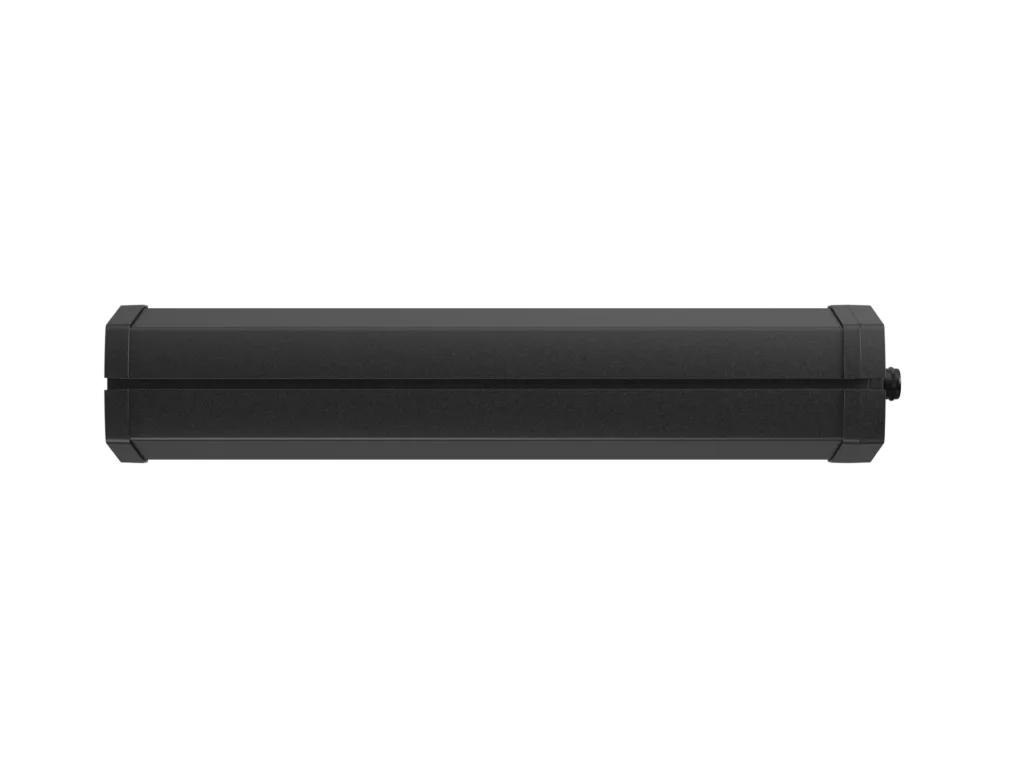
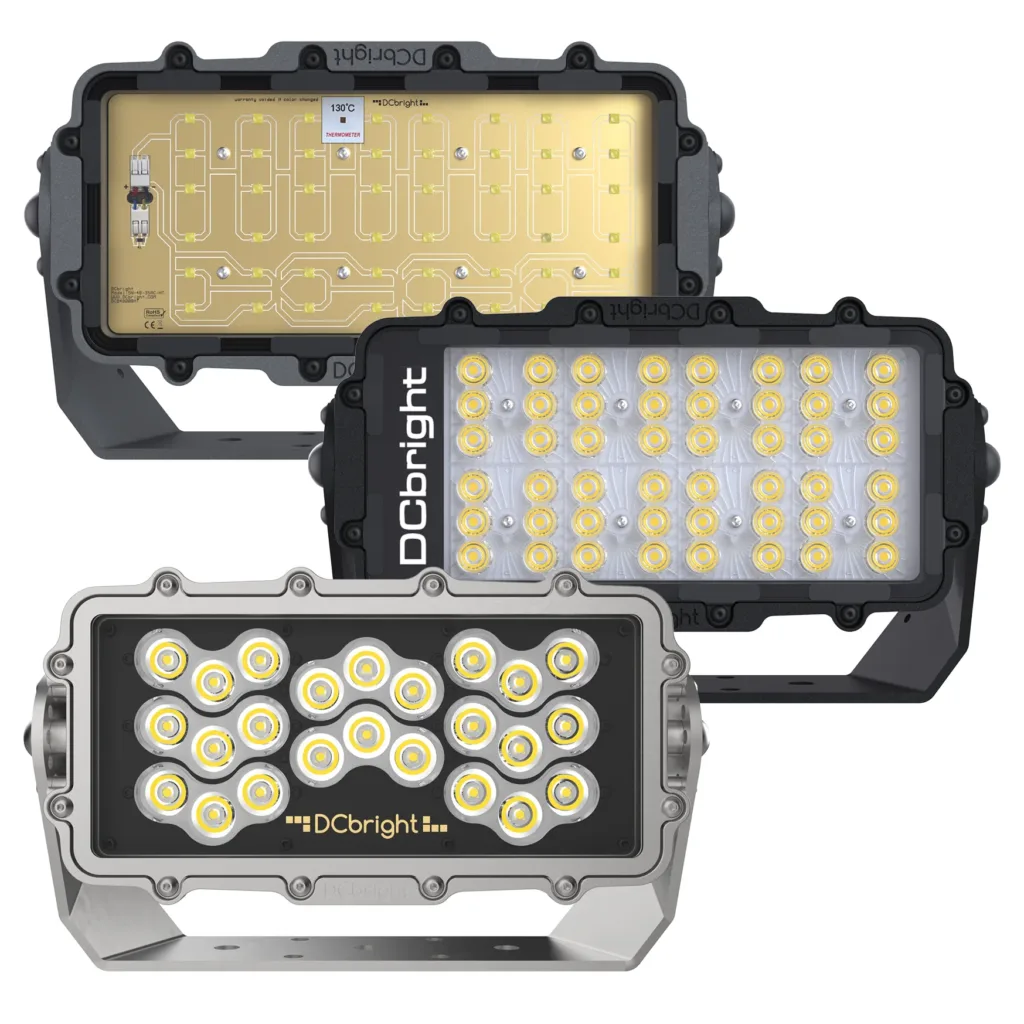
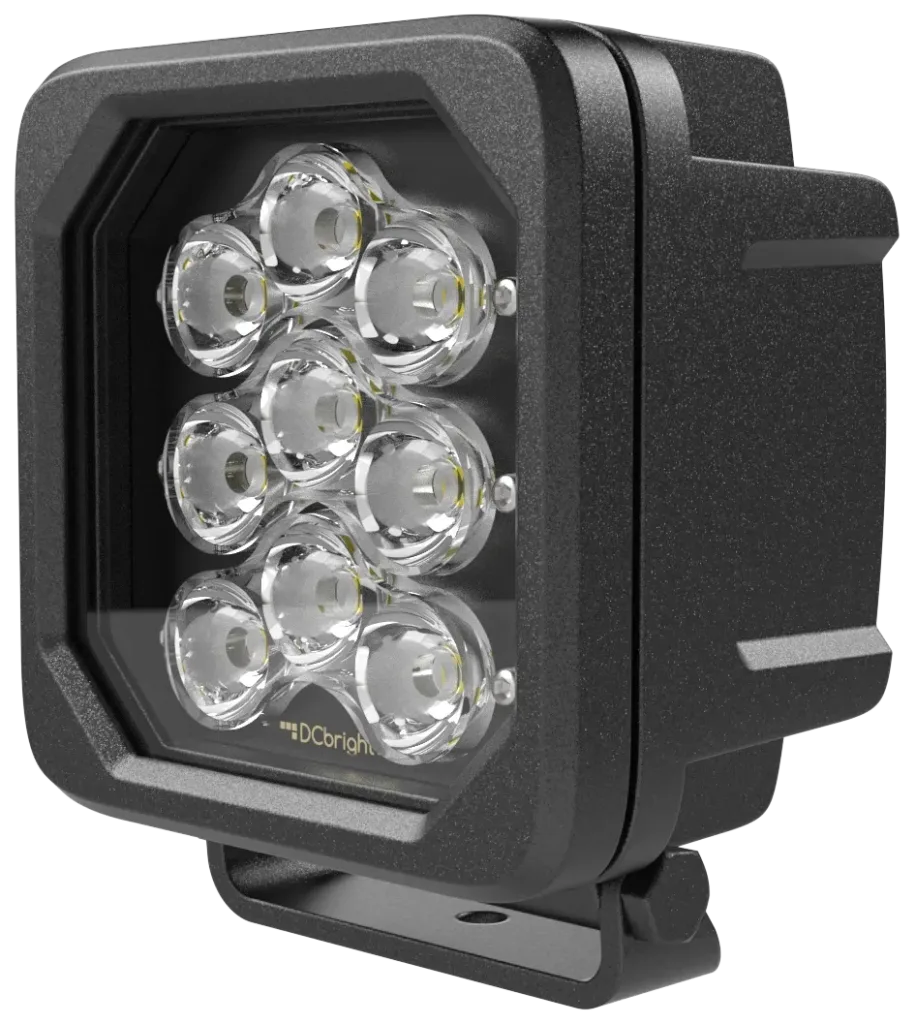
For the demanding zones in the hall
How do you calculate how many lighting points a production hall needs?
The number of required light points is calculated based on the desired illuminance in lux, the area of the room, the mounting height of the luminaires, and the light output per luminaire in lumens. A professional lighting calculation using software such as DIALux or Relux will provide the most reliable result.
The basic formula for a rough estimate works step-by-step as follows:
- Determine the desired illuminance level on the work surface in lux (e.g., 300 lux for general production).
- Multiply the desired lux by the area of the hall in square meters. This will give you the total required luminous flux in lumens.
- Take into account a maintenance factor (typically 0.7 to 0.8) to compensate for the decline in light output over time.
- Divide the total required luminous flux by the lumen output of the chosen luminaire. This gives the minimum number of luminaires.
- Check via a lighting calculation program if the distribution also provides sufficient uniformity over the entire floor area.
The mounting height has a great influence on the result. The higher the luminaire is hung, the more lumens are needed to achieve the same lux on the work surface. For more background on how lumens and lux relate to each other, the page about luminous flux helpful explanation.
Worked example
A 40 by 25 metre hall at 300 lux
The rough estimate above, worked through with a 1,200 mm Linear (25,600 lumens). Step 2 calculates as if all lumens reach the floor. In a hall, part of the light falls on walls, racking and ceiling; that loss is called the utilisation factor and in a high hall is often around 0.6.
Without a utilisation factor you arrive at 15 luminaires, and then the hall does not reach 300 lux. How large the loss really is depends on the height, the reflectance of floor and walls and the beam. That is what the lighting calculation determines.
When is ATEX-certified lighting mandatory in a production hall?
ATEX-certified lighting is mandatory in zones where an explosive atmosphere may arise due to the presence of flammable gases, vapors, mists, or dust clouds. This is stipulated in the European ATEX Directive (2014/34/EU). The obligation applies as soon as a potentially explosive zone is designated in the risk assessment of the production environment.
ATEX zones are classified based on the frequency and duration of explosion hazards:
- Zone 0 / Zone 20: Explosive atmosphere is continuously or long-term present (gas or dust, respectively). The highest level of protection is required.
- Zone 1 / Zone 21: Explosive atmospheres can occasionally occur during normal operation. Luminaires must be certified for category 2.
- Zone 2 / Zone 22: Explosive atmospheres rarely occur and only for short durations. Category 3 luminaires are permitted here.
Typical production environments where ATEX lighting is mandatory include paint and lacquer factories, chemical production facilities, food companies with dust production (such as flour or sugar), and storage areas for flammable liquids. The zone classification must be determined by a certified expert and forms the basis for luminaire selection.
Lighting calculation
We calculate your hall zone by zone in DIALux
Send the floor plan, the height below the beams and what happens in each zone. For each zone you receive the calculated illuminance, uniformity and glare, and a luminaire choice that fits the harshest condition in that zone.
Request a lighting calculation
Free of charge and without obligation · Response within 1 working day from an engineer
Practical example: Tata Steel IJmuiden
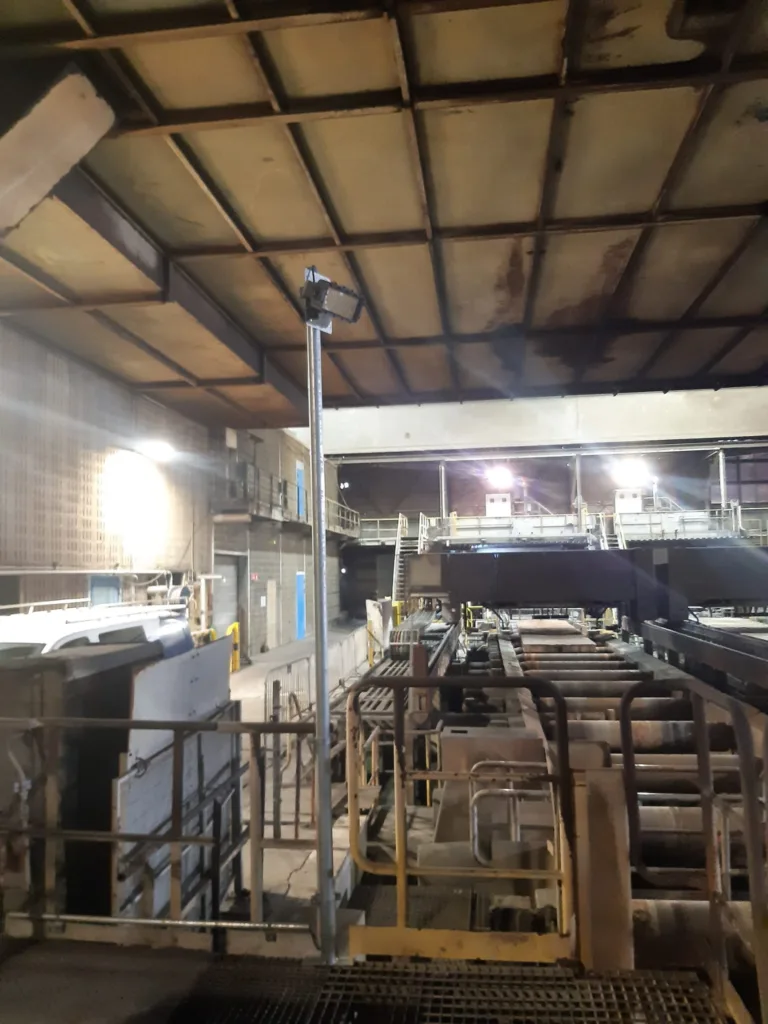
Tata Steel IJmuiden wanted to make the lighting near the production process more sustainable. Close to the hot steel, temperatures rise to +120 °C, the steel emits infrared radiation and the composition of the air is aggressive. During the inventory it became clear that in a number of places the lighting could also simply be better. Instead of a like-for-like replacement, a choice was therefore made per location from Snapper HT, Barracuda HT and Orca HT, and extra light was added where this demonstrably improved the working environment. The lighting design was verified against EN 12464-1 and achieves 100 lux near the working environment, with a uniformity rising to 0.55.
For a production hall, this is the core of a good lighting choice: not one luminaire for the whole hall, but deciding per zone what the conditions and the work require. A zone with heat or radiation places different demands on the luminaire than a zone with ordinary ambient conditions, and the required illuminance differs per task. An inventory per location prevents both luminaires that fail prematurely in a harsh zone and spots where the light level falls short.
Project · Heavy industry
Lighting at the steel process of Tata Steel IJmuiden
HT versions of Snapper, Barracuda and Orca chosen per location, close to the hot steel. At several spots extra light was added where it demonstrably improved the working environment. The lighting design was verified against EN 12464-1.
100 lux
near the production process
0,55
uniformity, increasing across the areas
+120 °C
ambient temperature close to the steel
Further reading
How JEL Products Helps You Choose the Right Lighting for Your Production Facility
JEL Products helps industrial organizations select, design, and implement the right LED lighting solution for production environments. This goes beyond simply supplying luminaires: it encompasses the entire process, from lighting design and consultation to installation and commissioning.
What JEL Products specifically offers for factory lighting:
- Professional custom light calculations, tailored to the specific zones and requirements of your hall.
- Luminaires that meet the right IP and IK classifications for your environment
- Solutions for extreme conditions, including high temperatures, corrosion, and vibration
- Guidance on subsidy and funding opportunities for energy-efficient lighting
- ISO9001 and VCA** certified execution of complete lighting projects
Would you like to know which LED lighting is best suited for your production hall? Please contact JEL Products for a no-obligation consultation.