

Short answer
Night work is safe with the right lux per zone, an even distribution and light that does not shine into the eyes.
Good lighting is a direct prerequisite for working safely at night. Without sufficient light in the right places, the chances of accidents, errors, and injuries significantly increase. This is especially true for industrial environments where machines, vehicles, and people operate simultaneously,under time pressure and with reduced daylight. Below you will find answers to the most frequently asked questions about night lighting, lighting standards, and practical choices for a safe workplace.
20 to 50 lux
roadways and outdoor site
100 to 200 lux
loading and unloading areas, quays and terminals
300 to 500 lux
production and assembly halls
What dangers arise from poor lighting at night?
Too little light increases the risk of tripping accidents, collisions, incorrect handling of machinery, and missing dangerous situations. In industrial environments where forklifts operate, cranes are in use, or hazardous substances are handled, poor visibility can pose direct safety risks for everyone on the work floor.
The dangers are not only physical, by the way. Poor lighting also leads to tired eyes, reduced concentration, and slower reaction times. Employees who work for extended periods in insufficient light become exhausted more quickly, which further increases the likelihood of errors. This is especially pronounced with night work, as the human body is naturally less alert during the night hours.
When considering insufficient night lighting on industrial sites, think about the following specific dangers:
Hazards with too little light
How much lux is required for safe night work in industry?
In the Netherlands, lighting standards are based on NEN-EN 12464 and the Dutch Working Conditions Act (Arbowet). Minimum values are applied depending on the task and environment, ranging from 50 lux for simple outdoor areas to 500 lux or more for precision work. The exact requirement depends on the nature of the work and the associated risks.
As a global guideline, the following lux values apply to industrial environments:
| Environment | Guide value |
|---|---|
| Outdoor areas and driveways: | at least 20 to 50 lux for safe passage of vehicles and pedestrians |
| Loading and unloading areas, docks, and terminals: | 100 to 200 lux for safe goods handling |
| Production and assembly halls: | 300 to 500 lux depending on the precision of the work |
| Inspection and control activities: | 500 lux or more for precise visual tasks |
In addition to the average illuminance, the uniformity of light also plays a role. Large contrasts between light and dark areas are dangerous because eyes have difficulty adapting quickly. An even light distribution over the work area therefore contributes significantly to safe work at night. More background information on light levels and luminous flux can be found on the page about Luminous flux and illuminance.
| Outdoor zone | Guide value according to EN 12464-2 |
|---|---|
| Walkways for pedestrians | 5 lux |
| Roadways for slow traffic, up to 10 km/h | 10 lux, U0 0.40 |
| Roadways for regular traffic, up to 40 km/h | 20 lux, U0 0.40 |
| Short-term handling of large units and bulk | 20 lux, U0 0.25 |
| Continuous loading, unloading and stacking | 50 lux, U0 0.40 |
| Reading labels, covered loading platforms, working with tools | 100 lux, U0 0.50 |
| Difficult assembly, electrical and mechanical work outdoors | 200 lux, U0 0.50 |
What is the difference between work lighting and area lighting?
Both types have their own functions and technical specifications. They complement each other but are not interchangeable. Task lighting illuminates a specific task or machine at close range, while area lighting makes a large outdoor area clearly visible and accessible.
Work lighting is focused on the direct work environment of an employee or machine. Think of a luminaire mounted on a crane, a forklift, or a production machine. The goal is sufficient light on the exact workplace, with minimal shadow formation and without glare for the operator. LED work lights for machinery Therefore, they are designed with focused beams and non-glare optics.
Area lighting focuses on illuminating outdoor areas such as harbors, storage areas, parking lots, and access roads. This involves a wide lighting range from a greater height, allowing vehicles and people to move safely. The luminaires are mounted on poles or buildings and must be resistant to wind, rain, and temperature fluctuations.
The distinction is also relevant for choosing the right product. A work lamp mounted on a machine imposes different requirements on vibration resistance, mounting, and beam pattern than a floodlight on a terrain mast. For Area lighting for industrial locations the light distribution angle and the control of glare also play a larger role.
How to prevent glare from night lighting on industrial sites?
Glare is extra dangerous at night because the pupil is wider and the contrast with the surroundings is greater. You can prevent it by choosing luminaires with a low UGR (Unified Glare Rating) value, positioning the light sources at the correct height and angle, and opting for full-cutoff optics that direct light exclusively downwards.
Practical measures to prevent glare include:
Preventing glare
Glare is not just a comfort problem. It also leads to temporary vision loss that can be life-threatening during crane operations, driving, or machine operation. In areas with multiple light sources, a coordinated lighting plan is necessary to prevent cumulative glare effects. More information about light color and its influence on visibility is described on the page about light color and Kelvin.
What lighting requirements apply to specific industrial environments?
The requirements are determined by the nature of the work, the risks present, and applicable standards such as EN 12464-2, ATEX directives, or sector-specific safety requirements. Each type of environment places different demands on lux levels, IP protection ratings, explosion protection, or temperature resistance.
A number of environments with special lighting requirements:
| Environment | Special requirement |
|---|---|
| Harbors and terminals: | high illuminance for crane operations and container transport, resistant to sea air and corrosion. More on this on the page about lighting for ports and terminals. |
| ATEX zones | Explosion-proof luminaires are mandatory in environments with flammable gases or dust explosion hazards. |
| Steel mills and blast furnaces | Temperature resistance up to +120 °C required, protection against infrared radiation |
| Climate chambers and cold storage | Reliable operation at temperatures down to -45 °C |
| Offshore and Maritime Environments | High corrosion resistance, resistant to salt water and extreme weather conditions |
The IP class of a luminaire determines its resistance to dust and moisture. In outdoor environments or wet industrial spaces, a minimum of IP65 is common. Higher requirements apply in environments with high-pressure cleaning equipment or immersion. More information on this can be found on the page about IP and IK ratings.
Lighting plan
We define per zone how much light night work needs
Send a site plan or aerial photo with the work zones, traffic routes and the places where people and equipment cross. You receive a lighting plan with the lux per zone, the mast positions and optics, and the glare rating per viewing direction, checked against EN 12464-2.
Free of charge and without obligation · Response within 1 working day from an engineer
Wanneer is a lighting plan mandatory or strongly recommended?
A lighting plan is mandatory when required by the Occupational Health and Safety Act or specific sectoral regulations, such as in ATEX environments, construction sites, or environments with specific safety standards. In all other cases, a lighting plan is strongly recommended when work is carried out at night, on large sites, or in environments with increased risks for employees.
An lighting plan is also useful outside of legal obligations in the following situations:
Self-check
Does your site need a lighting plan?
If you recognise one of these situations, a plan is the basis for a safe night shift.
- For new construction or expansion of industrial sites and production locations
- When replacing existing lighting with LED, where the light distribution is redefined
- When changing business operations, such as expanding night shifts or new machine positions
- On sites where multiple parties work simultaneously, such as contractors, operators, and transporters
- In incidents or near-misses where visibility played a role
A good lighting plan specifies the desired lux levels per zone, describes the placement and height of luminaires, considers glare risks, and complies with current standards. The plan serves as a basis for installation and is also valuable during inspections by the labor inspectorate or insurance companies.
Luminaires for sites at night
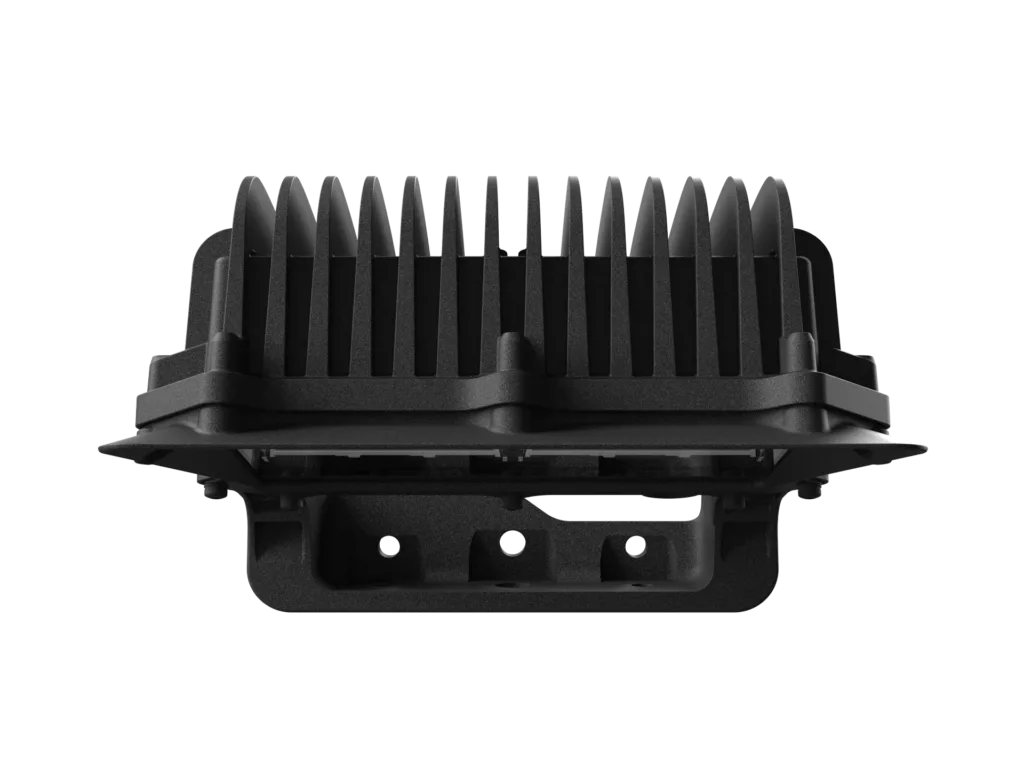
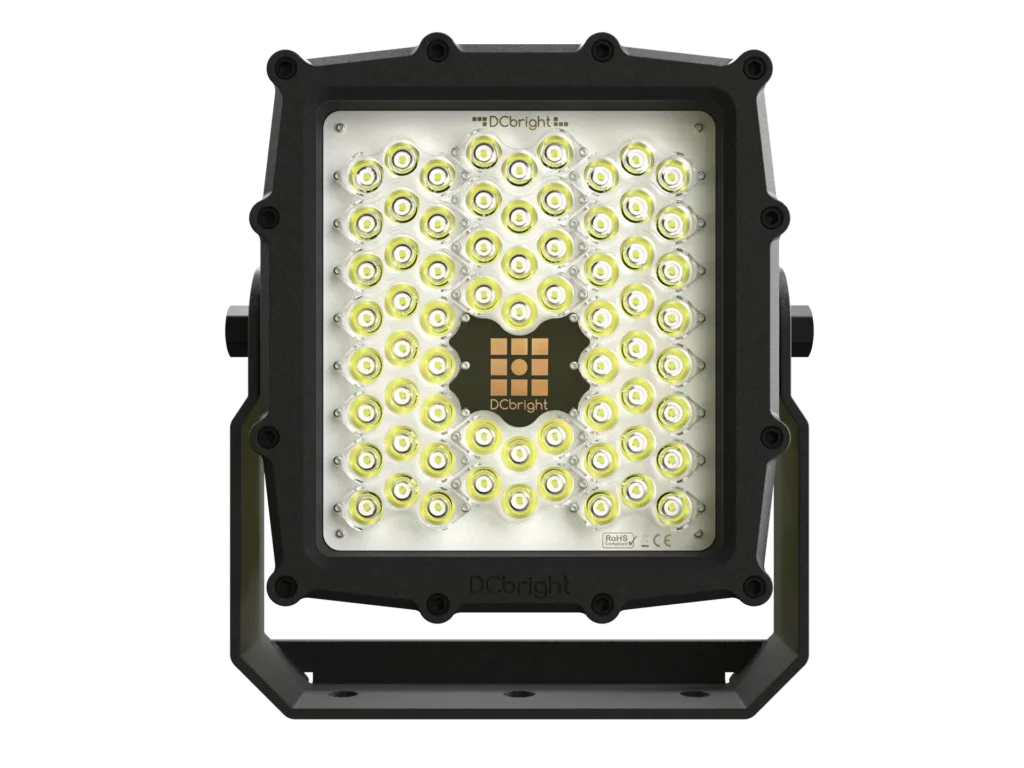
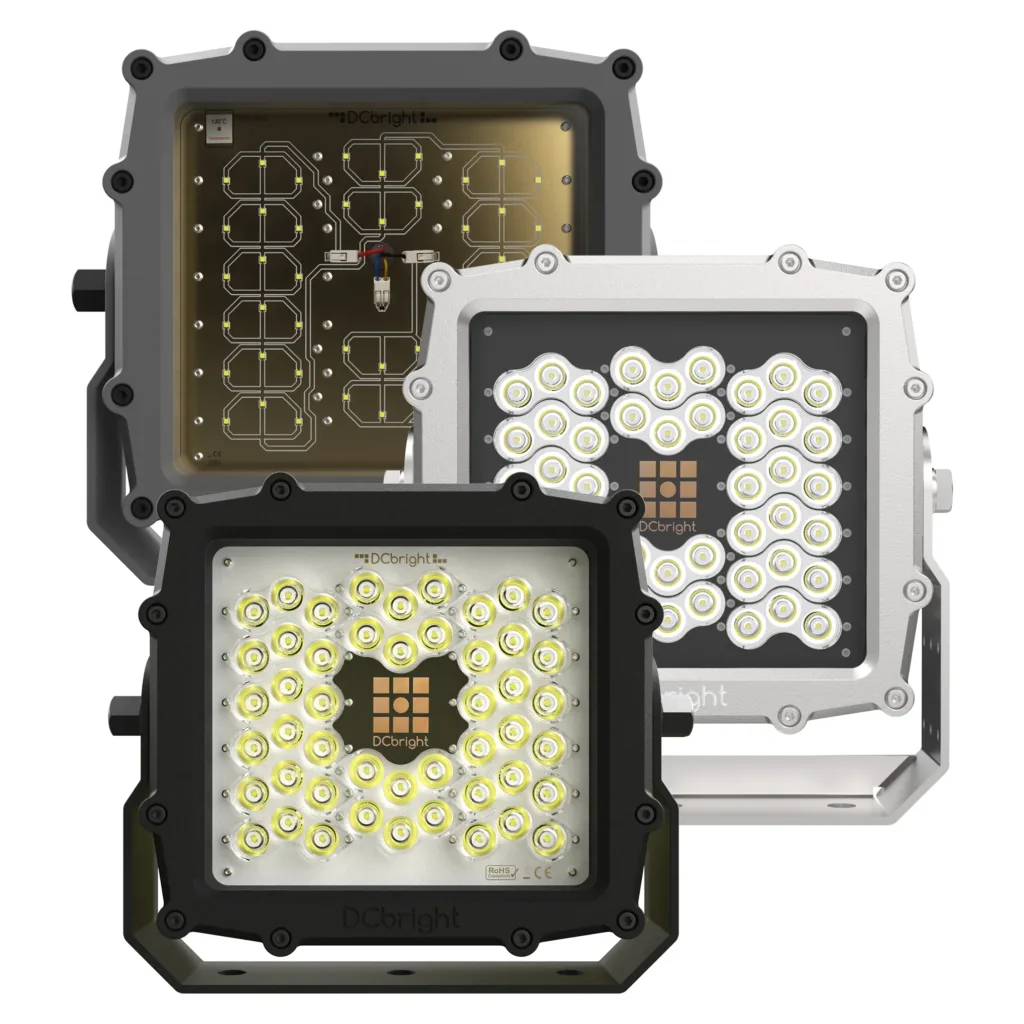
Practical example: Van Gelder Nijkerk
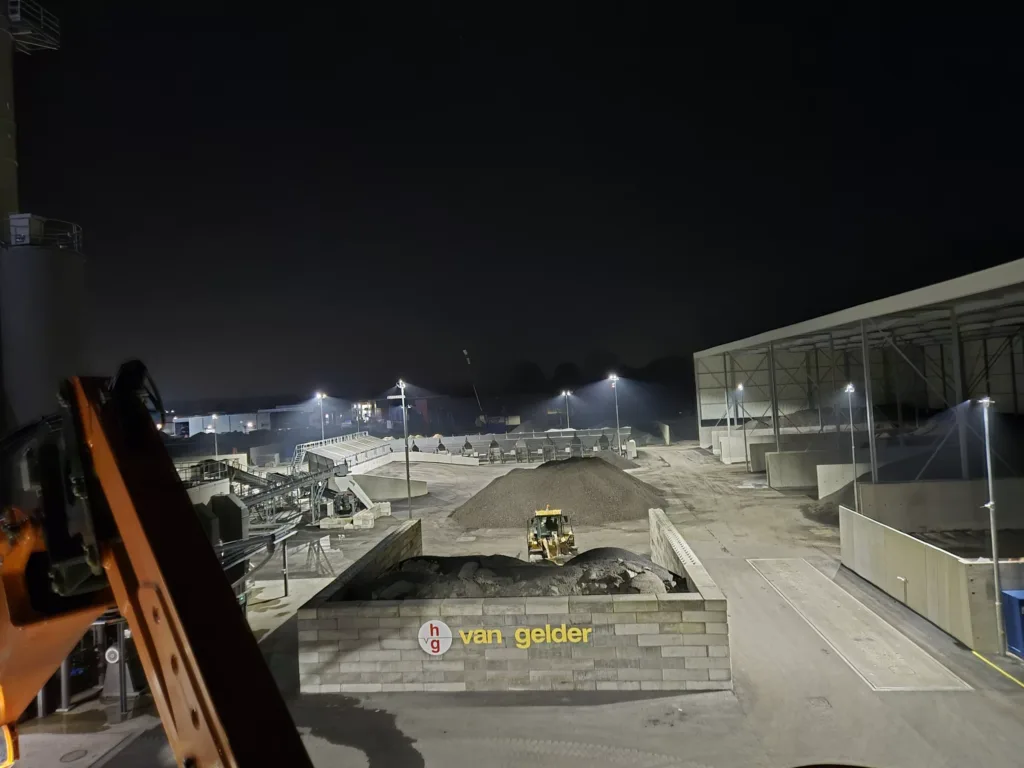
Project · Site lighting
Van Gelder asphalt plant in Nijkerk
Lighting design, engineering, installation and final aiming of 36 DarkLicht D luminaires on 15 masts of 10 and 12 m. The site gets 20 lux and the work zones 50 lux, while the canal with its bat routes stays dark.
36
DarkLicht D luminaires on 15 masts of 10 and 12 m
20 and 50 lux
site and work zones, uniformity 0.55
< 0.3 lux
on the water along the bat route
Van Gelder built a new asphalt plant in Nijkerk alongside a canal with bat routes. JEL handled the lighting design and engineering, the installation and the precise re-aiming of the luminaires. The entire surroundings were calculated in 3D, including the canal and the flight routes along the water. The site received 36 DarkLicht D-series luminaires on 15 new lighting masts of 10 and 12 m. The installation delivers 20 lux on the site and 50 lux in the intensive work zones, with a uniformity of 0.55. Thanks to full cut-off, no light is emitted above the horizontal and less than 0.3 lux remains on the water.
Not every part of a site needs the same light level at night. By lighting work zones to a higher level than the rest of the site, the light ends up where people carry out tasks, without raising the whole location to the highest level. That saves energy and limits the amount of light that can spill into the surroundings.
Full cut-off optics work in two directions here. Light that is not emitted above the horizontal is also less likely to shine into the eyes of drivers and machine operators on the site. What protects nature thus also reduces glare, and it is precisely glare that makes night work risky.
Read more about the Van Gelder Nijkerk project
Further reading
How JEL Products Helps Provide Safe Night Lighting
JEL Products offers comprehensive lighting solutions for industrial environments where safe nighttime operations are non-negotiable. From engineering and lighting design to the delivery of certified luminaires and full installation, the entire process is overseen by specialists with in-depth knowledge of industrial lighting standards and environmental requirements.
What JEL Products specifically offers for industrial night lighting:
- Custom lighting plans tailored to lux standards, zoning, and the location's risk profile
- LED luminaires suitable for extreme conditions: heat, cold, corrosion and vibrations, plus lighting for the areas outside ATEX zones
- Non-glare work lamps with full-cutoff optics for safe machine use at night
- Powerful LED floodlights for outdoor areas, harbors, terminals, and infrastructure projects
- ISO 9001 and VCA**-certified process from design through commissioning and maintenance
Whether it's a port, a steel mill, a construction site, or a logistics area: our specialists will collaborate with you from the initial technical query right through to completion. Feel free to get in touch via contact page for a no-obligation consultation about the lighting requirements at your location.
Related Articles
- What are the requirements for lighting in the glass industry at high temperatures?
- What are the differences between lighting for high and low temperature environments?
- What is illuminance and why is it important in industrial lighting?
- How does a lighting renovation project in a factory work, step by step?
- What does the Dutch Working Conditions Act (Arbowet) say about lighting in the workplace?