

Short answer
On a terminal, typically 20 to 50 lux required for general outdoor areas, rising to 100 to 200 lux for active work zones such as loading and unloading docks, crane paths, and inspection areas. The exact illuminance depends on the activities taking place, the safety risks, and the applicable standards. This article answers the most frequently asked questions about lux, standards, and lighting calculations for terminals and ports.
Maintenance values according to NEN-EN 12464-2:2024.
What factors determine the required lux on a terminal?
The required illuminance level at a terminal is determined by the nature of the work, the presence of people and vehicles, the required safety, and the specific zone within the site. The more complex or dangerous the activity, the higher the required lux values for outdoor lighting in the industry.
The following factors play a direct role in determining the required illuminance:
- Activity type: Visually simple tasks such as surveillance require fewer lux than operating cranes or checking loads.
- Traffic intensity Areas with many forklifts, reach stackers, or trucks require higher lighting levels for safe navigation.
- Working hours Terminals operating 24/7 require consistent lighting quality, even during nighttime hours.
- Obstacles and elevation changes: Stacking areas with containers or complex site layouts increase the risks and therefore the lux requirements.
- Weather conditions: Mist, rain, or sea air affect effective visibility and may justify higher nominal lighting values.
For Ports and terminals Furthermore, lighting must not only provide sufficient lux but also prevent glare. Crane operators and vehicle drivers must not be hindered by direct views into luminaires, which places specific demands on the optics and placement of the lighting installation.
What do EN 12464-2 and other standards say about terminal lighting?
EN 12464-2 is the European standard for outdoor workplace lighting and describes minimum requirements for illuminance, uniformity, and glare limitation. This standard directly applies to terminals, ports, and industrial outdoor locations.
Besides EN 12464-2, the following frameworks are also relevant for terminal lighting:
- EN 12193: Sports lighting, sometimes used as a reference for large outdoor areas with high uniformity requirements.
- Tree legislation: The Dutch Working Conditions Act obliges employers to provide safe working conditions, including adequate lighting in workplaces.
- Harbor Authority Guidelines: Major ports like Rotterdam and Amsterdam have additional guidelines for lighting levels on quays and terminals.
- ISPS-code: For secure port facilities, the International Ship and Port Facility Security Code specifies requirements for security lighting.
The standards prescribe not only a minimum illuminance but also a minimum uniformity degree (U0). This means that the difference between the darkest and lightest spot in a work zone must not be too large. Therefore, a high average lux without sufficient uniformity does not meet the standard.
Lighting calculation
We calculate your custom site plan
Send us a floor plan or DWG file. You’ll receive a calculation report that includes an isolux map, uniformity per zone, and a compliance assessment against NEN-EN 12464-2. You’ll receive a response from an engineer within one business day.
No newsletter, no sales pitch.
How many lux are required per zone in a terminal?
The required illuminance level differs per zone in a terminal. According to EN 12464-2, the following guidelines apply for industrial lighting per application area.
The most common zones and their corresponding lux values are:
| Zone | Required illuminance |
|---|---|
| Surveillance and access zones | at least 5 to 20 lux for basic visibility and camera surveillance. |
| General grounds and roadways: | 20 to 50 lux, depending on traffic intensity and speed. |
| Container storage yards | 50 lux as a guideline, with higher uniformity requirements due to stacking operations. |
| Active loading and unloading docks: | 100 to 200 lux for safe work with heavy equipment and loads. |
| Crane paths and crane work areas: | 100 to 150 lux on the work surface, with attention to vertical illuminance for crane operators. |
| Inspection and control zones | 200 lux or more when visual inspection of cargo or documentation is required. |
illuminance in a harbor always concerns the maintenance illuminance: the minimum value that must still be achieved at the end of the installation's lifespan. Therefore, a maintenance factor (MF) is applied during the design phase, resulting in an initial illuminance that is higher than the required minimum value.
The difference between lux, lumen, and candela for terminal lighting lies in what they measure:
Lux, lumen, and candela are three different quantities that each describe a different aspect of light. For terminal lighting, lux is the most relevant quantity, as it reflects the amount of light that actually falls on a surface. Lumen describes the total luminous flux of a luminaire, and candela indicates the luminous intensity in a specific direction.
Specifically, it works like this:
- Lumen (lm): The total amount of light emitted by a light luminaire. A luminaire with more lumens produces more light, but that says nothing about how that light is distributed over a surface.
- Lux (lx): The illuminance on a specific plane. One lux is equal to one lumen per square meter. This is the standard used in lighting calculations and standards.
- Candela (cd): The light intensity in a particular direction. Relevant for luminaires with directed beams, such as LED floodlights for terminal lighting.
For a terminal at high altitude and distance, a high candela value in the correct direction is essential. A luminaire with many lumens but a wide beam illuminates a large area diffusely, while a luminaire with a focused beam and high candela value at a distance achieves sufficient lux on the work surface. More background on the relationship between lumens and lighting performance can be found on the page about luminous flux.
How is a lighting calculation for a terminal performed?
An lighting calculation for a terminal is performed using specialized software such as DIALux or Relux, where the geometry of the site, luminaire positions, the light distribution curves of the luminaires, and maintenance factors are entered. The result is a simulation of the expected illuminance and uniformity per zone.
The steps in a professional lighting calculation are:
- Field survey Recording dimensions, obstacles, mast heights, surface reflectivity values, and zoning into functional areas.
- Norm choice: Determine which lighting standards apply per zone (EN 12464-2, internal requirements, port guidelines).
- Luminaire selection Selection of luminaires based on light distribution curve, IP rating, mounting method, and environmental requirements.
- Simulation Input all parameters in the calculation software and iteratively optimize the positions and quantities of luminaires.
- Verification: Check if the calculated lux values and uniformity ratios comply with the set standards, including the maintenance factor.
- Reporting: Development of a lighting plan with isolux charts, tables, and specifications for use in tender and installation.
An accurate calculation is the basis for an installation that meets both standards and energy efficiency. For complex terrain with crane paths, high masts, or special environmental requirements, specialized knowledge is indispensable. On the page about lighting expertise More information can be found on the approach to industrial lighting projects.
When does existing terminal lighting no longer meet lux standards?
Existing terminal lighting no longer meets lux standards when the measured illuminance on the work surface is consistently below the prescribed minimum values, the uniformity is too low, or the installation no longer functions safely. This can be due to aging, updated standards, or changed use of the premises.
Common signs that a lighting installation in a terminal is no longer adequate:
Does your installation still comply? Check what you recognize
If you recognize three or more, a measurement with a lux meter is the logical next step.
- Luminaires produce less than their original light output due to light degradation, meaning the maintenance illuminance is no longer achieved.
- The layout or use of the site has changed, requiring higher lighting levels in areas that were previously less critical.
- Current standards have been tightened, and the existing installation has never been recalculated or tested against the new requirements.
- The luminaires are damaged, dirty, or misaligned, causing the light distribution to deviate from the original design.
- Employees or operators are reporting visibility issues, which is a practical indication of insufficient illuminance or uniformity.
Have your site surveyed and tested for compliance with NEN-EN 12464-2
Periodic measurement of the actual illuminance with a lux meter, combined with a check against current standards, will provide clarity. If in doubt, a professional lighting scan is the most reliable approach. For terminals also dealing with corrosive environments or extreme weather conditions, additional requirements apply to the luminaires themselves, as described on the page about lighting for extreme corrosion.
Practical example: terminal lighting at DFDS Seaways in Vlaardingen
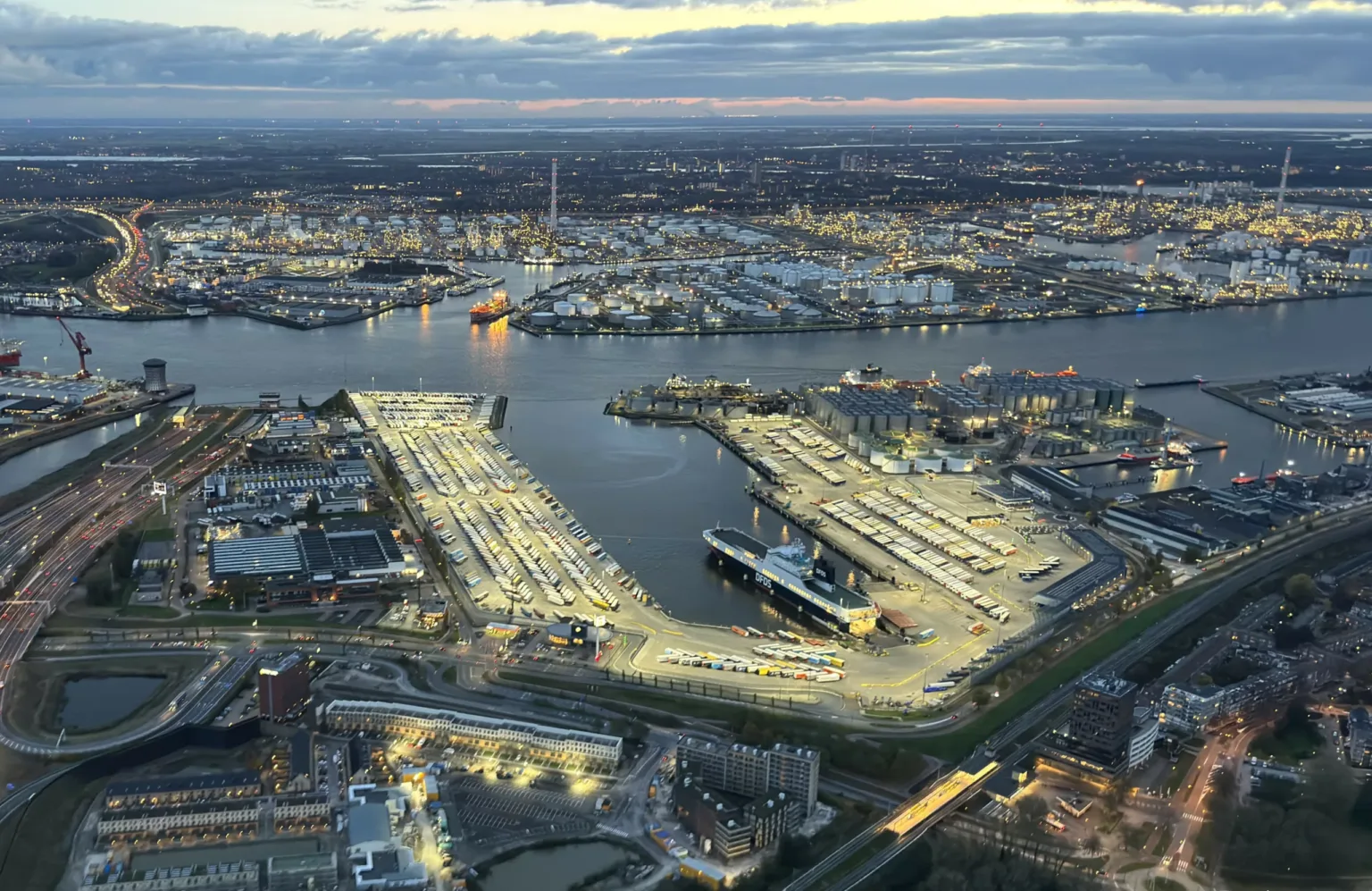
High-mast terminal lighting on 30-meter-high masts
A new lighting design with large mast distances, strict light pollution requirements, and a 24-hour operation.
Fittings that match this
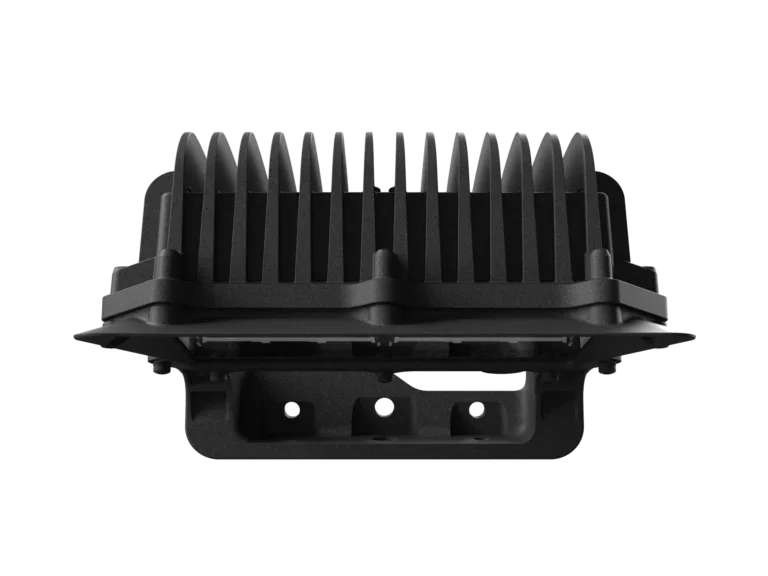 DarkLicht MFull cut-off, glare-free51,300 lm at 300 W
Cut-off 63 to 75 degrees
IP69K, IK08, C5-MView DarkLicht M
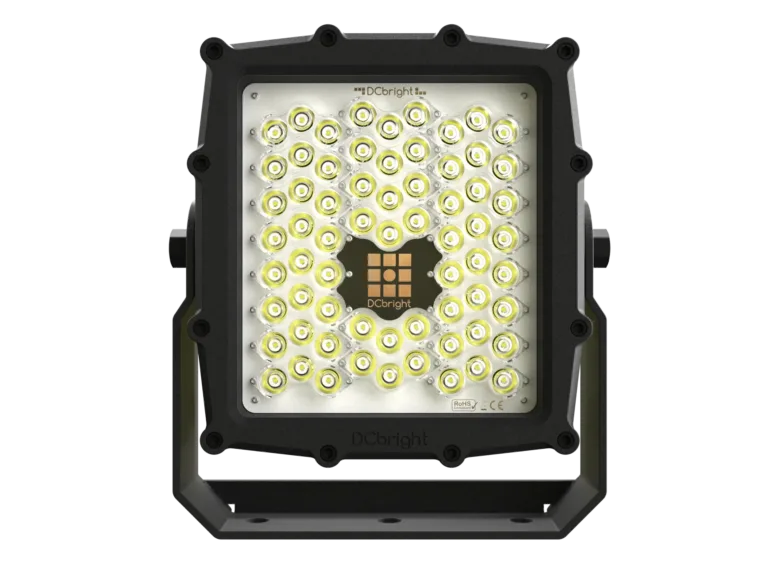 SharkTall masts and long distances50,000 lm at 320 W
Optics 14 to 69 degrees
IP69K, IK10, 9.2 kgView Shark
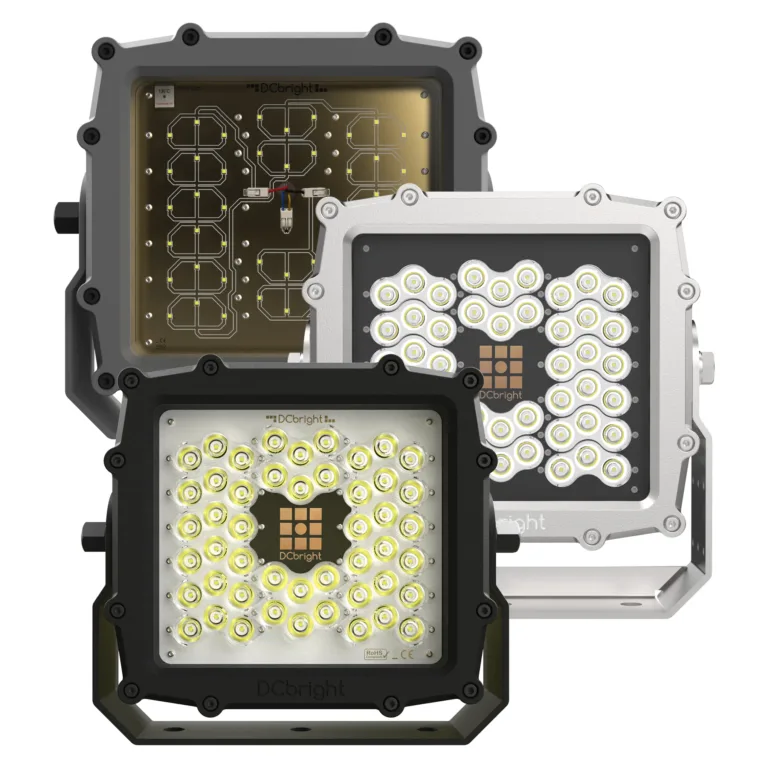 BarracudaSea air, heat and vibrations44,100 lm at 320 W
Stainless Steel 316L with a 20-year warranty on the housing
IP69K, IK10, 6 G vibrationView Barracuda
Continue reading: terminal lighting, lighting poles and high mast lighting, light pollution and full cut-off and crane lighting.
How JEL Products Helps with Lighting Standards at Terminals
JEL Products offers a complete approach for terminals and ports that want to meet the applicable lux standards without compromising on quality or durability. From lighting calculation to installation and maintenance, the entire process is guided by specialists with proven experience in the most demanding industrial environments.
What JEL Products specifically offers for terminal lighting:
- Professional lighting calculations based on EN 12464-2 and sector-specific standards, including uniformity analysis per zone.
- High-quality LED luminaires from the DCbright and DarkLicht product lines, designed for extreme conditions such as sea air, corrosion, tall masts, and 24/7 operation.
- Full-cutoff and glare-free optics for crane operators and vehicle drivers, in compliance with safe workplace lighting requirements.
- Complete solutions including foundation, light poles, installation, commissioning, and long-term maintenance.
- ISO9001 and VCA** certified methodology, with proven results on large international projects.
Do you want to know what illuminance your terminal needs and what a future-proof installation looks like? Get in touch with the specialists at JEL Products for a no-obligation consultation.
Related Articles
- Which lighting is used in the paper and pulp industry?
- How do you recognize when the terminal lighting no longer suits the operation?
- What are the failure costs of inexpensive port lighting?
- How does corrosion affect the lifespan of lighting installations in ports?
- How high should industrial lighting be mounted?