

Short answer
Not the LED but the driver determines the lifetime, and the temperature of the driver determines how long it lasts.
The lifespan of an LED driver in an industrial luminaire is typically between 50,000 and 100,000 hours, depending on the quality of the driver, the ambient temperature, and the load conditions. In practice, the driver is often the first component to fail in an LED luminaire, not the LED chip itself. Below you will find answers to the most frequently asked questions about lifespan, MTBF values, temperature influence, and the correct replacement time.
50,000 to 100,000 hours
usual lifetime of an industrial driver
10 °C
extra on the driver halves the lifetime of the capacitors
50 to 60 °C
maximum ambient temperature of a standard driver
What factors determine how long an LED driver lasts?
Thermal stress, component quality, supply voltage, and duty cycle together determine how long an LED driver will last. The ambient temperature is by far the most decisive factor: every additional 10 degrees Celsius can roughly halve the lifespan of the internal capacitors. In industrial environments, this makes it extra critical.
Besides temperature, the following factors play an important role:
What determines the lifetime of a driver
In demanding sectors such as heavy industry, offshore, or ports, it is important to choose luminaires where the driver is explicitly dimensioned for real environmental conditions, not laboratory conditions.
What does MTBF mean for an LED driver in practice?
MTBF stands for Mean Time Between Failures and indicates the statistical average time between two failures of a component. For LED drivers, this value is expressed in hours and for high-quality industrial drivers is often between 100,000 and 200,000 hours. However, it is a statistical measure, not a guarantee for individual lifespan.
Concretely, an MTBF of 100,000 hours means that for a large population of drivers, on average, half of them are still functioning after that number of operating hours. It says nothing about when a specific driver will fail. Therefore, an MTBF value is most useful as a means of comparison between products and as a basis for maintenance planning.
Good to know: manufacturers often calculate MTBF under controlled conditions. In an industrial environment with high temperatures, vibrations, or a corrosive atmosphere, the actual lifespan can be significantly lower than the stated MTBF. When purchasing, always ask about the test conditions under which the MTBF was determined.
How does a high ambient temperature shorten the lifespan of an LED driver?
Heat is the greatest enemy of an LED driver. It accelerates the degradation of electrolytic capacitors, which form the core of most LED drivers. If the operating temperature structurally exceeds the maximum tc temperature (the critical measurement point temperature on the circuit board), the lifespan decreases exponentially.
Most standard LED drivers are designed for ambient temperatures up to a maximum of 50 or 60 degrees Celsius. However, in environments such as steel mills, foundries, or process plants, the temperature around the luminaires can rise to 80, 100, or even 120 degrees Celsius. Standard drivers fail in such conditions within a fraction of their rated lifespan.
Solutions for high-temperature environments include:
Solutions for high temperatures
For applications in extreme heat, such as around blast furnaces or steel mills, specialized solutions are necessary. More about this can be found on the page about High-temperature lighting.
Calculator
How long will your LED driver last at the actual temperature?
Enter the rating from the datasheet and the temperature the driver actually reaches in your installation. The tool applies the rule of thumb that every extra 10 degrees halves the lifetime.
Expected lifetime
years
hours
expected lifetime at this temperature
factor relative to the rating
°C
maximum driver temperature for 10 years
Lifetime versus driver temperature
Indication based on the 10-degree rule for electrolytic capacitors (Arrhenius). The actual lifetime also depends on mains quality, load and vibration. Measure the driver temperature at the highest ambient temperature, not at a cold start.
What is the difference between an internal and external LED driver?
With an internal LED driver, the driver is built into the luminaire itself, whereas an external driver is mounted separately in a cooler or more accessible location. The core difference lies in the thermal load: an internal driver is exposed to the heat produced by the luminaire and the surrounding environment, while an external driver can be placed in a conditioned or cooler location.
In industrial applications, that choice has direct consequences for lifespan and maintenance:
| Driver | When and why |
|---|---|
| Internal driver: | More compact and easier to install. Suitable for moderate temperature environments. However, replacement requires access to the entire luminaire or the driver within the luminaire, which can be costly at height or in hard-to-reach installations. |
| External driver: | Ideal for high-temperature environments or applications where the driver is inaccessible. The driver is mounted in a cooler, accessible location. This significantly extends the lifespan and simplifies maintenance and replacement. |
In sectors such as heavy industry, offshore, or in Lighting for climate chambers the choice of an external driver is often the only technically sound option. The higher installation costs are more than recovered through longer maintenance intervals and less unplanned downtime.
When does an LED driver need to be replaced?
Flickering, a noticeable drop in light output without the LED chip being defective, or a complete failure are clear signals that an LED driver needs replacement. In addition, preventive replacement is wise when the driver approaches its calculated lifespan in an environment where unplanned failure is unacceptable.
Concrete signals that intervention is needed:
Self-check
Is your driver due for replacement?
If you recognise one of these signs, the driver usually needs replacing before the LED does.
- Visible flickering or irregular dimming
- Luminaire does not start up or only starts after multiple attempts
- Measurably lower light output while the LED chip is intact
- Overheating of the luminaire or smell of burning material
- Visible damage to the housing or connectors of the driver
In 24/7 operations or safety-critical environments, it is advisable to draw up a preventive replacement schedule based on the MTBF value and the actual operating conditions. This prevents a driver failure from leading to production downtime or an unsafe working situation.
Driver advice
We design the driver solution for your temperature
Tell us the ambient temperature at the luminaires, the summer peak and whether the driver must remain accessible. You receive advice on an internal or external driver, its position and its cooling, tested at the temperature that actually prevails.
Free of charge and without obligation · Response within 1 working day from an engineer
How do you choose an LED driver that can withstand industrial conditions?
An industrial-grade driver must meet higher requirements than a standard driver for office or commercial environments. The selection starts with the maximum operating temperature, but also includes degrees of protection, certifications, and the quality of the internal components.
When making your choice, pay attention to the following criteria:
| Criterion | What to look for |
|---|---|
| Temperature range | Check the maximum tc temperature and the ambient temperature for which the driver is certified. Always choose a wider margin than the expected operating temperature. |
| IP protection | In dusty, humid, or wash-down environments, a minimum of IP65 is required. In harsher environments, IP66 or IP67 is the norm. |
| Vibration and shock resistance: | Relevant for applications on cranes, mobile machinery, or near heavy production equipment. |
| ATEX certification | An ATEX-certified driver is required in potentially explosive areas. |
| Component quality: | Inquire about the specifications of the used capacitors and the origin of the components. Industrial quality starts with the choice of high-quality parts. |
| Dimming functionality and compatibility: | Ensure the driver is compatible with the desired dimming method (DALI, 0-10V, or PWM) and with the rest of the system. |
When in doubt, always consult a lighting specialist who knows the specific environmental conditions. For complex industrial applications, sector-specific lighting advice the most reliable route to the right choice.
Luminaires with the driver away from the heat
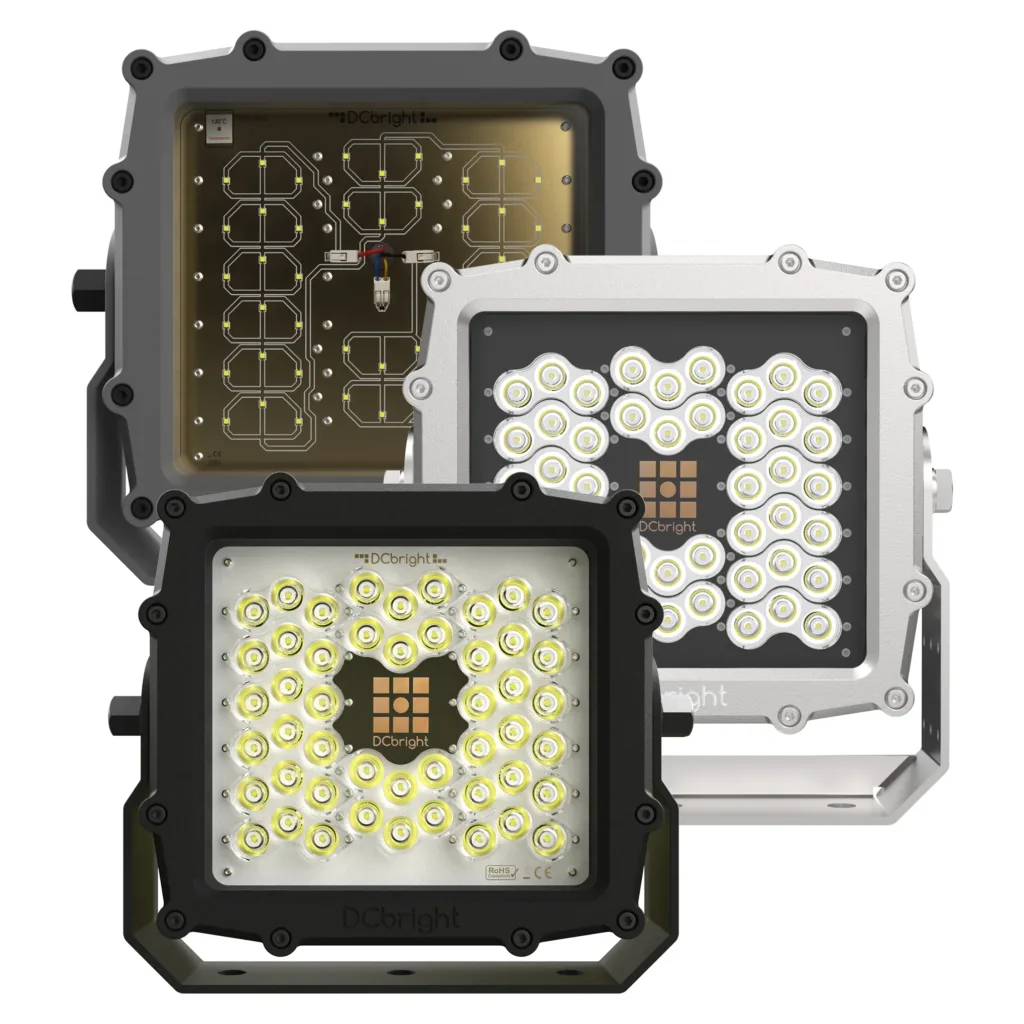
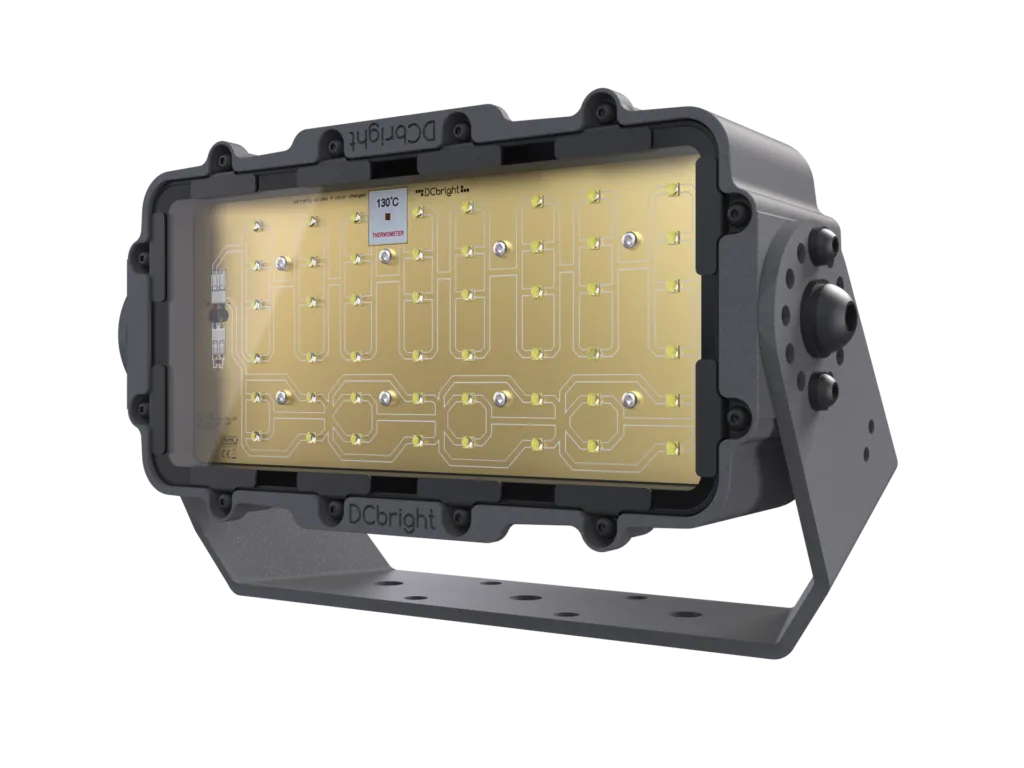
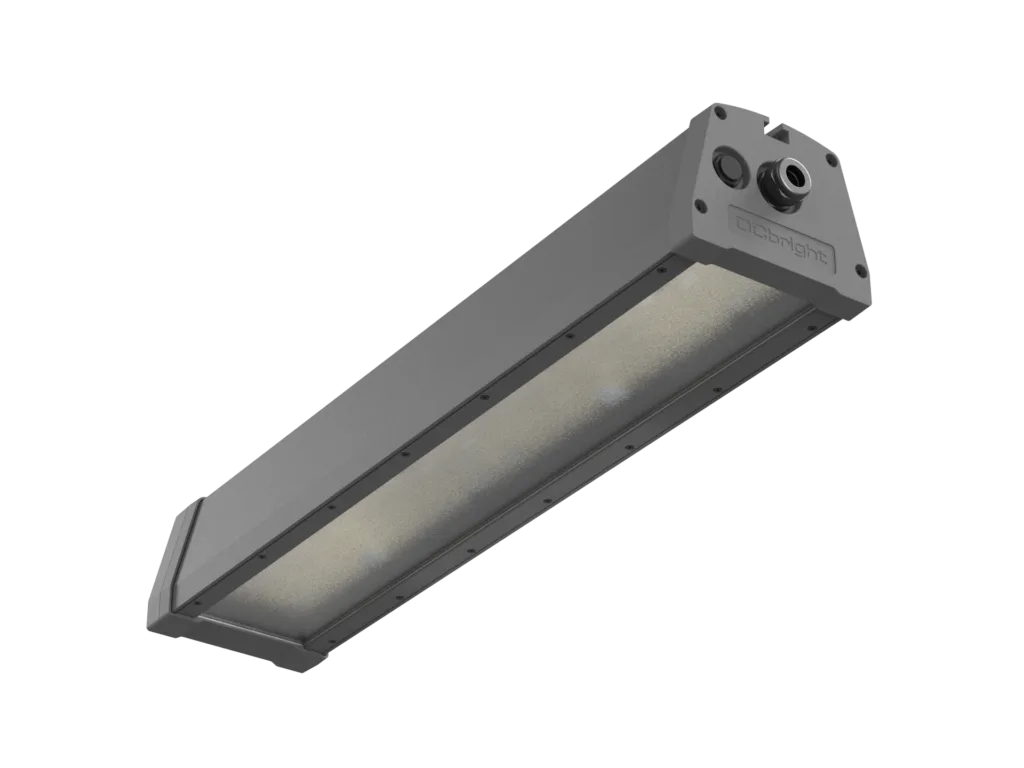
Practical example: Rockwool Croatia

Project · Heavy industry
Heat-resistant lighting for Rockwool Croatia
Above 110 °C with infrared radiation in the hall, and up to 40 °C outdoors in summer. The drivers are positioned separately, cooled and tested so they stay below 50 °C.
> 110 °C
ambient temperature with infrared radiation
50 °C
maximum for the drivers, placed separately and cooled
100+
Barracuda HT, Snapper HT, and Linear HT
In the Rockwool factory in Croatia, the ambient temperature rises above 110 °C, with infrared radiation from the production process. In addition, the summer heat in the surrounding area led to LED driver failures. The drivers were not allowed to exceed 50 °C, while outdoor summer temperatures already approach 40 °C. JEL therefore designed and tested the driver positioning and cooling separately, away from the hot production zones. More than 50 Barracuda HT, more than 20 Snapper HT and more than 30 Linear HT were supplied.
For the service life of a driver, what counts is the temperature of the driver itself, not just that of the space around it. A luminaire can be heat-resistant while its electronics still run too hot, especially when a warm summer comes on top of process heat.
When choosing between an internal and an external driver, the question is therefore where the driver stays coolest and whether that location is accessible for maintenance. A driver solution tested under real conditions says more about expected service life than an MTBF value from a datasheet.
Read more about the Rockwool Croatia project
Further reading
How JEL Products Helps You Choose the Right LED Driver
JEL Products supplies LED luminaires built to withstand the harshest industrial environments, including applications involving extreme heat, corrosion and vibration. For every project, the service life of all components, including the LED driver, is central to the design.
What JEL Products specifically offers:
- HT-line luminaires with validated temperature-resistant drivers for environments up to +120 °C
- Choice between internal and external driver solutions, tailored to the specific installation
- Products suitable for extreme corrosion and climatic chambers, and lighting outside ATEX zones, with referral to a certified Ex manufacturer for the zones themselves
- ISO 9001 and VCA certified quality assurance in design and production
- Support throughout the entire process: from lighting design to installation and maintenance
Whether it concerns industrial LED floodlights for outdoor areas or specialized luminaires for high-temperature processes, the focus is always on the total lifecycle costs and reliability of the installation. Do you want to know which driver solution best suits your environment? Please contact JEL Products for a no-obligation consultation.
Related Articles
- How do you choose lighting for a cement factory or lime kilns?
- How do you evaluate a lighting plan for a high-temperature zone?
- How do you calculate the ROI of an LED lighting investment?
- What is the best LED lighting for a workshop with machinery?
- What is the difference between LED and traditional industrial lighting?