Work lighting up to a height of 160 meters with only five luminaires, maintenance-free, uniform across the full working height, and without glare to the surroundings.
Client
Only 5
luminaires
111,000 lumens
per luminaire
Schiedam,
Netherlands
0,75
Uniformity
No
upward light
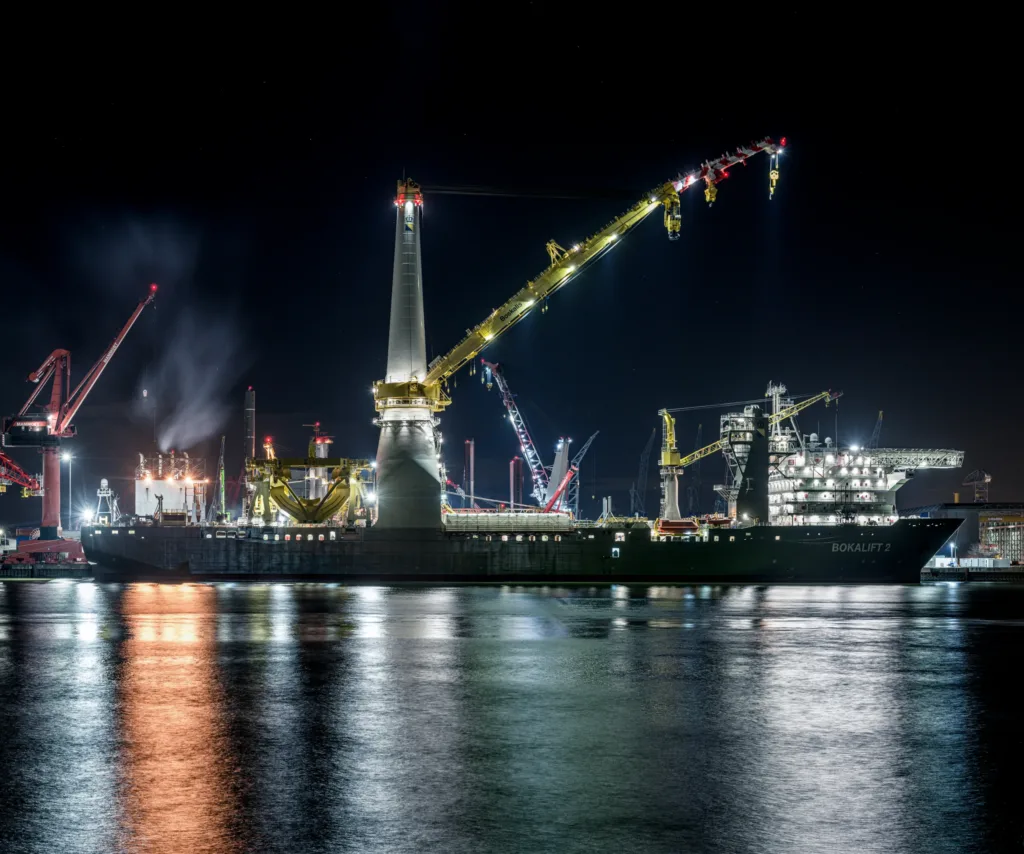
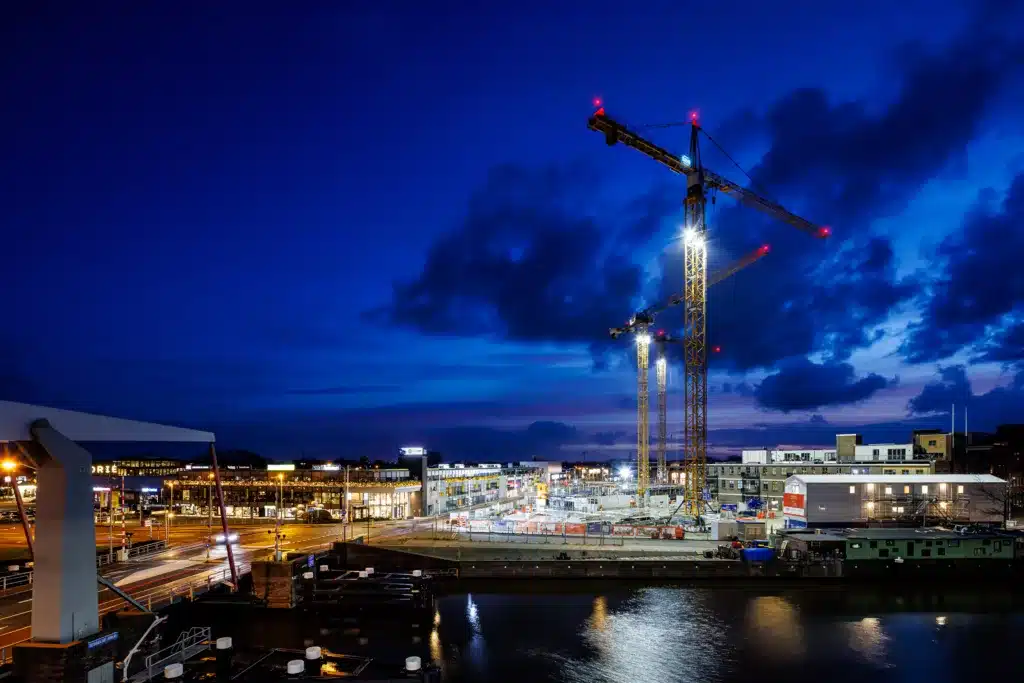
Mammoet sought lighting for the PTC-210-DS, at the time one of the largest Cranes in the world. The crane was used for a large-scale project: replacing the cranes on the heavy-lift vessels Wind Osprey and Wind Orca for offshore wind projects.
With good work lighting, Mammoet could continue working into the evening. JEL provided the complete lighting design and collaborated with the client on the installation.
Looking for a solution for a different type of crane? See the overview at crane lighting.
The mounting height was extreme: the highest luminaire hangs at 160 meters. At that height, replacement after installation is practically impossible, so the lighting had to be resistant to all conditions.
The lighting design was complex. The lighting was not allowed to blind passing traffic, traffic from the nearby tunnel, or the operators around the crane. At the same time, the light had to be uniform and concentrated over the entire working height, not fixed on one point. Furthermore, only five mounting positions were available.
The question started with good work lighting so that Mammoet could continue working into the evening on replacing the cranes on the heavy-lift vessels. Wind Osprey and Wind Orca.
It quickly became apparent that the real challenge was the high-level lighting design: maintenance-free, uniform across the full working height, and without glare to the busy surroundings.
Project card
Project Type
Lighting for the world's largest ring crane (heavy lifting)
Location
Schiedam, Netherlands
Client
Mammoet
Environment
Mounting height up to 160 m, near shipping lane, highway, and tunnel; offshore wind vessel project
Current situation
A lighting question to work through evolved into a complete high-altitude lighting design
Scope
Lighting design and engineering, installation devised together with the client, material supply
Result
200 lux average over the working height, uniformity 0.65 to 0.75 (standard: 0.40)
Standards
EN 12464-2:2024, NSVV light nuisance guideline and NEN 1010 (electrical installation)
Prefer direct contact? +31 33 785 9809
JEL designed the lighting concept based on the actual situation at the crane: an assembly height of up to 160 meters, only five available positions, and strict requirements for glare affecting the shipping route, highway, and operators.
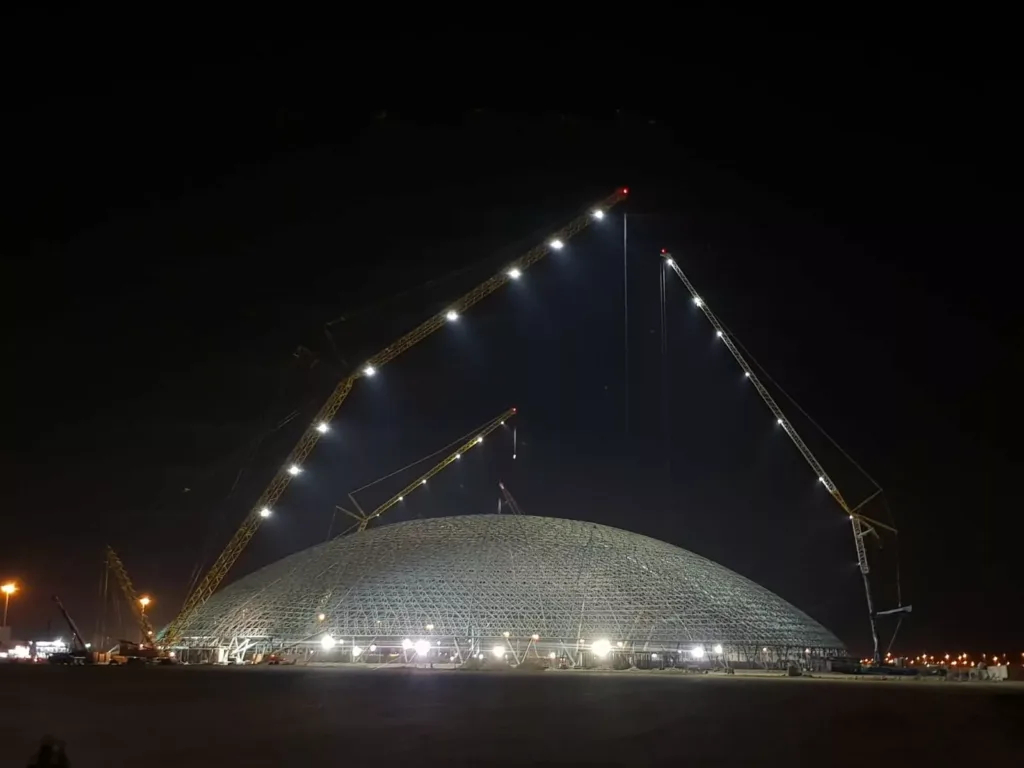
By first determining the environment and the lighting design and only then selecting the luminaire and optics, five Orca luminaires provide more than 200 lux across the entire working height, as tested in accordance with EN 12464-2:2024 and the NSVV light pollution guideline.
Step 1
The environment
What is happening at the location determines the design: height, operating hours, environment, standards.
Step 2
The system
Light distribution, uniformity and glare are calculated before a luminaire is chosen.
Step 3
The product
Only after that follows the choice of luminaire, optics, and mounting that matches that calculation.
JEL delivered the complete lighting design and luminaires for the Mammoet PTC-210-DS and conceived the installation together with the customer.

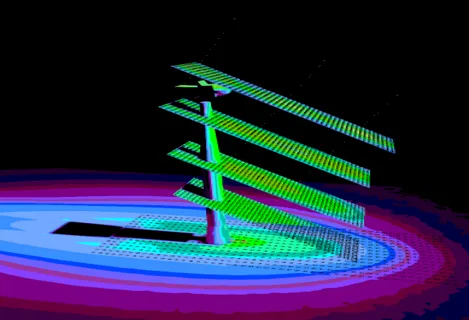
JEL did not design the lighting on one plane but vertically across multiple working heights, so that the entire hoisting height of the crane is evenly illuminated.

The luminous intensity towards the nearby shipping lane, highway, and tunnel is limited to a maximum of 5,000 candela, with no upward light, so as not to blind passing traffic and operators.
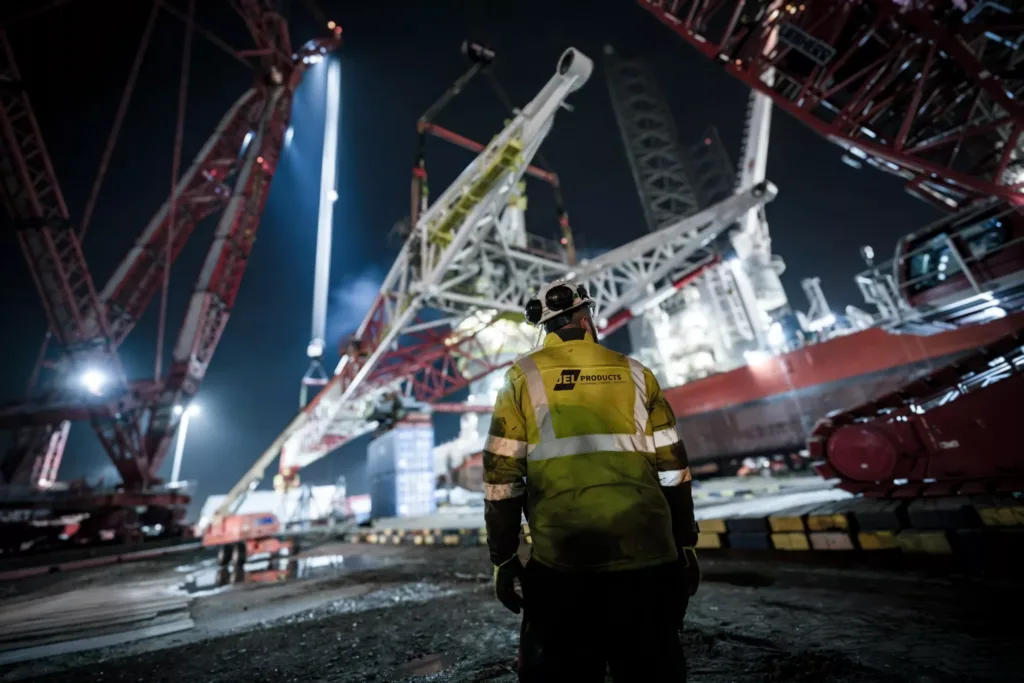
The luminaires are mounted at a height of up to 160 meters. Since maintenance at that height is not realistic, the installation was carefully planned and executed together with Mammoet.
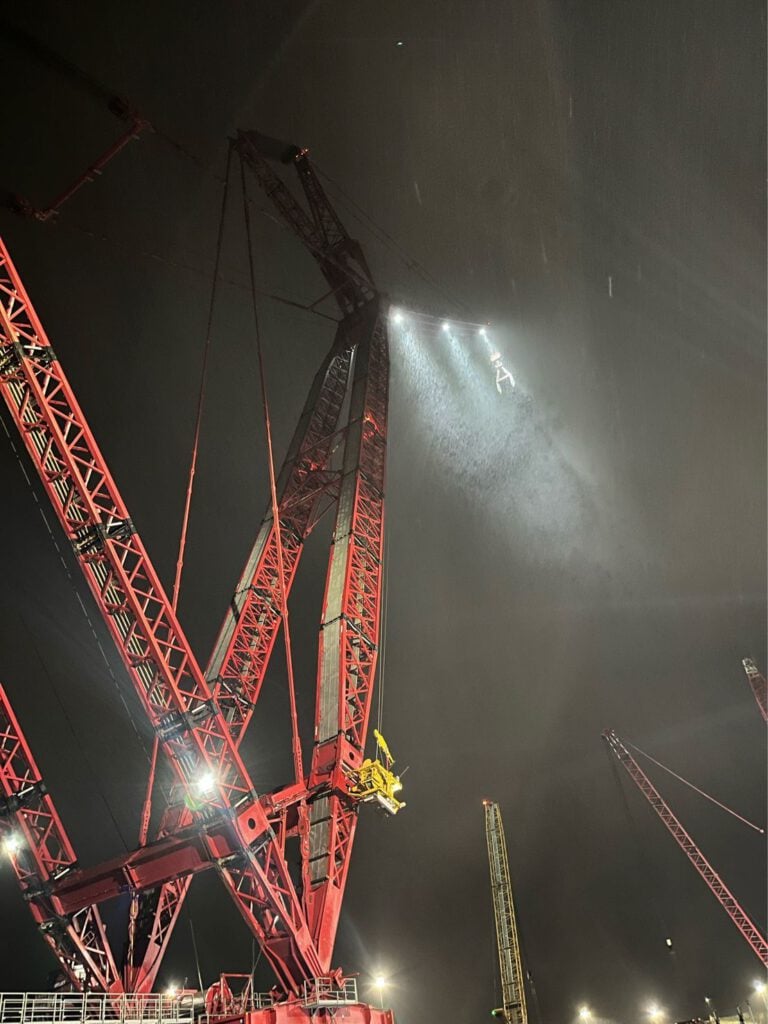
The design has been calculated at multiple working heights and achieves an average of 200 lux with a uniformity of up to 0.75, well above the standard requirement of 0.40.
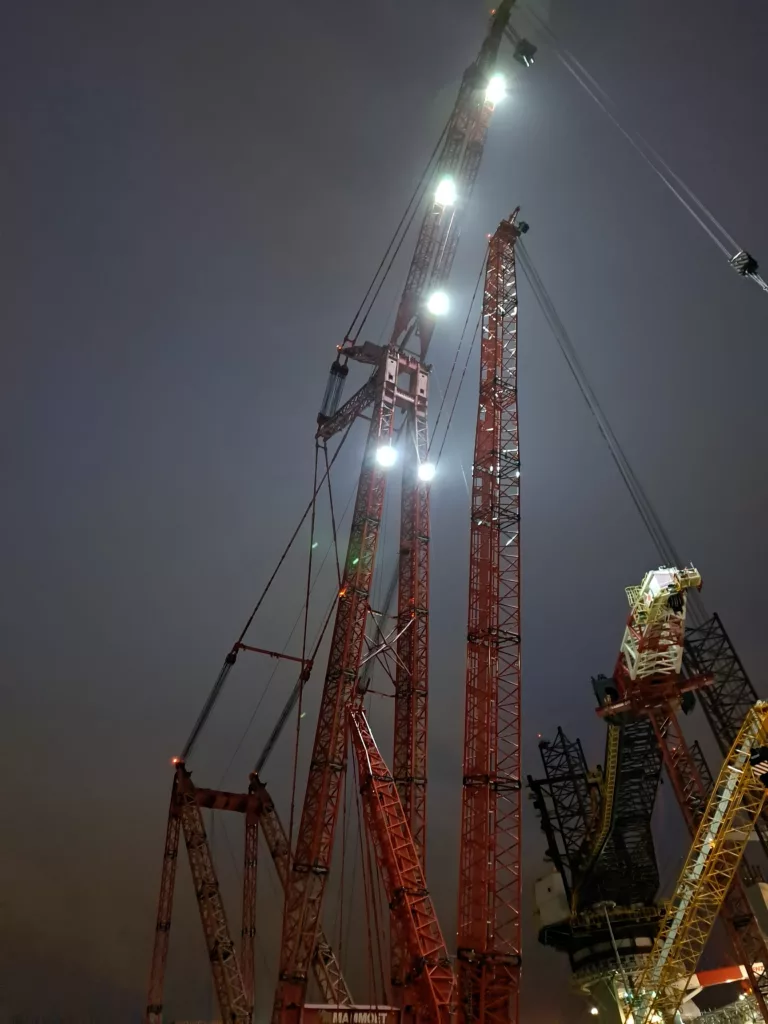
There were only five mounting positions available. Using special project-specific optics, those five Orca luminaires still provide more than 200 lux at the workstation.
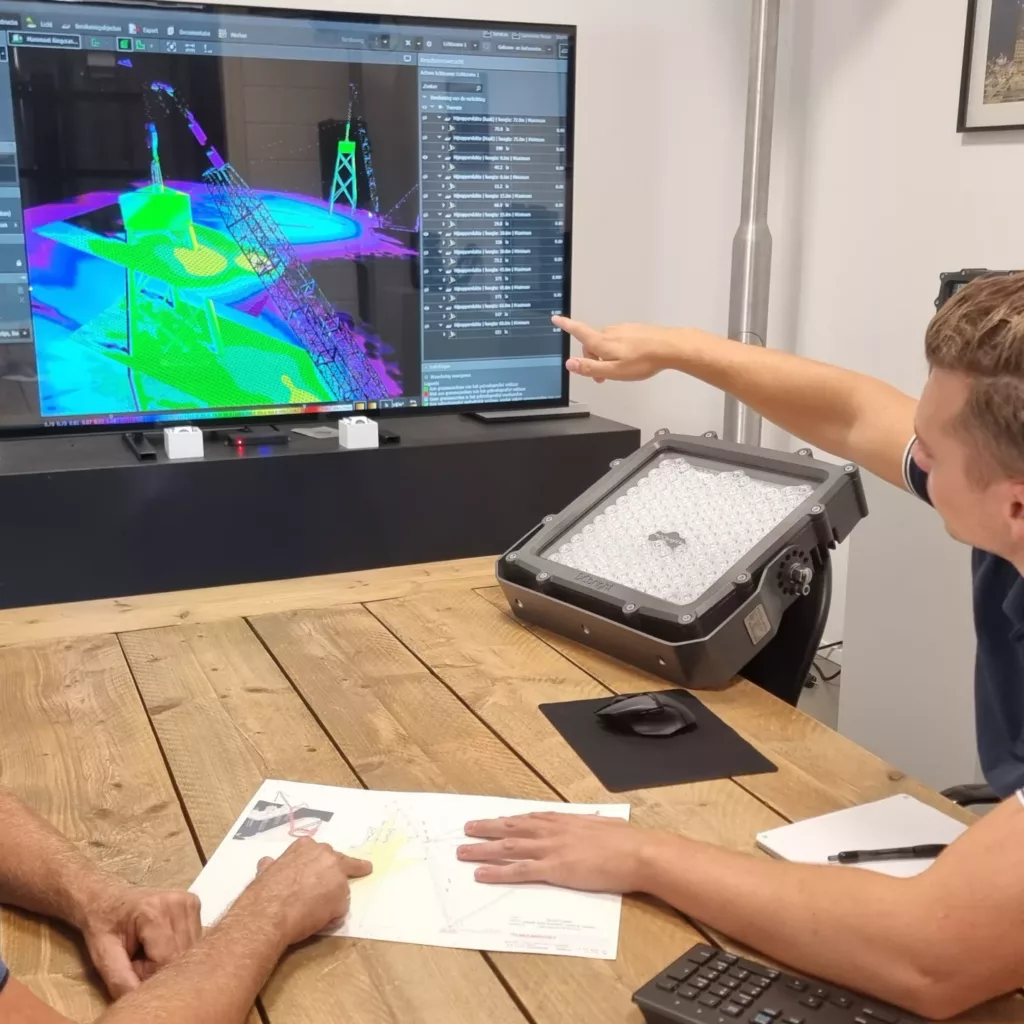
JEL coordinated lighting design, luminaire selection, and installation with Mammoet, ensuring the lighting met the stringent requirements of the heavy-lifting project.
The installation achieves an average of 200 lux in the work area, measured vertically at various heights, with a uniformity between 0.65 and 0.75. This is well above the standard requirement of 0.40; by calculating at multiple working heights, JEL even exceeded the standard.
Towards the nearby shipping lane and highway, the luminous intensity (except directly in front of the crane, which is unavoidable) was limited to 5,000 candela, with no light directed upwards.
200 lux average over the working height, uniformity 0.65 to 0.75 (standard: 0.40)
Used product

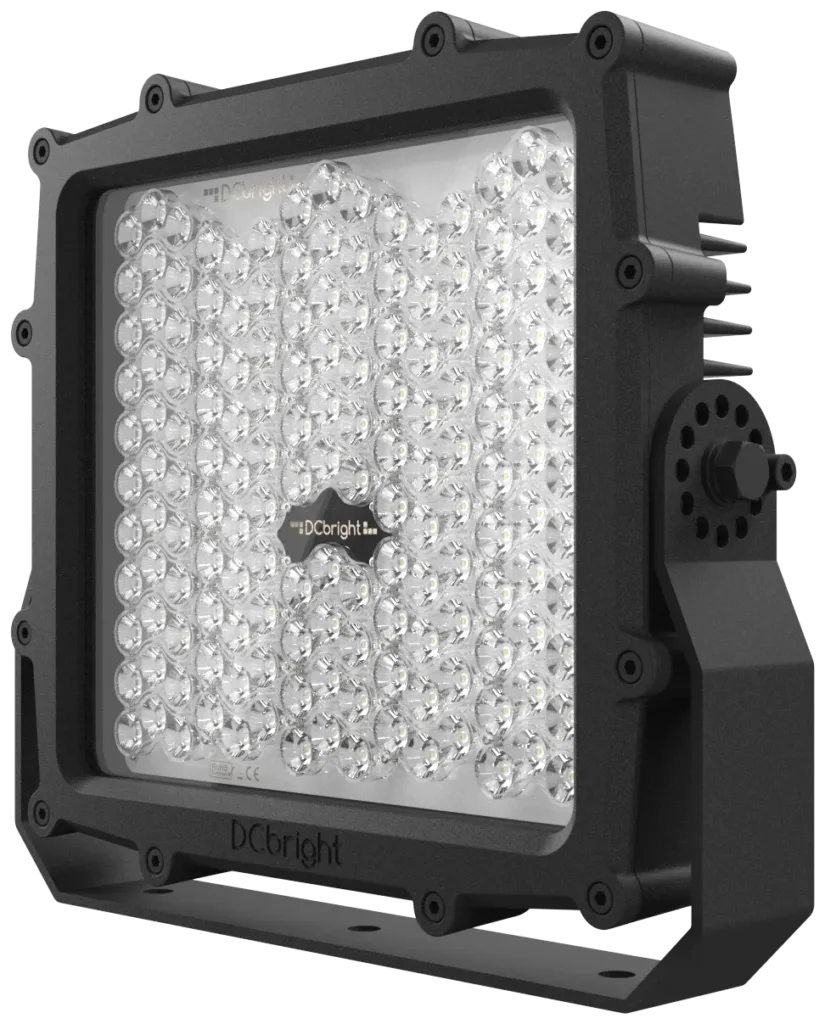
The work was carried out with five Orca LED Floodlights in the AC 800 W version, each good for 111,000 lumens. Special optics used for this project made it possible to achieve over 200 lux on the workspace with just five luminaires.
Since maintenance at a height of 160 meters is not realistic, the robustness and reliability of the Orca were decisive factors in the selection.
At that height, maintenance after installation is practically impossible, so the luminaires must be able to withstand all conditions. We selected five Orca luminaires (AC 800 W, 111,000 lumens) with special optics to ensure that the lighting will continue to perform maintenance-free for many years.
The lighting design limits the luminous intensity towards the nearby shipping route and highway to a maximum of 5,000 candela and prevents upward light. This keeps the work area well-lit without disturbing the surroundings.
There were only five mounting positions available on the crane. Due to a focused optics and a well-thought-out design, those five luminaires nevertheless deliver more than 200 lux over the entire working height.
Instead of calculating on a single plane, we vertically calculated the lighting design at multiple working heights. The result is a uniformity of 0.65 to 0.75, well above the standard requirement of 0.40.
The Mammoet PTC-210-DS, one of the largest cranes in the world at the time, was used to replace the cranes on the heavy-lift vessels Wind Osprey and Wind Orca for offshore wind projects.
Are you working on a lighting project for a crane, a hoisting or heavy-lifting application, or another large industrial site? JEL supports you every step of the way: from lighting design and the selection of optics to lighting fixtures, installation, and project coordination.
| Response | within 1 working day, by an engineer |
| Lighting calculation | free of charge, per zone |
| Trial luminaire | on your own mast, on request |
| Warranty | 5 years full, 10 years on the housing with a maintenance contract |
Rather call directly: 033 785 9809