

Short answer
Candela determines whether the light from a luminaire mounted twenty metres high still reaches the floor.
Luminous intensity is the amount of light that a luminaire or light source emits in a specific direction, expressed in candela (cd). In industrial environments, luminous intensity determines whether a workplace is safely and effectively illuminated: too little light increases the risk of errors and accidents, while too much unfocused light causes glare and energy waste. In this article, we answer the most frequently asked questions about luminous intensity,from basic principles to practical application in heavy industry.
E = I / d²
lux directly below the luminaire: candela divided by the distance squared
40.000 cd
gives 100 lux directly below at a distance of 20 metres
4 ×
that much more luminous intensity is needed when the distance doubles
Inverse square law for light falling perpendicular to the surface. If the light falls at an angle, the cosine of the angle of incidence is added.
How does luminous intensity differ from lumens and lux?
Three concepts that are often used interchangeably, but each measure something different. Light intensity (candela) indicates how much light a source emits in one specific direction. Lumen describes the total amount of light a luminaire emits in all directions combined. lux measure how much of that light actually falls on a surface, at a certain distance.
A useful example: a luminaire with many lumens does not automatically have high illuminance. If the light is widely dispersed, the beam is less intense in any given direction. A spotlight with the same lumens but a narrow beam has a much higher illuminance in that single direction. For industrial applications, this distinction is crucial, high illuminance ensures that light reaches far and is directed, which is essential for high masts, large halls, or outdoor locations.
The relationship between the three quantities in a row:
| Quantity | What is it measuring |
|---|---|
| Candela (cd): | Luminous intensity in a specific direction |
| Lumen (lm): | total luminous flux emitted by a luminaire |
| Lux (lx): | illuminance on a surface (lumens per square meter) |
More background on the relationship between lumens and luminous flux can be found on the page about Luminous flux and what you need to know.
Why is light intensity critical in industrial environments?
On a factory floor, a construction site, or a haven terminal work with heavy machinery, dangerous materials, and complex installations. Insufficient targeted lighting directly leads to reduced visibility and an increased safety risk, and that's precisely where the importance of light intensity comes in.
Industrial luminaires are often hung at great heights, sometimes twenty meters or more above the work floor. At that distance, the illuminance decreases rapidly if the luminaire's luminous intensity is too low. A luminaire with high luminous intensity in the correct beam shape ensures that light reaches the workspace with sufficient intensity, even at a great distance.
In addition, environmental factors play a role. Dust, vapor, heat, and corrosion can further reduce light output. In such conditions, a generous light intensity margin is not a luxury, but a necessity to guarantee reliable lighting throughout the entire lifespan of the installation.
What illuminance level is required for different industrial applications?
The required illuminance varies greatly depending on the application and is determined by the mounting height, the area to be illuminated, the nature of the work, and applicable standards. For industrial workplaces in the Netherlands and Europe, guidelines apply based on the EN 12464-1 standard for indoor lighting and EN 12464-2 for outdoor locations.
Global guiding values per application:
| Application | Guide value and luminous intensity |
|---|---|
| Hallways and storage rooms: | at least 100 lux at work surface height, low illuminance is sufficient at short distances |
| Production halls and workshops: | 300 to 500 lux, high-bay luminaires require high luminous intensity |
| Precision work and quality control: | 750 lux or more, with emphasis on even distribution |
| Outdoor areas and port locations: | 50 to 200 lux depending on activity, high brightness needed due to large lighting distances |
| Crane operations and working at height | Specific high-brightness bundles aimed at the work area |
For complex environments where large areas and varying working heights converge, a professional lighting design is essential to determine the correct illuminance per zone.
How do you measure the light intensity in an industrial space?
Luminance itself is measured with a goniophotometer, a specialized laboratory device that records the light intensity of a luminaire in all directions. In practice, however, on the workplace, you measure illuminance (lux), not luminous intensity (candela) directly,for this, you use a lux meter.
A workplace measurement proceeds as follows: position the light meter at working surface height (standard 0.85 meters above the floor) at multiple measurement points distributed across the room. By comparing the measured lux values with the required standards and analyzing the differences between them, you assess whether the lighting installation provides sufficient and uniform illumination.
Modern lighting software allows for simulations to determine the required light output per luminaire to achieve desired lux levels on the work floor. This prevents installations from failing to meet requirements after the fact, which can avoid costly adjustments on large industrial projects.
Lighting calculation
We calculate with the measured light distribution of the luminaire
The luminous intensity distribution of our luminaires has been measured and is available as an LDT file. We use it in DIALux to calculate, position by position, what reaches the floor or the site: illuminance, uniformity and glare. You receive the report, even if you do not buy from us afterwards.
Request a lighting calculation
Free of charge and without obligation · Response within 1 working day from an engineer
The consequences of incorrect light intensity in the workplace are: * **Eye strain and fatigue:** Too little or too much light can cause discomfort, dryness, headaches, and blurred vision. * **Reduced productivity and performance:** Poor lighting can make it difficult to see details, increasing errors and slowing down work. * **Increased risk of accidents:** Insufficient lighting can lead to tripping hazards and difficulty navigating the workspace. * **Sleep disturbances:** Exposure to incorrect light, especially blue light at the wrong times, can disrupt the body's natural sleep-wake cycle. * **Mood and well-being:** Inadequate or harsh lighting can contribute to feelings of stress, irritability, and general discomfort. * **Damage to vision over time:** Chronic exposure to improper lighting can potentially contribute to long-term vision problems.
Both too low and too high light levels in the wrong place cause problems that go beyond discomfort. The consequences directly affect the safety, productivity, and health of employees.
By too low brightness Employees see details less clearly, react more slowly to dangerous situations, and make more mistakes. This is particularly risky with machine operations, crane operation, or working at heights. Fatigue and headaches are common complaints with structurally insufficient lighting.
By excessive brightness or incorrectly aimed beams This causes glare. Direct or reflected glare disrupts vision and can lead to serious workplace accidents. This risk is particularly high in environments with shiny surfaces, water, or metal.
Additionally, an incorrect lighting installation has economic consequences: luminaires that provide too little light are replaced or supplemented, leading to higher costs. Over-dimensioned luminaires unnecessarily consume energy. A good lighting design based on the correct illuminance prevents both pitfalls.
Which factors influence the effective luminous intensity of an LED luminaire?
The specifications on a datasheet don't tell the whole story. Various technical and environmental factors determine how much light actually reaches the workplace.
The main factors are:
What determines the effective luminous intensity
For applications in extreme environments, such as high temperatures or aggressive chemical exposure, choosing a luminaire specifically developed for those conditions is crucial for long-term performance.
Luminaires for high mounting positions
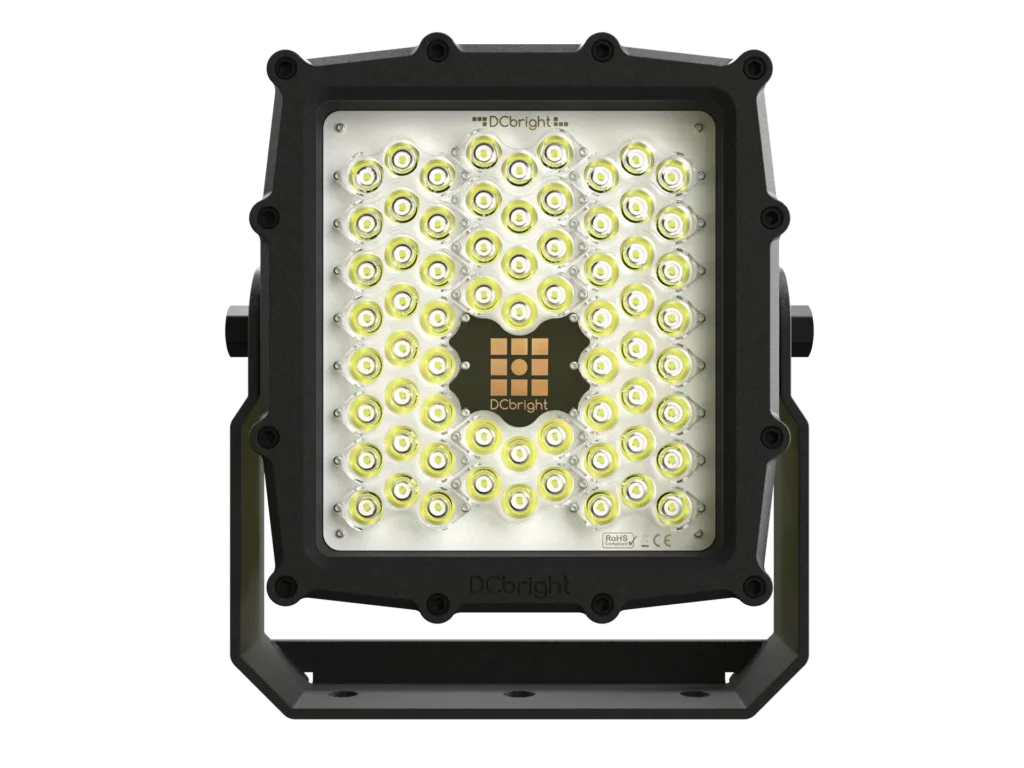
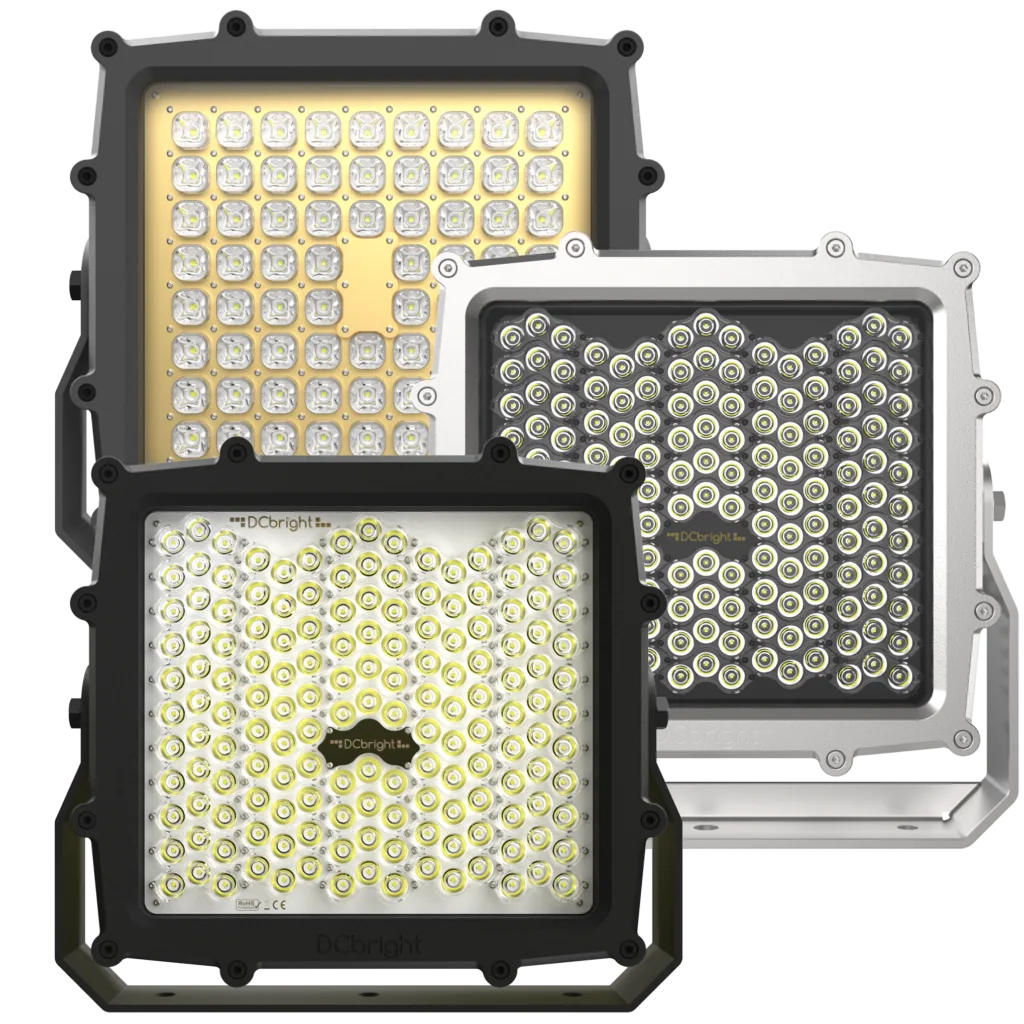
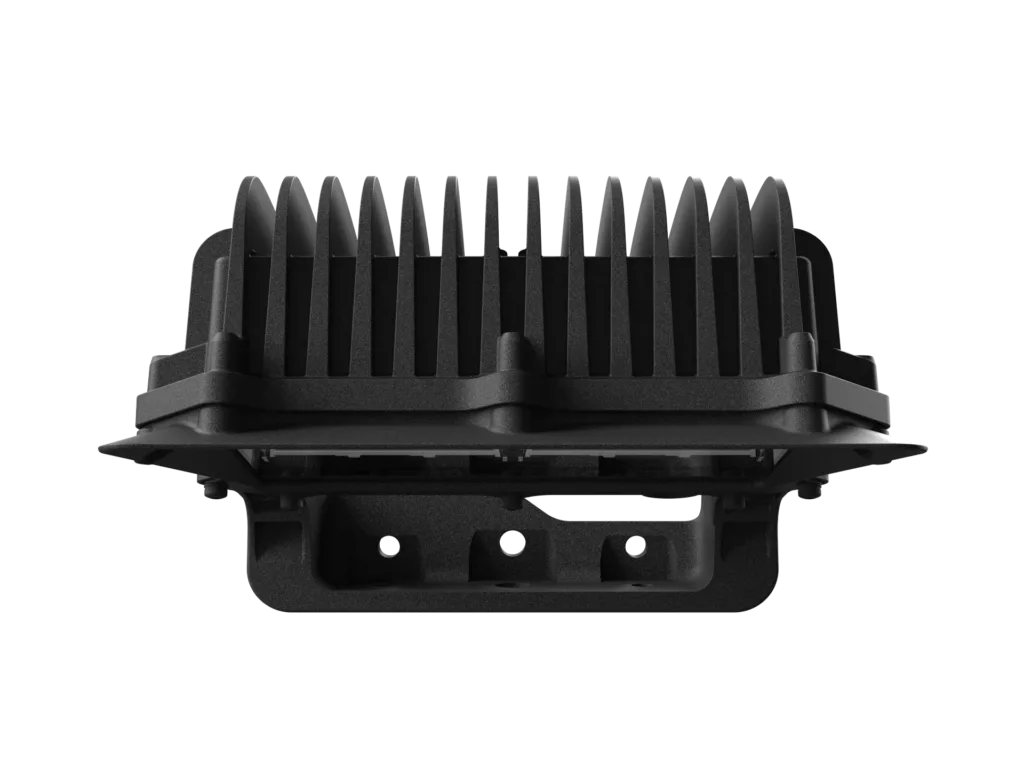
Practical example: DFDS Vlaardingen
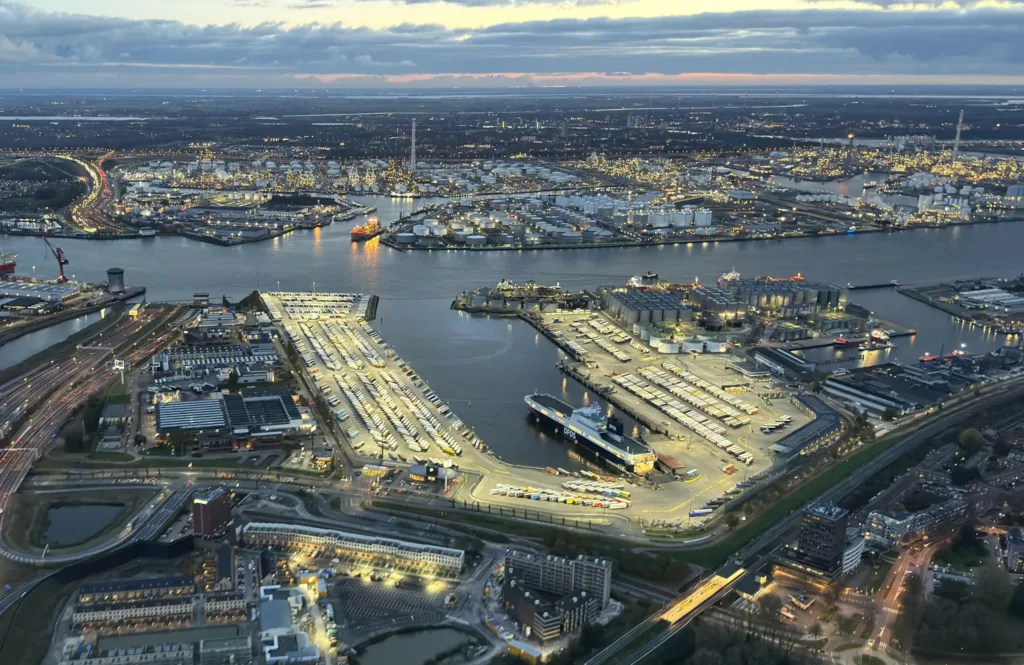
Project · Ports and terminals
High-mast terminal lighting at DFDS Seaways in Vlaardingen
34 masts of 30 metres with DarkLicht, across the entire terminal site on the waterfront. The beam is matched per mast to the mounting height and the geometry of the site.
34
30-meter light masts
50 lux
average across the site
0,45
uniformity U0
At the DFDS port terminal in Vlaardingen, which operates 24/7, JEL handled the lighting design and the installation of new terminal lighting on 34 lighting masts of 30 metres, with a total of around 180 DarkLicht DL1 and DL2 luminaires. The biggest technical challenge was the mast spacing of 145 metres, around five times the mast height. In addition, the terminal borders homes and residential towers, so glare and light pollution towards the residential area had to be prevented. The result is an average of 50 lux on the site with a uniformity of up to 0.45.
With such a ratio between mast height and mast spacing, the luminous intensity in the right direction determines the result more than the total luminous flux of a luminaire. The light has to reach far across the site at a shallow angle, otherwise dark zones and hard shadows appear between the masts. Precisely controlled optics direct the luminous intensity to those distant points and keep it away from the facades of the homes. Only the distribution of luminous intensity across the various directions shows whether a design achieves the required level and uniformity.
Further reading
How JEL Products Helps with Light Intensity in Industrial Environments
Choosing the right light intensity for an industrial environment is not a one-size-fits-all solution. It requires an understanding of the specific work environment, mounting heights, activities on the shop floor, and applicable standards. JEL Products supports technical decision-makers and project managers at every stage of this process:
- Professional lighting design based on your specific situation and standards
- Selection of luminaires with the correct beam shape and light intensity for the application
- Calculations and simulations that provide advance insight into the expected lux values
- Luminaires designed for extreme conditions, from high temperatures to corrosive environments
- Guidance from engineering to installation and commissioning
Whether it's a production hall, a port terminal, or an outdoor location with harsh conditions, there's always a solution that meets your organization's technical and operational requirements. Feel free to contact us for a no-obligation consultation via contact page.
Related Articles
- What role does lighting play in the safety of evacuation routes during heatwaves?
- How do you protect terminal lighting against lightning and power surges?
- How do you properly maintain industrial LED lighting?
- What is the difference between horizontal and vertical illuminance in harbors?
- How do you correctly light a high industrial hall?