
...
Home / Crane lighting / Obstruction lighting
Obstruction lighting

Obstruction lighting for cranes, from stock and with advice on the layout.

Red aviation obstruction lights for tower cranes, mobile cranes and temporary structures, to ICAO Annex 14. We supply the lights and the control as a complete set, and advise which light belongs at which height.
Standard versions from stock  ·  ICAO Annex 14  ·  12 to 230 V, AC and DC
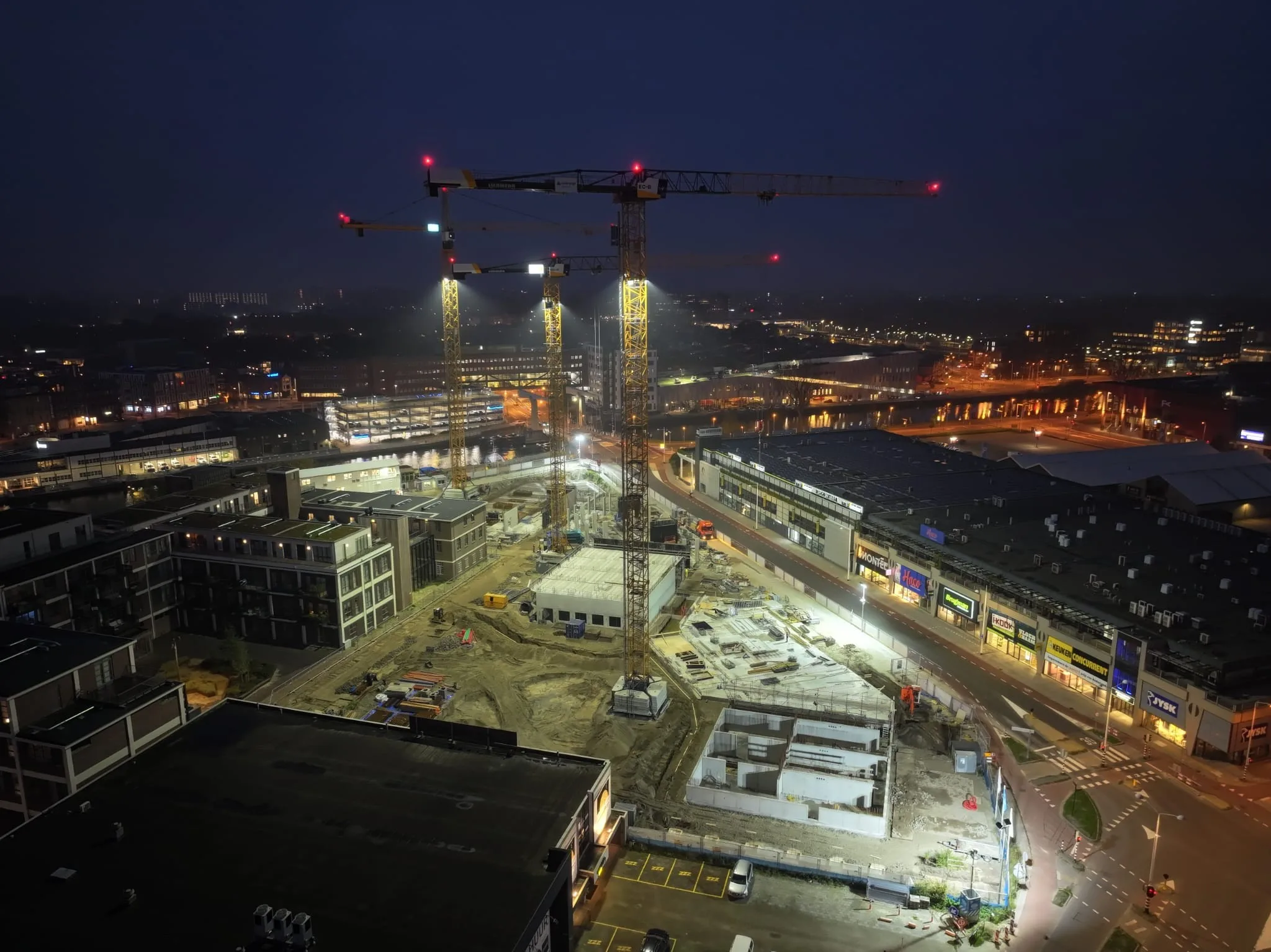
Tower cranes with red obstruction lights on the top and the jib ends above a construction site at night

The red lights on the top and the jib ends: Lantern L32 below 45 metres, M2K as the top light above that
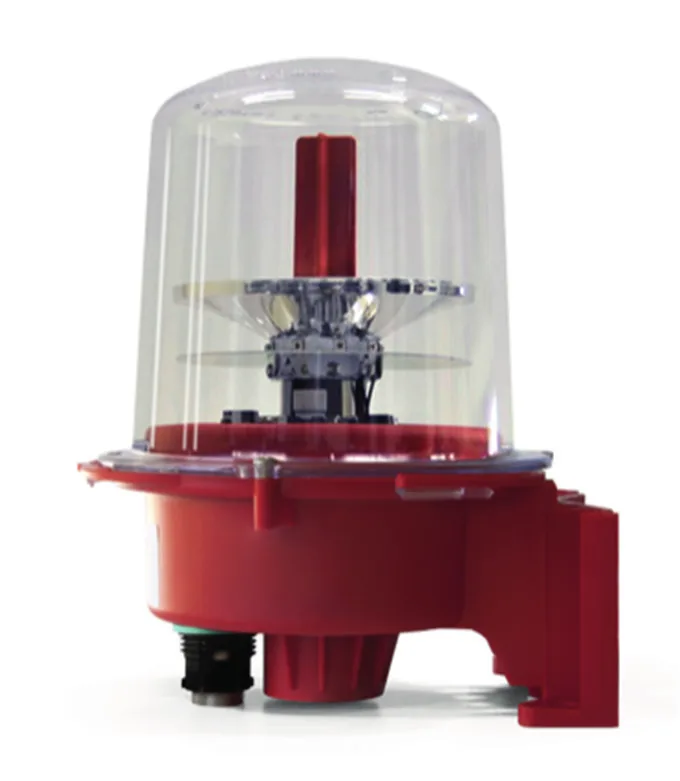
32 cd
Low intensity, steady red
2000 cd
Medium intensity, flashing
12 to 230 V
AC and DC
From stock
Standard versions
The question

When does a crane have to be lit?

To a pilot, a crane is an obstacle just like a radio mast, only temporary and in a place where yesterday there was nothing. A low-flying helicopter, an air ambulance or an aircraft on its approach has to be able to see the height and the ends of the crane in the dark. Whether your crane has to be lit, and with which light, is decided by the aviation authority after notification. Three factors count.
01

Height

Below 45 metres, ICAO considers low intensity sufficient: steady red, 32 candela. From 45 to 150 metres, a flashing light of 2,000 candela goes on top.
02

Location

Lower limits apply around airports, helicopter landing sites and low-flying routes. There, even a 30 metre crane may need lighting.
03

Notification

In the Netherlands a crane from 100 metres is notified to the ILT; around Schiphol and Lelystad a permit is required. The authority sets what the crane has to carry.
The range

The Lantern Series: two light classes, one set

All lights comply photometrically with ICAO Annex 14, Volume I, and with FAA types L-810 and L-864. We supply standard versions from stock; large quantities and non-standard models by arrangement.
Lantern L32 low intensity obstruction light with red housing and clear cap
Low intensity, ICAO Type B

Lantern L32

Steady red light of more than 32 candela, visible all round. For the jib ends, the counter jib and the top of cranes up to 45 metres. 700 grams, IP66, with a plug connection so the light is replaced at height in minutes.
Light intensity> 32.5 cd
Power supply10-60 V DC or 110-230 V AC
Power consumption3 W DC, 4.5 W AC
Ambient temperature-40 to +55 °C
VariantsDouble, infrared, flashing
Lantern M2K medium intensity obstruction light with aluminium top and bottom plate
Medium intensity, ICAO Type B

Lantern M2K

Flashing red light of 2,000 candela, 20 to 40 flashes per minute. The top light for cranes and structures from 45 metres, visible from much further away than a steady light. 5 to 6 watts on average.
Light intensity2,000 cd
Power supply12 V DC, 24-48 V DC or 110-230 V AC
Weight5.5 kg
Ingress protectionIP66
VariantsDouble, infrared, Type C steady
On request: medium intensity Type A (white, 20,000 cd by day and 2,000 cd at night), a dual-mode white and red version, and Ex versions for offshore cranes and process areas.
Diagram of two tower cranes with the positions of the obstruction lights, below 45 metres and between 45 and 150 metres
Layout on the crane

Which light belongs at which height?

A crane is lit at its highest point and at its ends, because the jib is what a helicopter meets first. Below is the usual layout following the ICAO recommendations. The final layout follows from the notification to the authority.
HeightUsual layout
Up to 45 mLantern L32 at the top and at both jib ends
45 to 150 mLantern M2K at the top, L32 at the jib ends and at intermediate levels no more than 52 m apart
Above 150 mPer project, often with white light by day
Low intensity, steady red, 32 cd
Medium intensity, flashing red, 2,000 cd
Control and power

On at dusk, and you know when a light fails

Obstruction lighting has to be on from sunset to sunrise and in poor visibility, exactly when nobody is on site. The control around the lights takes care of that, and reports a failed light before an inspector or a pilot does.
Photoelectric switch in aluminium housing for obstruction lighting
LAN-PC

Photoelectric switch

Switches the lights at 22 to 3,000 lux, factory set at 300 lux. With a delay, so that headlights or site lights do not switch it. IP65.
Compact controller for obstruction lighting with three cable glands
LAN-C3

Compact controller

For 24 or 48 V DC. Controls three L32, or two L32 and one M2K, with a fault alarm per light and a volt-free contact. IP68.
Local control panel for obstruction lighting with indicator lamps and selector switch
LAN-CP

Local control panel

For 230 V AC and more lights. Power per level, synchronised flashing, alarm per level and an AUTO, ON, OFF selector.
Solar power kit with panel, battery box and obstruction light
LAN-SOL

Solar power kit

Panel, battery and charge controller on one frame, without external cabling. For cranes and masts without power at night. Sized per project.
Mounting brackets for angle sections from 50 × 50 to 160 × 160 mm and tubes from Ø 48.3 to 219.1 mm, hot dip galvanised or in 316 stainless steel. The L32 comes with a pole anchor up to Ø 82.5 mm as standard.
Working together

What we supply, and what you arrange

1JEL Products

We supply

The obstruction lights, the control, the photoelectric switch, junction boxes and mounting brackets, as a complete set on one quotation. Standard versions from stock.
2JEL Products

We advise

On the number of lights, the light class per level, the positions on the crane, the power supply and the cabling. Based on crane type, height and location.
3Client

You arrange

Mounting on site and the notification or permit with the aviation authority. The authority decides what the crane has to carry; we help you choose the right set for it.
Questions

Frequently asked questions about obstruction lighting

The rules per country are a summary as of September 2026. Check the current requirements with the authority for your project.
Rather discuss it directly? Call Lucas de Graaf.

Background: The light classes, height limits and reporting rules per country are explained in the knowledge article obstacle lighting and ICAO.

That differs per country and per location, and the aviation authority decides. As a guide: in most European countries a crane from 100 metres has to be notified, and lower limits apply around airports and helicopter landing sites. ICAO recommends low intensity below 45 metres and a flashing medium intensity top light from 45 to 150 metres.

Objects from 100 metres, including temporary cranes, are notified to the ILT. The notification includes the number and type of obstruction lights. Around Schiphol and Lelystad, tower cranes need an environmental permit under the Luchthavenindelingbesluit, applied for through the Omgevingsloket. Source: ilent.nl.

The Allgemeine Verwaltungsvorschrift zur Kennzeichnung von Luftfahrthindernissen requires marking from 100 metres outside built-up areas and from 150 metres in cities, and lower within the protection zones of airports. Cranes count as temporary obstacles. The Landesluftfahrtbehörde decides, on advice from DFS.

Cranes and temporary installations near airports are assessed by skeyes. The marking of obstacles is set out in circular CIR/GDF-03 of the FPS Mobility and Transport, Directorate-General Aviation. Request the advice before the crane is erected.

The CAA requires notification for cranes higher than 10 metres within 6 kilometres of an aerodrome, and for cranes from 100 metres anywhere. For planned projects at least eight weeks ahead. The CAA guidance CAP 1096 recommends 32 candela lights below 45 metres, 2,000 candela above that with intermediate levels no more than 52 metres apart, and lights on both jib ends.

In France, structures, including mobile ones, need authorisation from 50 metres outside and 100 metres inside built-up areas, through the DGAC. Marking follows the arrêté of 23 April 2018. In Spain, AESA authorisation is required within the aeronautical easement zones and for obstacles from 100 metres; the lighting is set per decision.

Low intensity Type B is a steady red light of at least 32 candela for obstacles up to 45 metres and for the ends and intermediate levels of taller structures. Medium intensity Type B is a flashing red light of 2,000 candela, visible from much further away, which belongs on top of structures from 45 metres.

Red obstruction lighting is for the night and for poor visibility; a photoelectric switch turns it on and off automatically. By day a crane is usually marked with colour or flags. For structures above 150 metres the authority may require white light by day; we supply those lights on request.

No. We supply the lights, the control and the mounting brackets, and advise on the layout. Mounting on site and the notification or permit with the authority are arranged by you or your crane hire company.

We supply standard versions from stock. For large quantities or models outside the standard range we agree the delivery time in the quotation.

The Lantern L32 runs on 10 to 60 V DC or 110 to 230 V AC, the Lantern M2K on 12 V DC, 24 to 48 V DC or 110 to 230 V AC. If the crane has no power at night, there is a solar kit with a battery.

Further reading

More on crane lighting

All solutions for tower cranes, mobile cranes and harbour cranes.
Work lighting on the tower crane jib, with frame and distribution unit.
Lighting for the self-erecting tower crane.
All technical documentation in one place.
Request

Advice on the obstruction lighting for your crane

Send us the crane type, the height and the location. Within one working day you receive a proposal for the lights, the positions and the control, as a complete set on one quotation.
Standard deliveryFrom stock
StandardICAO Annex 14, Volume I
ResponseWithin 1 business day
Downloads
We respond within one working day. We deliver standard items within a week. Custom work, such as a different light colour, a different CRI or a bespoke version, by arrangement.