

Short answer
Passive cooling has no part that can wear out. In dust, moisture and heat, that counts for more than extra cooling capacity.
The difference between active and passive cooling in LED luminaires lies in the way heat is dissipated. Passive cooling uses the luminaire body itself, often equipped with cooling fins, to naturally disperse heat. Active cooling adds a mechanical element, such as a fan or liquid cooling, to accelerate heat dissipation. Which method is most suitable depends heavily on the environment and the thermal load of the installation.
+50 °C
upper limit of a standard industrial luminaire
+120 °C
continuous with the HT line, driver outside the hot zone
51.400 hours
L90B05 at +120 °C, almost six years of continuous operation
Values of the JEL HT line in AC version. The DC version goes up to +110 °C.
In this article, we answer the most frequently asked questions about cooling in LED fixtures, allowing you to make a well-founded choice for your industrial situation.
How does heat affect the lifespan of an LED fixture?
Heat is the greatest enemy of an LED light source. The higher the temperature of the LED chip, the faster the light output decreases and the shorter the lifespan becomes. This phenomenon is called lumen maintenance, and it is exponential: a relatively small increase in junction temperature can shorten the lifespan by tens of percent.
LEDs convert part of the electrical energy into light, but a significant portion becomes heat. That heat has to go somewhere. If the thermal management of an LED luminaire falls short, the junction temperature rises, which leads to color shift, reduced light output, and ultimately premature failure of the light source.
This plays an even stronger role in industrial environments. Think of production halls, steel mills, or outdoor locations in direct sunlight. The ambient temperature is already high, which means the LED fixture has to work extra hard to keep the internal temperature manageable. Good thermal management at high temperatures is then not a luxury but a technical necessity.
How does passive cooling work in an LED luminaire?
Passive cooling uses conduction and convection with no moving parts. The heat produced by the LED chip is dissipated to the housing surface via a thermally conductive printed circuit board and the luminaire body. Cooling fins increase the surface area and promote heat transfer to the ambient air.
The great advantage of this system is its simplicity. There are no moving parts, no components susceptible to wear, and no maintenance is required on the cooling system itself. This makes passively cooled luminaires exceptionally reliable in environments where maintenance is difficult or costly, such as at high altitudes, in confined spaces, or during 24/7 operations.
The effectiveness of passive cooling depends on the housing material, the geometry of the cooling fins, and the airflow around the fixture. Aluminum is widely used because of its high thermal conductivity and low weight. With a correct design, passive cooling is fully sufficient for most standard industrial applications.
How does active cooling work in an LED luminaire?
With active cooling, a mechanical system is used to accelerate heat dissipation. The most common form is a built-in fan that blows air past the LED chips and the heatsink. In more advanced or extreme applications, liquid cooling can also be used, where a coolant removes heat via a closed circuit.
Active systems can dissipate significantly more heat per unit of time than passive systems. That makes them suitable for situations where a high luminous flux is required in a compact luminaire, or where the ambient temperature is so high that passive cooling is insufficient.
The drawback is the added complexity. Fans wear out, can become clogged with dust or dirt, and require periodic maintenance. In environments with a lot of dust, moisture, or aggressive substances, the fan must be well protected, which increases the design requirements for the enclosure. Active cooling therefore requires a deliberate trade-off between performance and maintenance burdens.
What are the pros and cons of active versus passive cooling?
The choice between active and passive cooling in LED fixtures is a trade-off between thermal performance, reliability, and ease of maintenance. Below is an overview of the main advantages and disadvantages.
Advantages and disadvantages side by side
Passive cooling:
- No moving parts, so no mechanical wear
- Maintenance-free cooling system
- Suitable for hard-to-reach installations
- Quiet operation
- Limited cooling capacity at very high ambient temperatures or high wattages
Active cooling:
- Higher cooling capacity, suitable for extreme thermal loads
- More compact luminaire designs possible at high power
- Moving parts that wear out and require maintenance
- More sensitive to dust, moisture and aggressive environments
- Higher lifecycle maintenance costs
For most industrial applications, passive cooling is preferred due to its higher reliability. Active cooling makes sense when thermal requirements truly demand it.
When is active cooling necessary in industrial lighting?
Active cooling is necessary when the combination of high lighting output and high ambient temperature exceeds the limits of passive cooling. This occurs in specific industrial situations where the heat generated by the LED chips cannot be dissipated quickly enough via the luminaire body alone.
Consider the following situations:
- Steel mills and foundries where radiant heat from glowing metal extremely increases the ambient temperature
- Tunnels and confined industrial spaces with limited air circulation and high heat buildup
- Compact fixtures with high wattage where the surface area for passive cooling is insufficient
- Process plants where luminaires are mounted close to heat sources
- High-temperature cycling climate chambers where the luminaire itself also acts as a heat source
In these cases, choosing active cooling is a technical necessity, not a preference. However, during the design phase, you must account for protecting the ventilation openings against dust and moisture, as well as accessibility for periodic maintenance.
How JEL solves this
The HT line works up to +120 °C without a fan
The situations above are exactly the positions the HT line was developed for: above ovens, rolling mills and dryer sections, and in steel plants. No fan is involved there; the heat is managed through the design of the entire system.
On the process side there is a gold-coloured reflector that reflects 96 to 99.9 percent of the infrared radiation between 800 and 2,500 nm, so radiant heat does not heat up the luminaire. The housing dissipates the heat of the LED passively. The driver, the component that ages first, sits in a DRB driver box at a position where it gets no hotter than +50 °C.
At 8,760 hours of continuous operation per year, 51,400 hours is almost six years. At +85 °C ambient temperature it is 103,000 hours.
The HT line
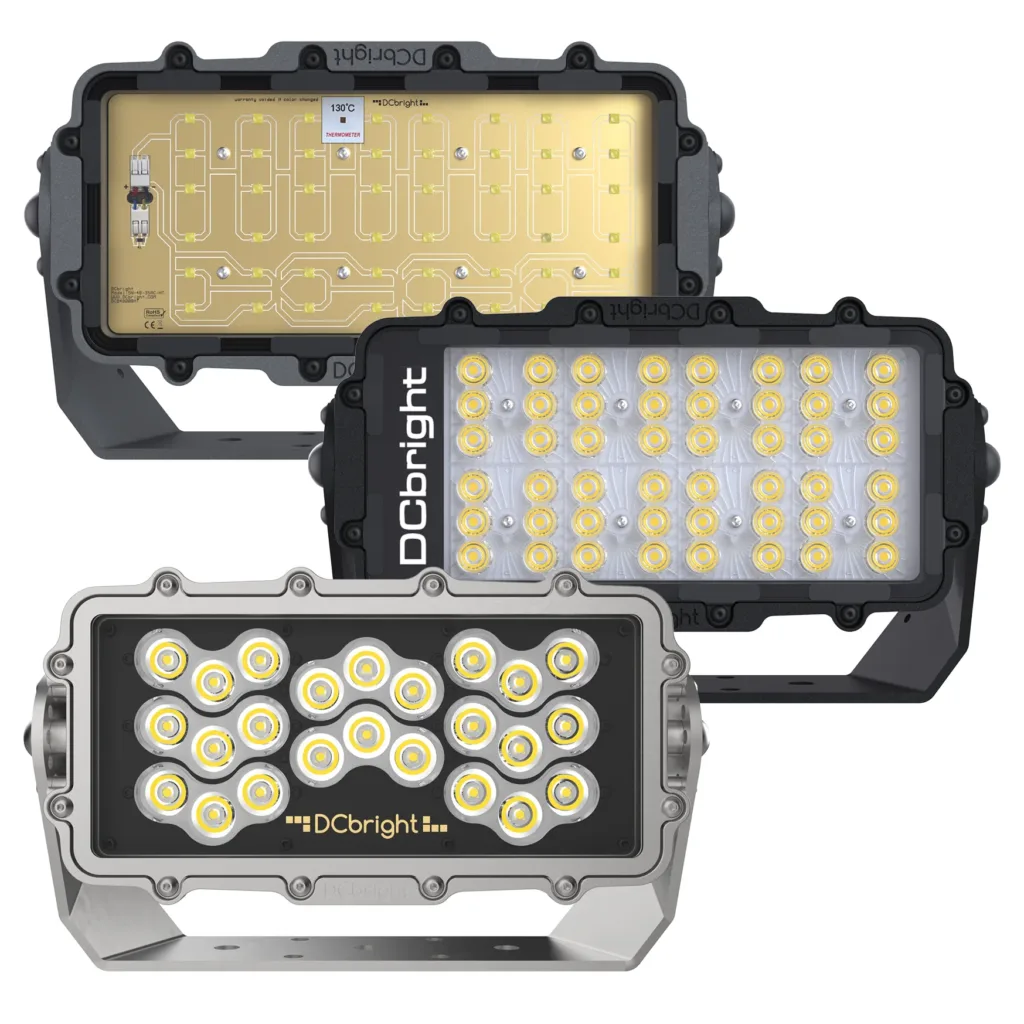
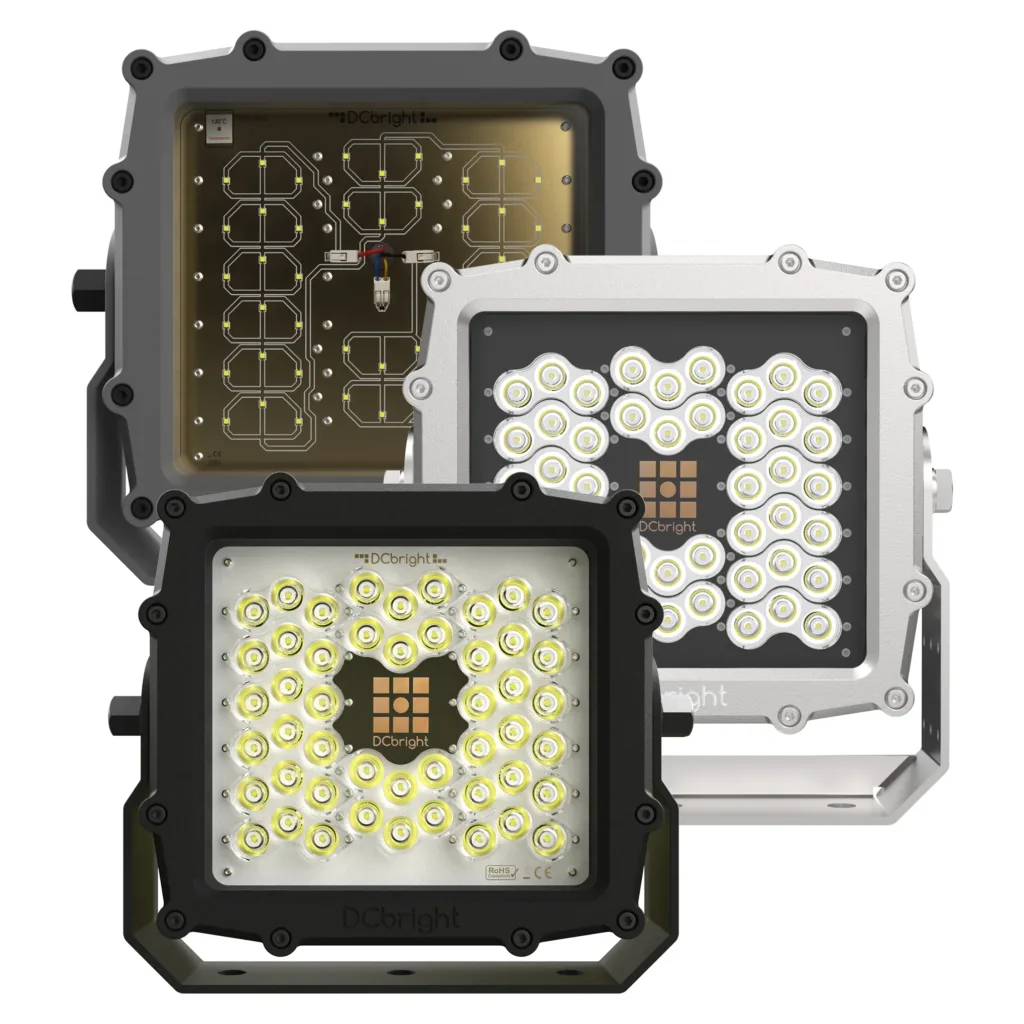
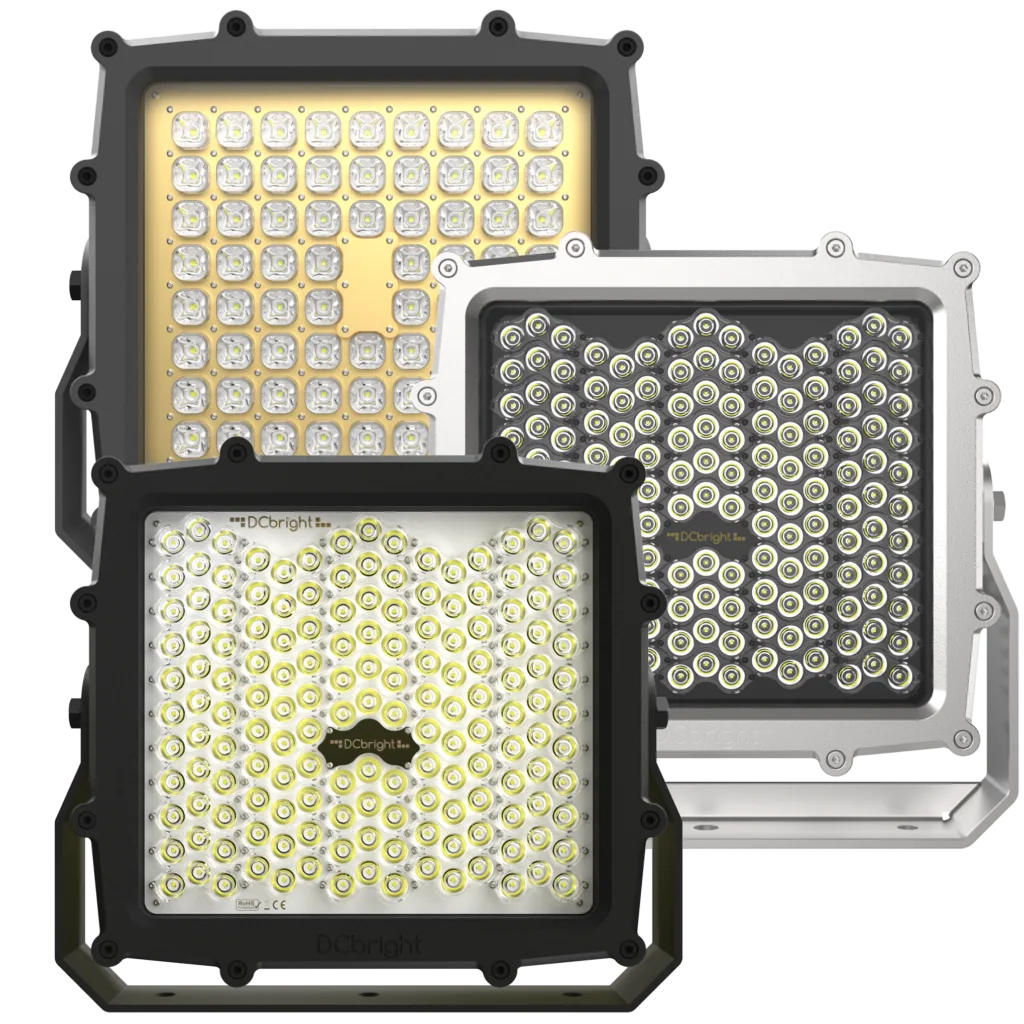
Which cooling method is most suitable for your industrial environment?
The right choice depends on three factors: the ambient temperature, the required lighting output, and the maintenance frequency that is feasible in your situation. In most industrial environments with normal to elevated temperatures, passive cooling offers the best combination of reliability and low maintenance costs.
When making your choice, consider the following questions. What is the ambient temperature at the installation location? What is the required wattage per fixture? Is the location easily accessible for maintenance? Are aggressive substances, heavy dust, or moisture present? How critical is the continuity of the lighting for the operation?
If the ambient temperature is structurally above 50 degrees Celsius, or if the wattage per fixture is very high in a compact housing, active cooling is a serious option. In all other cases, passive cooling is preferred. For more technical context, also view the lighting advice that helps in making the right trade-off.
Submit your position
We determine whether standard is sufficient or the HT line is needed
Tell us the temperature at mounting height, the process below and the distance to the heat source. Below +50 °C the standard range is sufficient and an HT version adds nothing. Above that, we calculate the position and tell you which HT version and driver position fit.
Free of charge and without obligation · Response within 1 working day from an engineer
Practical example: Rockwool Croatia

Project · Heavy industry
Heat-resistant lighting in the Rockwool factory in Croatia
Barracuda HT, Snapper HT and Linear HT in a factory with ambient temperatures above 110 °C and infrared radiation from the process. The drivers are located outside the hot zone, where they must not exceed 50 °C.
>110 °C
ambient temperature at the luminaires
>100 lux
on the shop floor, in accordance with EN 12464-1
5 years
warranty, also in this environment
At the Rockwool plant in Zajci, Croatia, ambient temperatures in production exceed 110 °C, with infrared radiation from the process on top of that. Standard LED lighting, and even many heat-resistant versions, fail under these conditions. JEL Products provided the lighting design, engineering, installation design and supply of more than 50 Barracuda HT, more than 20 Snapper HT and more than 30 Linear HT, which together achieve more than 100 lux on the shop floor. The LED drivers must not get warmer than 50 °C, while outdoor temperatures in summer already approach 40 °C. Their positioning and cooling were therefore designed and tested separately, away from the hot production zones.
In such an environment, a fan would itself become the most vulnerable component. The HT luminaires stay cool through their choice of materials and thermal design, and the heat-sensitive electronics are placed where the temperature remains manageable. Cooling thus becomes a matter of system design, in which luminaire, driver position and environment are considered together, rather than an additional mechanical component that requires maintenance.
Further reading
How JEL Products helps with cooling in industrial LED fixtures
JEL Products designs and manufactures LED fixtures tailored to the thermal realities of heavy industrial environments. That starts with the design: each fixture is developed with a view to the specific ambient temperature, the required lighting output, and the maintenance conditions at the installation site.
Specifically, JEL Products provides support in the following areas:
- Technical advice on the right cooling method for your specific environment
- Fixtures with optimized passive cooling design for most industrial applications
- Specialized high-temperature luminaires for extreme environments such as steel mills and foundries
- Lighting design incorporating thermal management and environmental conditions into the calculations
- Management of the entire process: from advice and engineering to installation and commissioning
Do you have a specific situation where you are unsure about the right cooling solution for your LED fixtures? Please contact us via the JEL Products Contact Page for a conversation with a technical specialist.