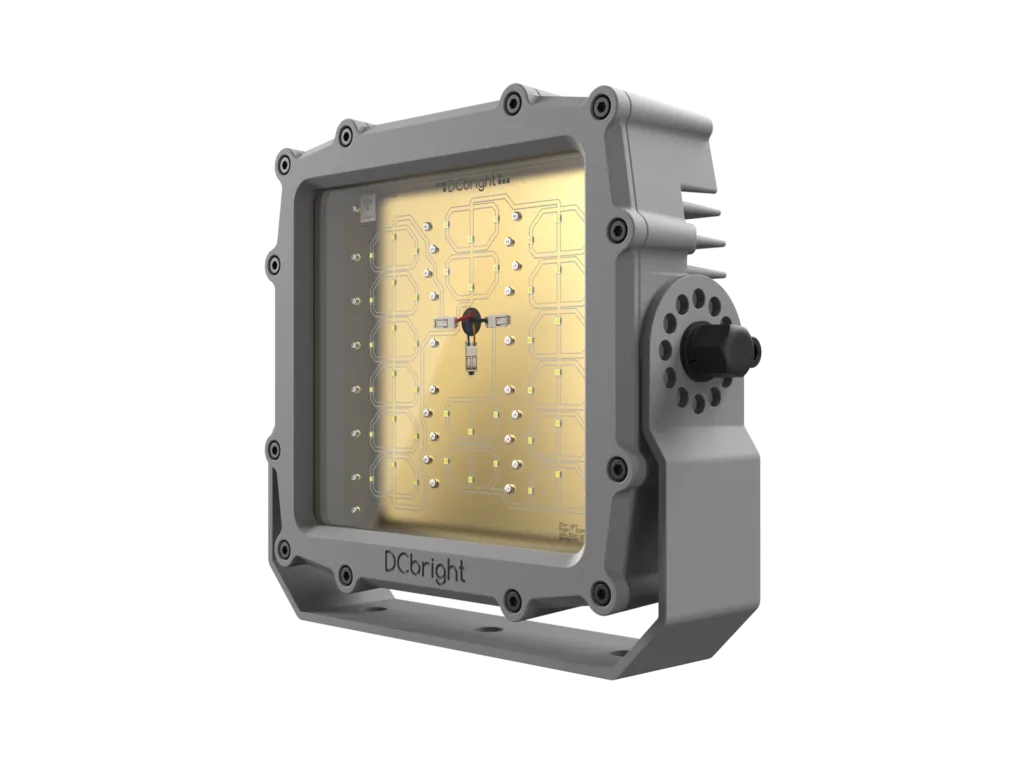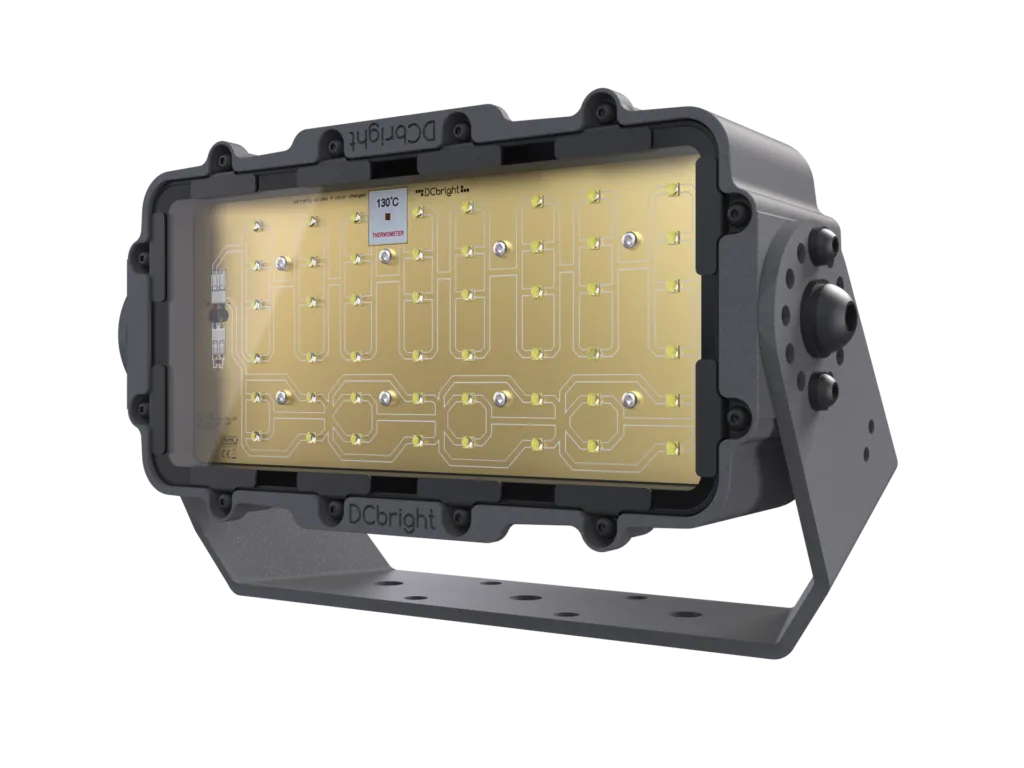

In a steel mill the air temperature is only half the story. Glowing steel radiates infrared heat directly onto every surface, and a luminaire above a rolling line or casting platform catches that radiation in full.
Plastic lenses turn dull and brittle, standard drivers give up. Our luminaires are built to hang right in that radiation: chemically hardened glass, heat-resistant housing and the driver up to 25 metres outside the hot zone. Proven daily at Tata Steel IJmuiden.

Continuous, peaks up to +130 °C permitted
Driver outside the hot zone, in the DRB box
Chemically hardened, no plastic in the radiation
Continuous radiant heat from the passing steel.
Peak temperatures with every pour.
The highest ambient temperatures of the mill.
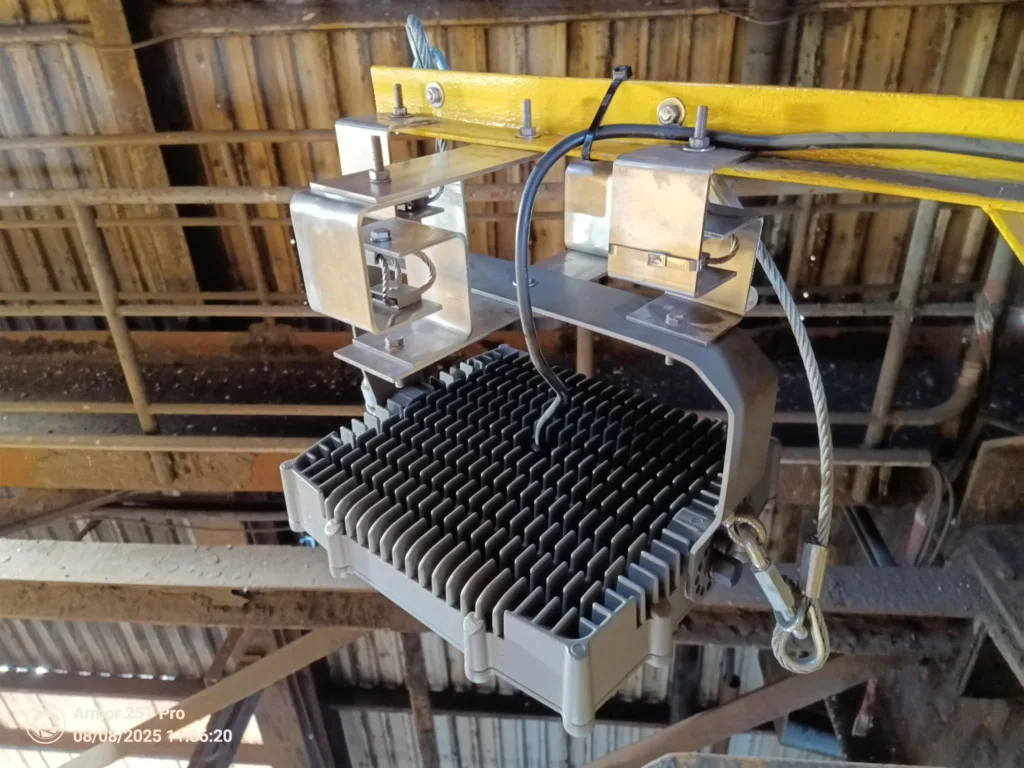
High, hot and dusty; accessibility is the real problem.
A datasheet tells you the ambient temperature, but radiation heats the luminaire itself far beyond it. That is why we include the radiation load per position and choose optics and housing accordingly.
Glass instead of plastic is not an upgrade here but a precondition.
of the infrared radiation between 800 and 2500 nm is reflected by the gold-coloured IR reflector in the luminaire. The radiant heat goes back into the process, not into the housing.
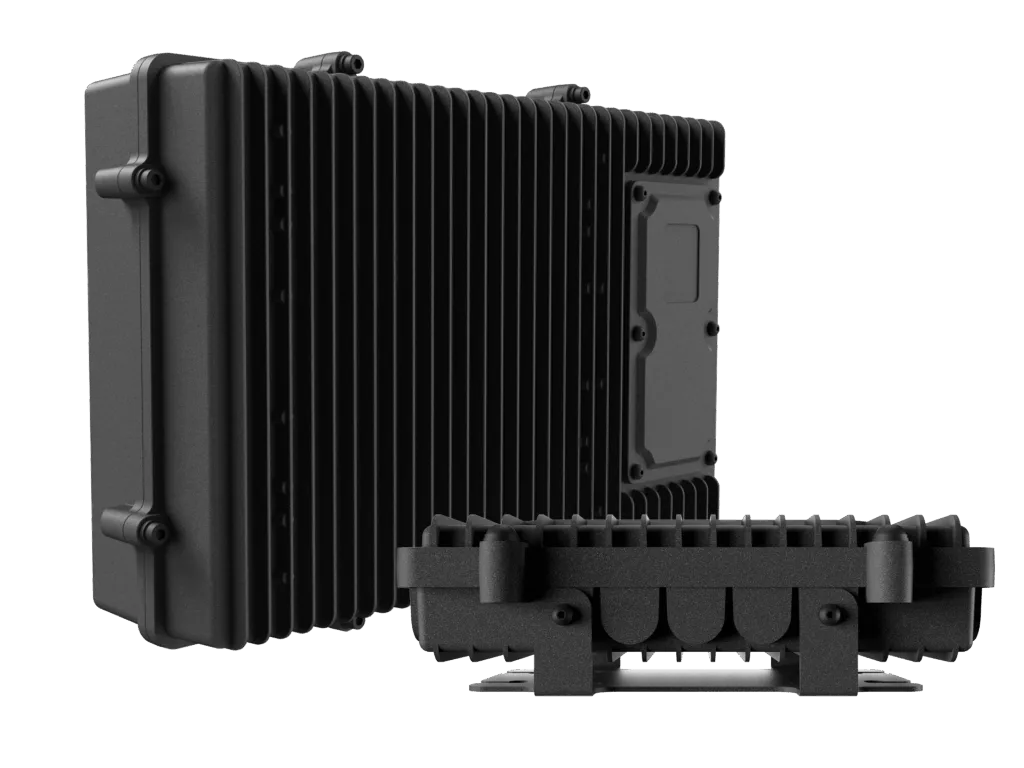
The driver up to 25 metres outside the hot zone, IP67, maintenance in the cool zone.
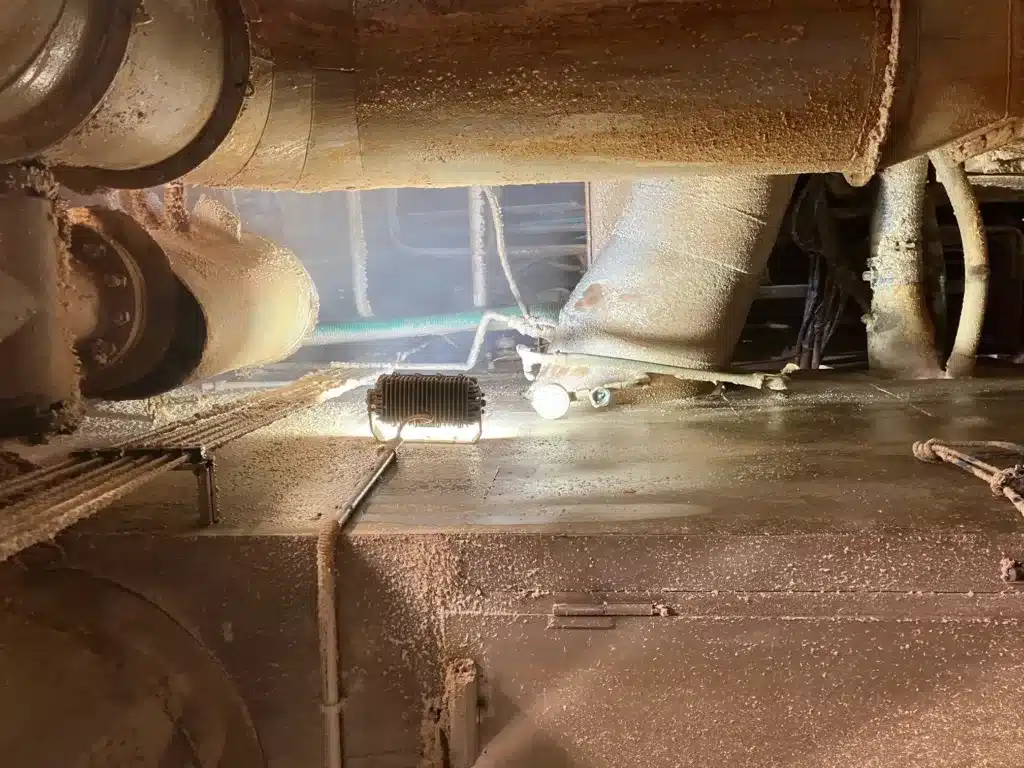
At Tata Steel conventional lighting in the production process kept failing; our luminaires now hang on the positions where that happened. The driver sits outside the hot zone and the luminaires hang right in the radiation of the process.
Is your question not listed? Call 033 785 9809, you will speak with an engineer.
Luminaires designed for radiant heat: chemically hardened glass instead of plastic, a heat-resistant housing and the driver outside the hot zone. Our luminaires operate continuously up to +120 °C ambient temperature, with peaks up to +130 °C.
Radiation heats the luminaire itself far above the air temperature. Plastic lenses turn dull and brittle, seals harden and the driver ages rapidly. That is why we include the radiation load in every position calculation.
AC versions continuously up to +120 °C ambient temperature, with brief peaks up to +130 °C without warranty consequences. Above +130 °C our engineers calculate per position what is possible with shielding and remote mounting.
By placing the driver, the most failure-prone component, outside the hot zone in a DRB driver box up to 25 metres away. Maintenance therefore happens in the cool zone, not at height above the line.
Yes, the same line. Casting platforms and melting zones see peak loads with every pour; the luminaires are designed for that. For furnace zones and dryers there is a separate application page.
The Orca HT has HT glass optics of 20, 40 or 60 degrees for directed beams from high positions, up to 65,000 lumens per luminaire. The beam choice follows from the lighting calculation per position.
The steel industry is the most demanding application of our high temperature LED lights, with radiation-resistant optics and the driver outside the hot zone.