

Short answer
Terminal lighting must be grounded when it concerns Class I luminaires, metal housings, or installations in wet, corrosive, or explosion-hazard environments. This applies in virtually all professional terminal environments. Grounding is not optional: it is a legal requirement and a direct safety measure that prevents dangerous voltage differences. In this article, we answer the most frequently asked questions about grounding terminal lighting, from risks and standards to execution and inspection frequency.
Stricter inspection requirements apply in ATEX zones according to NEN-EN 60079-17.
What are the risks if terminal lighting is not grounded?
A wiring or luminaire defect combined with a missing earth connection can lead to hazardous touch voltages on metal parts. This poses a direct risk of electric shock to employees. In wet or damp environments, such as terminals and quays, this risk increases significantly, and fire or equipment damage caused by electric arcs is also a looming threat.
Terminals are environments with a lot of moving equipment, vibrations, and severe weather conditions. A damaged connection cable or a loose cable gland can already be enough to energize a luminaire. Without grounding, that voltage has nowhere to go except through a person touching the pole or the luminaire.
In addition to the direct danger to individuals, there are also operational risks to consider:
- Lighting failure due to damaged components after an earth fault
- Damage to adjacent electrical systems caused by electric arcs
- Liability in the event of incidents when grounding is demonstrably absent
- Failed inspections or audits
Which standards and regulations determine the mandatory grounding requirement?
The basis is provided by NEN 1010: the Dutch standard for low-voltage installations, which prescribes when and how protective earthing must be applied. Additionally, for maritime and port environments, the NEN-EN 60079 series applies for explosive atmospheres and the IEC 60364 series for electrical installations in special environments.
For terminals and ports, the requirements from the Working Conditions Act are also relevant. The employer is obligated to guarantee a safe working environment, which has direct consequences for the electrical installations on the site. Inspections by a recognized inspection body, such as a NEN 3140 inspection, verify, among other things, whether all lighting is properly grounded.
By marine lighting specific requirements from classification societies such as Lloyd's Register or Bureau Veritas also apply, depending on the location and type of installation. These bodies enforce strict requirements for the earthing of all electrical systems on board and onshore.
Which types of terminal lighting must always be earthed?
In short: all Class I luminaires. These are luminaires where protection against electric shock relies on the earth connection. In practice, this applies to virtually all metal luminaires at terminals, including LED floodlights work lights on masts, working lights on cranes, and lighting in loading and unloading areas.
The following types of terminal lighting always require proper grounding:
Which of these are on your premises?
Everything you check here requires a proper earth connection.
- LED floodlights with metal housing on light poles and gantry structures
- Crane and harbour crane lighting on conductive structures
- Valves in potentially explosive ATEX zones
- Lighting in wet or damp areas (IP65 or higher)
- Luminaires on steel poles or structures with conductive contact
Class II luminaires (double insulation) technically do not need to be earthed, but for this type as well, the mounting structure itself may need to be earthed. In practice, almost exclusively class I luminaires are used at terminals due to the harsh environmental requirements. More information about suitable luminaires can be found on the page about Harbors and terminals lighting.
Installation specification
We provide the specification your installer can work with
Per zone, the luminaire class, the IP rating, the material of cable glands and terminals, and the connection method, as part of the lighting plan. Inspection and measurement remain the work of your certified installer; we ensure the specification is correct before anything goes up the mast.
No newsletter, no sales pitch.
How is the earthing of terminal lighting correctly carried out?
Proper grounding consists of a continuous connection from the luminaire through the installation to the earthing point of the supplying distribution board. Every link in that chain must be electrically reliable and meet the required cross-section for the earth conductor.
Correct execution proceeds step by step:
- Determine the earth conductor cross-section based on the phase conductor and the short-circuit current. This is specified in NEN 1010, Table 54.2.
- Connect the luminaire via a green or yellow-green earth conductor to the earth terminal in the junction box.
- Ensure continuity by running the earth conductor continuously through cable glands, cable trays and distribution boards.
- Earth the mast or structure on which the luminaire is mounted, separately to the main earthing terminal of the installation.
- Measure the earth resistance after installation and document the values for the inspection.
- Have the installation inspected by a certified electrical installer in accordance with NEN 3140.
For installations in corrosive environments, such as dock areas with marine air, the use of stainless steel cable glands and earth clamps is strongly recommended. Standard galvanized connections can corrode within a few years to such an extent that the earth connection loses its function.
When is grounding especially critical for terminal lighting?
There are situations where the probability of an earth fault is higher, or where the consequences of an incident are more severe. On terminals, these are the zones where water, corrosion, vibrations, or explosion hazards coincide with electrical installations.
Specific situations where extra attention to grounding is required:
In these zones, water, corrosion, vibrations, or explosion hazards combine with the electrical installation. Include the earth connection there as early as the design phase.
Especially with lighting for extreme corrosion is the earthing connection a point of concern, because corrosion can interrupt the electrical continuity of the earth conductor without this being immediately visible.
Do light poles also need to be grounded against lightning strikes?
Yes, but that is a different earthing than the protective earthing described earlier in this article. Protective earthing according to NEN 1010 ensures that an insulation fault in a luminaire is safely disconnected. Lightning protection earthing has to do something completely different: discharge a current surge of tens of thousands of amperes into the ground within a few microseconds. The requirements for cross-section, geometry, and connections therefore differ significantly. A pole that is correctly earthed according to NEN 1010 is therefore not automatically protected against lightning strikes.
On a terminal, the lighting mast is often the highest object in the vicinity, especially in the case of high masts of 20 to 50 meters on an open site near the water. This makes it a probable strike point. Whether lightning protection is actually required follows from a risk analysis according to the NEN-EN-IEC 62305 series. That analysis also determines which protection level (LPL I to IV) applies. NPR 1014 is the Dutch practice guideline for this series of standards.
What that practically means for a lighting mast at a terminal:
- The mast itself can be the drain pipe. According to NEN-EN-IEC 62305-3, a steel mast may serve as a natural down conductor, provided that electrical continuity is guaranteed over its full length and the wall thickness and cross-section comply with the standard. Flange connections, painted contact surfaces, and insulated bolted connections are the weak points here.
- One bonded grounding system, not two. The lightning earth and the protective earth must be on the same equipotential system. Two separate grounds actually create a potential difference in the event of a strike, and that difference is precisely what destroys the installation.
- Step and touch voltage around the mast base. Where people can get within a few meters of the mast, a ring earth electrode, insulating paving, or a physical barrier limits the potential gradient in the soil during a strike.
- Surge protection in the power supply. Without SPDs from the NEN-EN-IEC 61643 series, the driver in the luminaire usually does not survive a nearby strike, even if the pole safely conducts the main current away. Type 1 belongs where lightning current can enter the installation, type 2 further down in the distribution.
- A proprietary inspection regime. The lightning protection system is inspected in accordance with NEN-EN-IEC 62305-3. This is not automatically included in the NEN 3140 inspection of the electrical installation, and the two are frequently confused in practice.
For the earth-termination resistance of the lightning earth, 10 ohms is often used as a guideline, but the geometry of the earth electrode carries more weight than that number alone. A single deep rod behaves differently during a steep current pulse than a ring earth electrode with the same measured resistance. In areas with a lot of paving, a high groundwater table, or saline soil, this is a design question rather than a standard solution. The elaboration and measurement are the responsibility of your installer or a specialized lightning protection company; we ensure that the luminaires, masts, and connection method in the lighting plan align with this.
How often must the grounding of terminal lighting be checked?
At least every three years, the grounding must be checked as part of the periodic electrical inspection in accordance with NEN 3140. In environments with increased wear and tear, such as quay areas with marine air or heavy-use zones, an annual visual inspection and a biennial measurement are recommended.
During an inspection, the following aspects are evaluated:
- Visual condition of earth conductors, terminals, and cable glands
- Measurement of the earth conductor and earth resistance
- Continuity of the earth connection from the luminaire to the main earthing terminal
- Condition of corrosion-prone joints in outdoor installations
In addition to periodic inspections, it is advisable to check the grounding immediately after any incident,such as a pole collision, storm damage, or an electrical malfunction. Furthermore, after replacing luminaires or making modifications to the installation, the grounding must be verified before the installation is put back into service.
Stricter inspection requirements apply to installations in ATEX zones. NEN-EN 60079-17 prescribes that electrical installations in hazardous areas must be regularly inspected, with earthing being a mandatory part of the inspection routine. Always consult a certified inspection body with demonstrable experience in explosion safety for this purpose.
Fittings for corrosive terminal environments
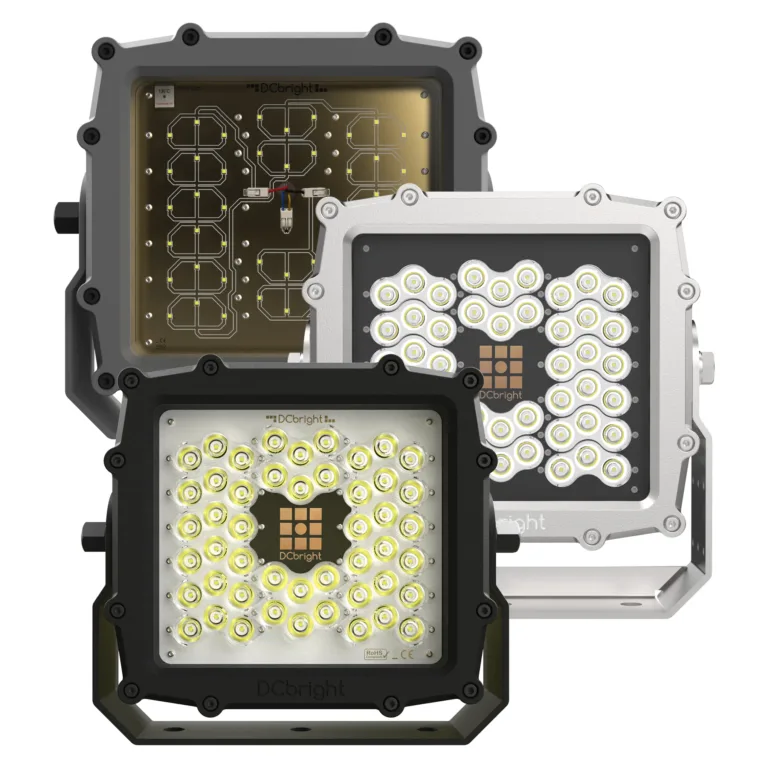 BarracudaStainless steel 316L for quay areas44,100 lm at 320 W
Stainless steel 316L, CRC III according to EN 1993-1-4
20-year warranty on the housingView Barracuda
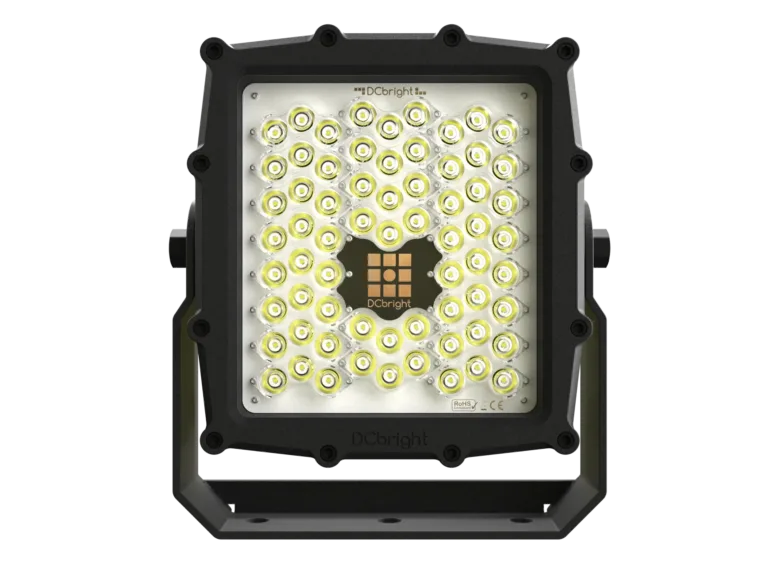 SharkSites and high masts50,000 lm at 320 W
Optics 14 to 69 degrees
IP69K, IK10, C5 Industrial and MaritimeView Shark
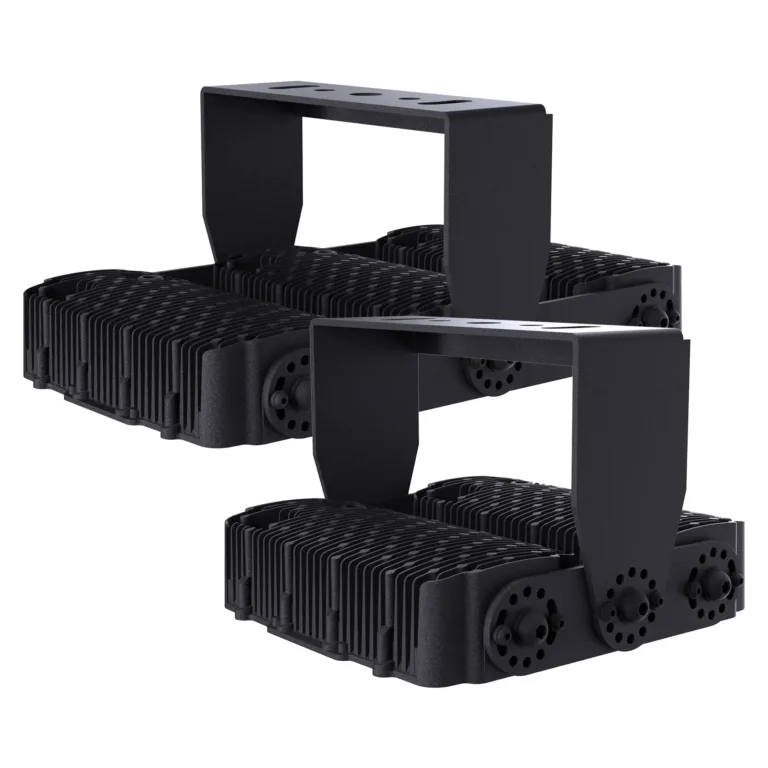 Snapper HCCrane lighting on conductive structures55,000 lm at 320 W
6 G vibration according to IEC 60068-2-6
IP68, C5 Industrial and MaritimeView Snapper HC
Practical example: DFDS Vlaardingen
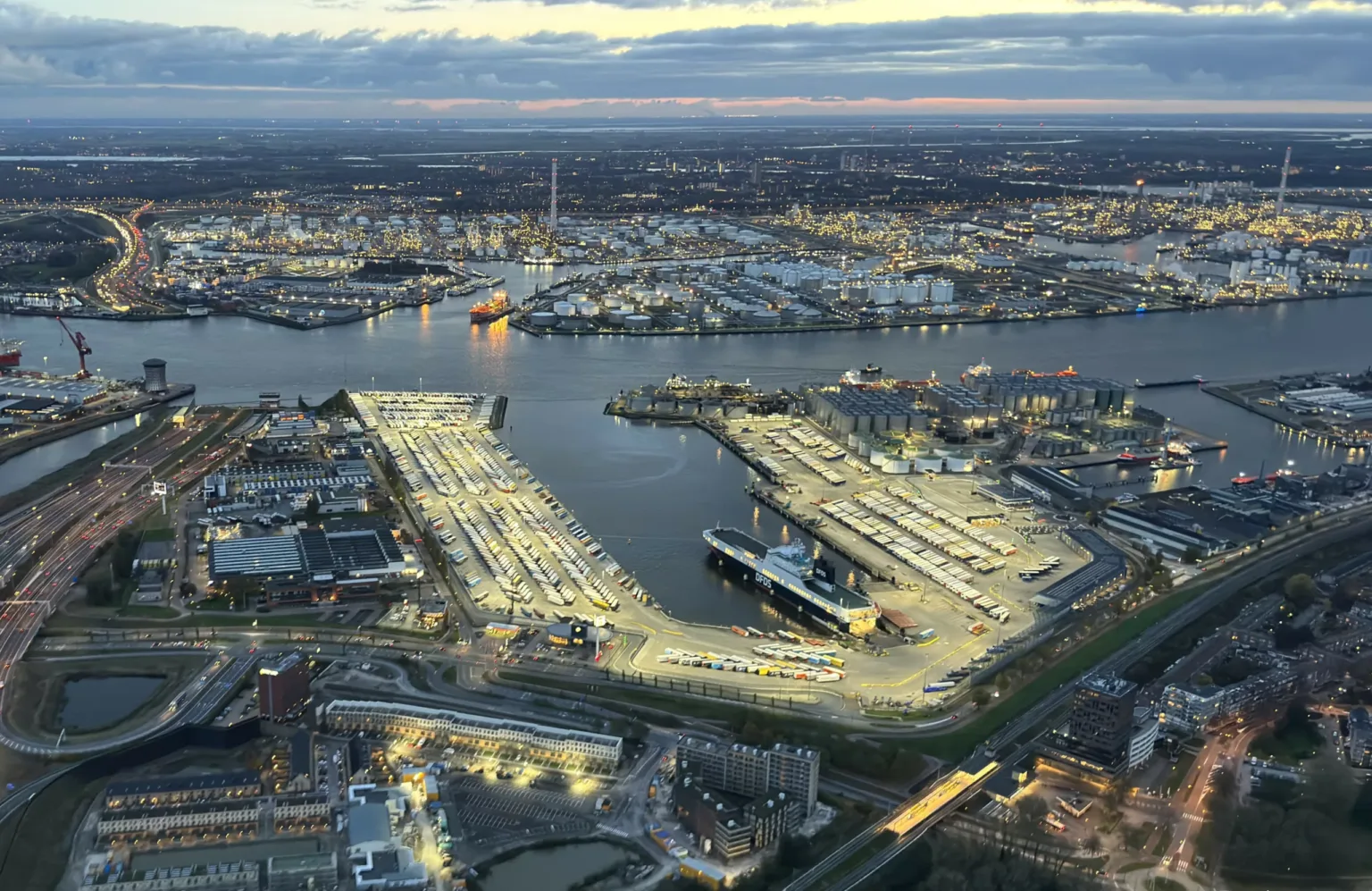
High-mast terminal lighting at DFDS Seaways in Vlaardingen
By the water, with constant exposure to salty sea air, and an operation that runs day and night. The earth connections were already included in the design during the engineering phase.
At the DFDS port terminal in Vlaardingen, JEL installed new terminal lighting on behalf of main contractor Boskalis: 34 lighting masts of 30 metres with a total of around 180 DarkLicht DL1 and DL2 luminaires. The scope covered the lighting design, the lighting masts, the cable infrastructure and connections for the new lighting, installation and maintenance. The Eurocode was applied to the lighting masts and NEN 1010 to the electrical installation. The work was carried out with an aerial work platform and crane on a terminal that operates 24/7.
Precisely when masts, cabling and electrical installation fall within one scope, earthing belongs in the design from the outset rather than only at handover. On a terminal where operations continue, modifying connections at a height of 30 metres afterwards is difficult and costly. A design that records how each mast and each luminaire is connected also makes periodic inspection easier, because the inspector knows what to expect.
Continue reading: lighting for extreme corrosion, IP and IK rating, lighting poles and high mast lighting and crane lighting.
How JEL Products Helps with Grounding and Terminal Lighting
JEL Products not only supplies high-quality LED luminaires for terminals and ports, but also provides support throughout the entire process of implementing lighting solutions in demanding environments. This always includes attention to technical requirements, such as grounding, IP rating, and material selection for corrosive environments.
Specifically, JEL Products offers:
- Luminaires with housings suitable for Class I installations in wet and corrosive environments
- Lighting for the site areas outside the ATEX zones at terminals, with referral to a certified Ex manufacturer for the zones themselves
- Stainless steel versions for dock areas subject to extreme corrosion
- Complete lighting design including technical specifications for the electrical installation
- Guidance from engineering to commissioning, ensuring that earthing and inspection are correctly guaranteed
Whether it concerns lighting for harbor cranes, area lighting, or specialized custom solutions, the full technical context is always considered, including earthing and material selection. Feel free to contact us via the contact page for a no-obligation discussion about your situation.