

Short answer
UGR is a property of the installation, not of the luminaire: the same luminaire gives a different value in a different room.
UGR, of Unified Glare Rating, is an international standard that indicates the extent to which a lighting installation causes glare for people in a room. The lower the UGR value, the less glaring the lighting. This is directly relevant for workplace lighting: glare reduces concentration, increases the likelihood of errors, and poses a serious safety risk in industrial environments. The questions below elaborate on each aspect of UGR in a practical way, from calculation to luminaire selection.
< 19
screen work, inspection and machine operation
< 22
production areas and workshops
< 25
heavy industry and storage
Scale from 10 to 30 in steps of 3; the lower, the less glare. Set per task in EN 12464-1.
How is the UGR value calculated?
The calculation takes into account the luminance of the light sources, the background illuminance, the position of the viewer, and the angle at which the luminaires are viewed. The result is a number on a logarithmic scale, typically between 10 and 30. The higher the number, the greater the perceived glare.
The formula has been standardized by the CIE (Commission Internationale de l’Eclairage) and is applied internationally. In practice, lighting designers perform the UGR calculation using specialized software such as DIALux or Relux, where the exact light emission of each luminaire is entered via a photometric data file (LDT or IES).
Important to understand: the UGR value is not a property of a single luminaire in itself. It is always a result of the entire lighting installation in a specific room, with a certain arrangement, ceiling and wall reflections, and a fixed viewing position. A luminaire can have a UGR of 19 in one room and a UGR of 22 in another room.
What do the different UGR limit values mean in practice?
The scale runs in steps of 3: UGR 10, 13, 16, 19, 22, 25, and 28. Limit values indicate how much glare is acceptable for a specific task or workplace. In practice, values of 19 and 22 are most commonly used, depending on the visual demands of the work.
| Threshold value | Application |
|---|---|
| UGR < 10 | Virtually no glare. Rarely required in standard work environments. |
| UGR < 13 | Very high visual demands, for example in precision assembly or medical environments. |
| UGR < 16: | Drawing tables, fine craftsmanship, and technical drawing. |
| UGR < 19: | Office workspaces with screens, inspection tasks, machine operation. |
| UGR < 22 | Industrial production spaces, warehouses, and workshops with less precise visual tasks. |
| UGR < 25 | Heavy industrial environments, storage areas, and spaces without fine visual work. |
| UGR < 28 | Hallways, stairwells, and spaces with low visual demands. |
For operators who operate machines or perform quality control, UGR < 19 is the minimum requirement in most cases. For display screen work, this has even become a hard standard in European guidelines.
UGR finder
Which UGR limit applies to your workplace?
Choose the task. You see the maximum UGR and the associated requirements for illuminance, uniformity and colour rendering.
Requirement according to EN 12464-1:2021
UGR
lux
average illuminance, minimum
uniformity U0, minimum
Ra
colour rendering, minimum
UGR scale
Guide values from EN 12464-1:2021, table per activity. The UGR value itself depends on the layout in your room and is calculated per project with the LDT files of the luminaires.
Which standards set UGR requirements for the workplace?
The main standard that establishes UGR requirements for workplace lighting is NEN-EN 12464-1. This European standard describes the lighting requirements for indoor spaces, including minimum illuminances, color rendering, and maximum UGR limits per type of workplace or activity.
In addition EN 12464-2 for outdoor workplaces, such as Terminals, construction sites, and industrial areas. For specific sectors, additional requirements may apply based on industry guidelines, the Dutch Working Conditions Act (Arbowet), or clients. In the offshore and heavy industry, stricter requirements are sometimes imposed than the basic standard prescribes.
The Dutch Working Conditions Act obliges employers in the Netherlands to ensure a safe and healthy working environment. Glare from lighting falls under this. NEN-EN 12464-1 is considered a recognized practical guideline for meeting that obligation. Lighting expert can assess whether an existing installation complies with applicable standards.
What is the difference between UGR and glare rating (GR)?
UGR (Unified Glare Rating) and GR (Glare Rating) both measure glare but are applied in different situations. UGR is intended for indoor spaces and measures psychological glare: the uncomfortable sensation that disrupts concentration and visual comfort. GR was developed for outdoor lighting and measures physiological glare: the actual limitation of vision due to direct light in the field of view.
In practice, this means the following distinction:
UGR versus GR
A luminaire with a good UGR value for indoor use will not automatically perform well on GR for outdoor applications. When selecting luminaires for mixed environments,such as covered loading docks or industrial halls with exterior doors,it is important to assess both values.
How to choose a luminaire with the correct UGR value?
You start by determining the visual requirements of the work in the space. First, determine which UGR limit value applies according to NEN-EN 12464-1, and then look at luminaires that can achieve that value in a representative arrangement.
Follow these steps:
| Step | What you do |
|---|---|
| Determine the task class: | What activities take place? Fine manual work, machine operation, warehouse work? This determines the required UGR limit value. |
| Check the light beam and shielding: | Luminaires with a wider light beam or less shielding produce more glare. Choose luminaires with directed optics or diffuse shielding for visually sensitive environments. |
| Request photometric data: | Reliable manufacturers provide LDT or IES files that allow a lighting designer to perform an accurate UGR calculation. |
| Perform a lighting calculation. | Use software such as DIALux to simulate the UGR value in the specific room before installation. |
| Take into account mounting height and position: | The same luminaire at a different height or position yields a different UGR result. Optimize the layout in the simulation. |
For LED work lights Different considerations apply to the operating machines of cranes than to ceiling lighting in a production hall. In those cases, non-glare optics and targeted beams are even more important, as operators and bystanders can have the light source directly in their field of vision.
UGR calculation
We calculate the UGR of your actual layout
Send the floor plan, the mounting height and the viewing directions of the workstations. You receive a DIALux calculation with the UGR per workstation, the illuminance and the uniformity, with the optic that meets the limit.
Free of charge and without obligation · Response within 1 working day from an engineer
When is a UGR calculation insufficient and what then?
A UGR calculation gives a good indication of glare risks, but falls short in situations with complex geometries, highly reflective surfaces, dynamic light, or unusual viewing positions. In those cases, additional analysis or a practical measurement is needed to assess the actual glare experience.
Situations where a standard UGR calculation is insufficient:
Self-check
Does a UGR calculation say enough about your situation?
If you recognise one of these situations, a luminance analysis or a trial setup is needed.
- Spaces with shiny floors, machines or products that reflect light into the eyes of operators.
- Environments with both artificial light and strong incident daylight, where the contrast ratio fluctuates significantly.
- Workspaces where people move and view lighting from multiple angles, such as in crane cabins or on moving vehicles.
- Installations at high altitudes or in irregular spaces where the standard calculation method is not representative.
In such cases, a comprehensive lighting design with additional luminance analysis or a pilot installation offers more certainty. Engaging professional lighting advice also helps in making the right choices before an installation is realized.
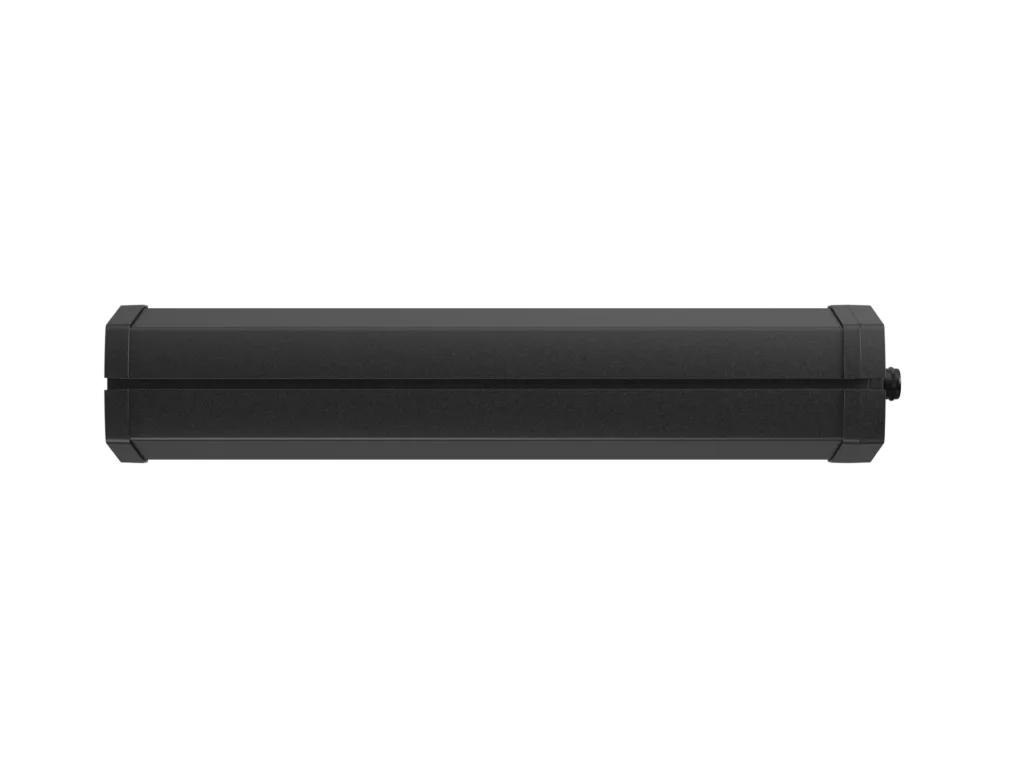
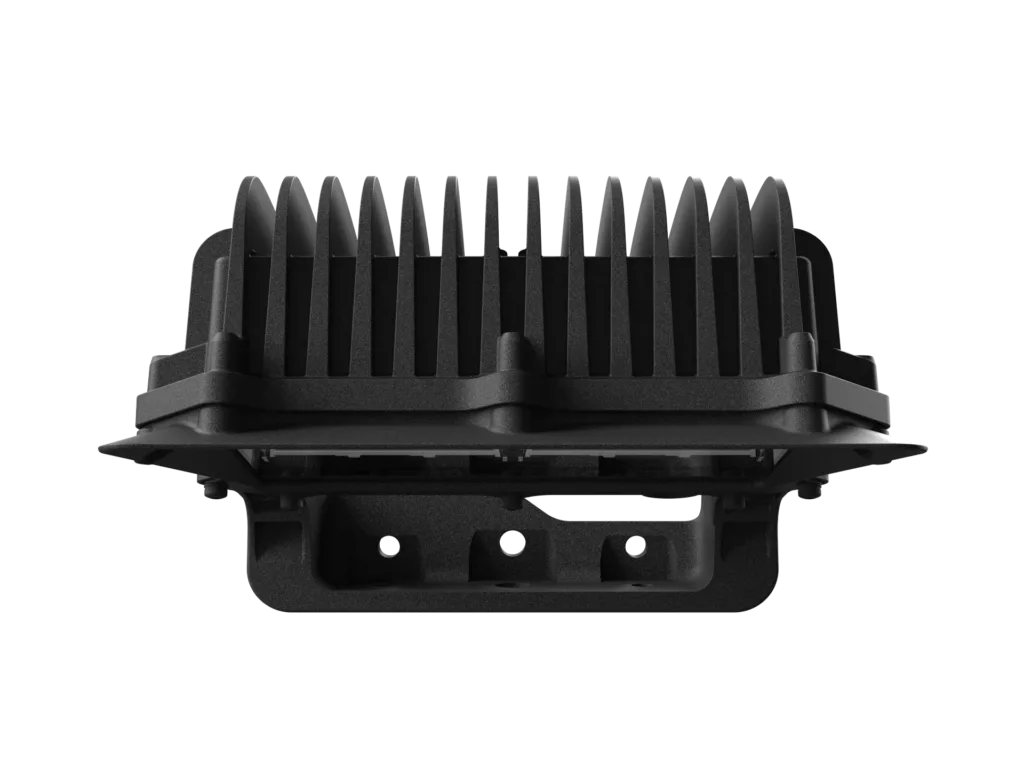
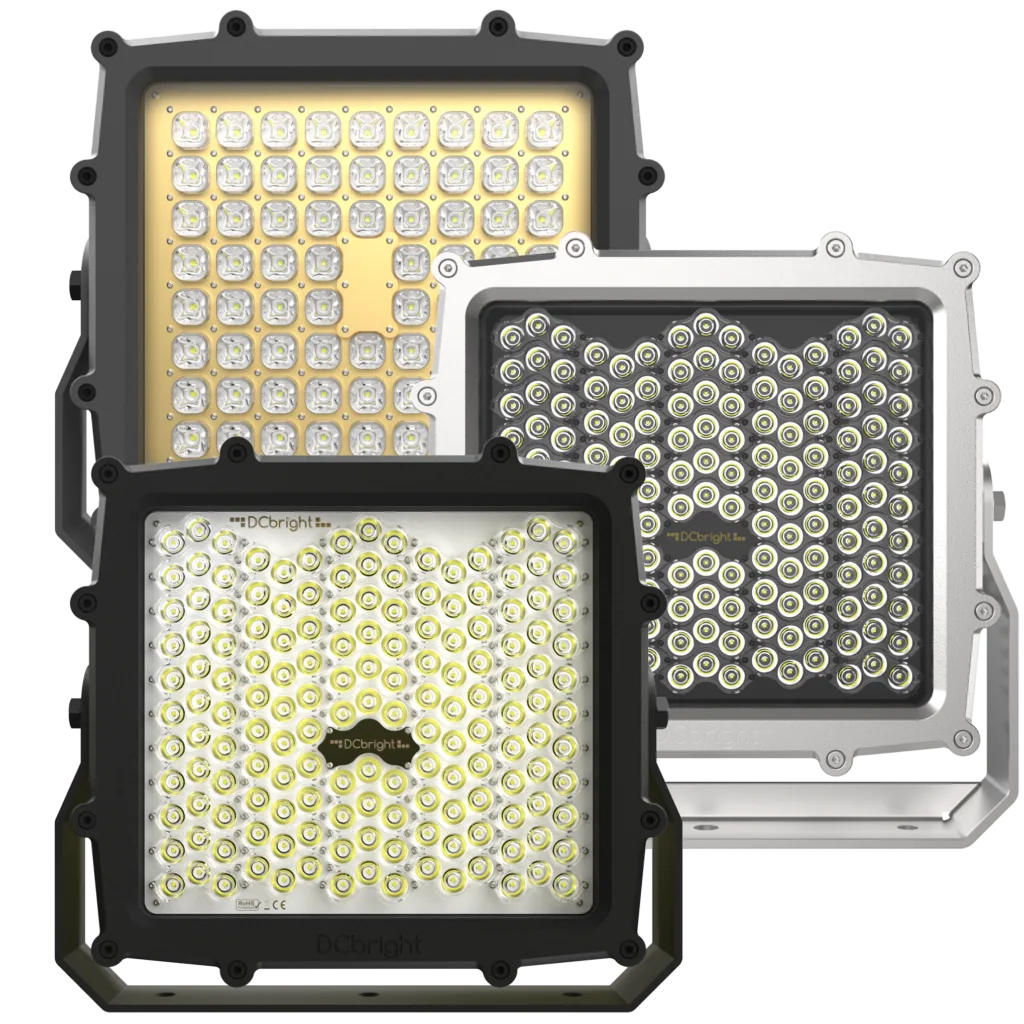
Luminaires with controlled glare
Practical example: Mammoet PTC-210-DS
Project · Crane lighting
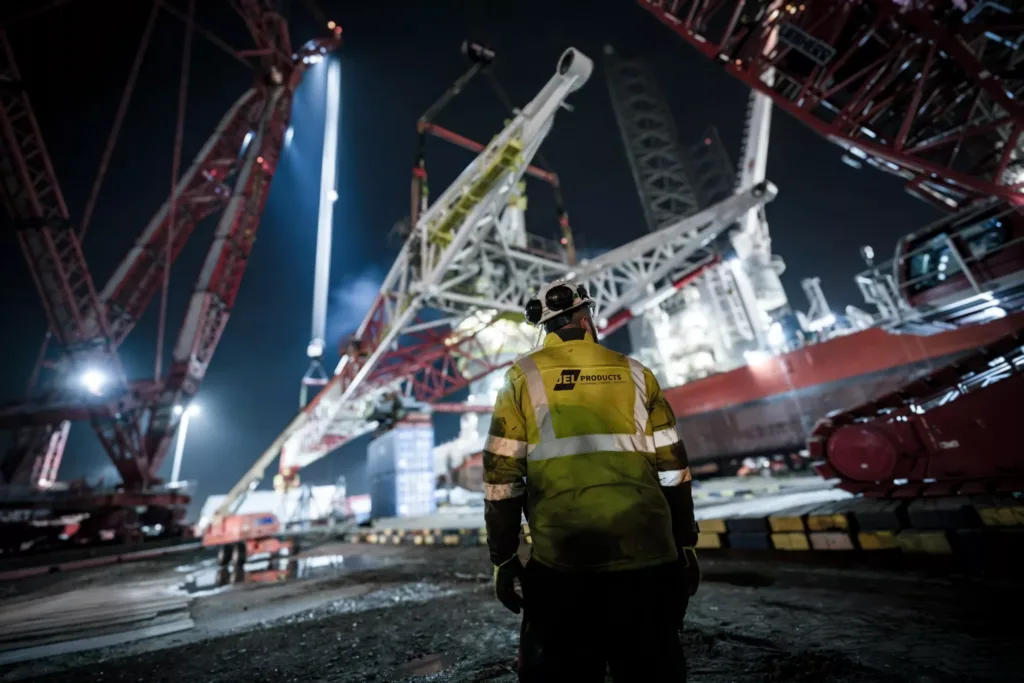
Ring Light for Mammoet PTC-210-DS
Five Orca AC 800 W luminaires with project optics light the full working height from 160 m, without blinding shipping, tunnel traffic or operators.
160 m
highest luminaire, maintenance-free
5
Orca AC 800 W of 111,000 lm with project optics
200 lux
average over the working height, U0 0.65 to 0.75
Mammoet needed work lighting for the PTC-210-DS, a ring crane in Schiedam. The highest luminaire is mounted at 160 metres, only five mounting positions were available, and the lighting was not allowed to dazzle passing shipping, traffic from the nearby tunnel or the operators around the crane. JEL provided the lighting design and supplied five Orca AC 800 W luminaires of 111,000 lumens with a special project optic. The result is an average of 200 lux over the working height, with a uniformity of 0.65 to 0.75.
A UGR calculation assumes a fixed room and a fixed viewing position. Around a crane of this height, neither exists: operators, shipping and road users see the light sources from constantly changing angles and distances. Controlling glare then means limiting, for each viewing direction, how much light a luminaire emits, and choosing the optics accordingly.
The calculation plane also determines the outcome. Calculating on a single horizontal plane tells you nothing about what happens at other working heights. Calculating at several heights assesses the lighting where people actually look and work, which is exactly where a standard UGR calculation falls short.
Read more about the Mammoet PTC-210-DS project
Further reading
How JEL Products Helps You Choose the Right Lighting for Your Workspace
JEL Products guides you through the entire process, from the initial lighting challenge to a fully functional installation. Whether it involves workplace lighting in a production hall, lighting on mobile machinery, or complex outdoor installations on industrial sites,our approach is always tailored to the specific environment and its requirements.
Here's what JEL Products specifically offers:
- Lighting calculations including UGR analysis based on photometric data of the luminaires supplied by JEL.
- Advice on the correct luminaire selection based on task class, environmental requirements, and applicable standards such as NEN-EN 12464-1.
- Luminaires with glare-free optics and full-cutoff technology for environments where visual comfort and safety are paramount.
- Total solutions for both interior and exterior lighting, including engineering, installation, and commissioning.
- Specialist knowledge of extreme environments, from high temperatures to corrosive conditions; where there are ATEX zones, lighting for the areas outside the zones, with referral to a certified Ex manufacturer for the zones themselves.
Would you like to know what UGR value is achievable in your situation and which luminaires are suitable for it? Get in touch Contact JEL Products for a no-obligation consultation.